A Deeper Search of Old Parkes Data Finds Six Missed Pulsars
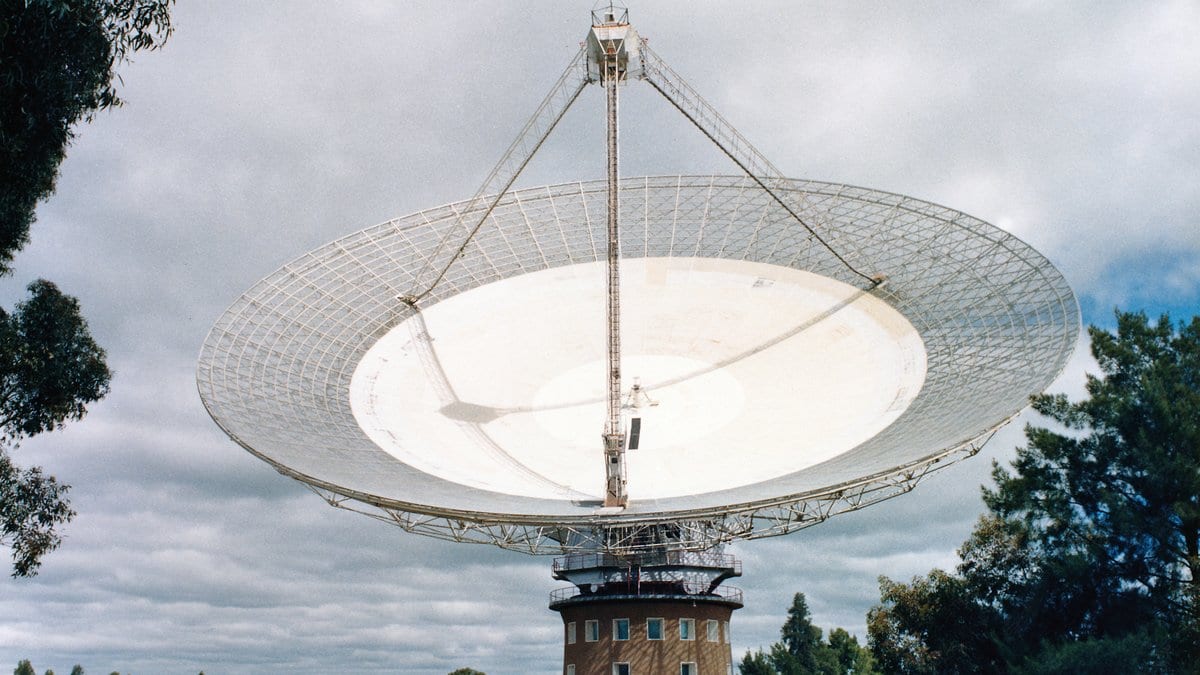
A deeper search of radio survey data recorded at the Parkes telescope in 2000 and 2001 has turned up six pulsars that earlier passes through the same recordings missed, five of them in the Large Magellanic Cloud. One of the five turns once every 3.8 seconds, making it the slowest-spinning pulsar known in either Magellanic Cloud. The work was published Nov. 5, 2026.
No new observing time was involved. Rahul Sengar of the Max Planck Institute for Gravitational Physics in Hannover and colleagues report in The Astrophysical Journal Letters that they re-ran the archived recordings through a search that folds very faint candidates instead of discarding them. They argue the exercise shows that reanalyzing old surveys is still worth doing, both to complete the pulsar census and to find objects worth studying. The two Magellanic Clouds are the only galaxies beyond our own in which a population of pulsars is known.
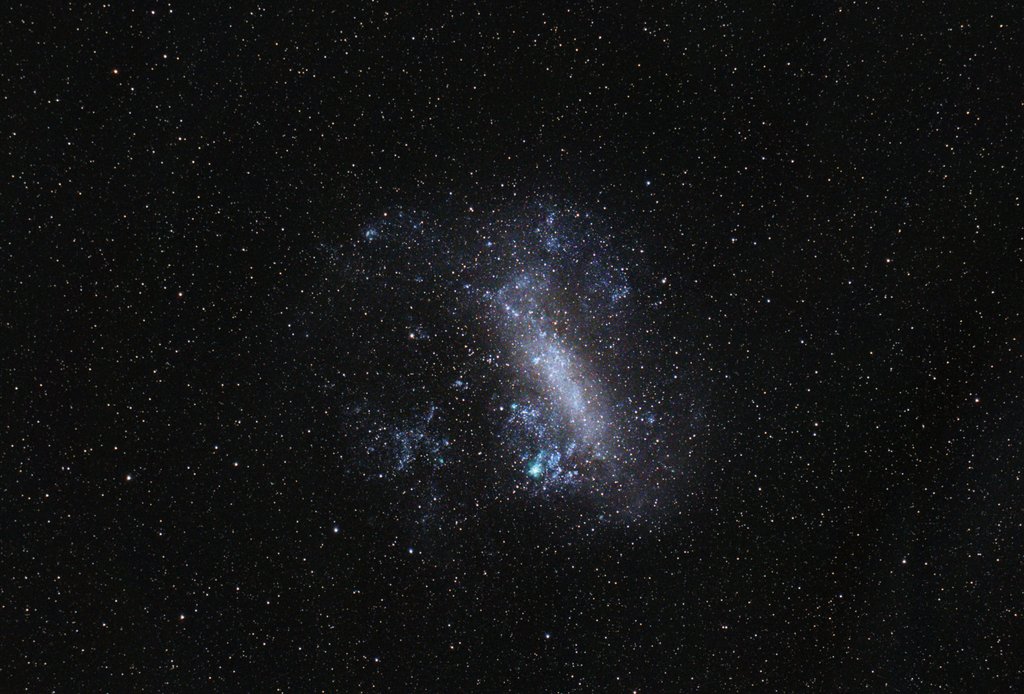
The slow pulsar is cataloged as PSR J0520-67. It was picked up again in a neighboring beam from a later pointing, but a follow-up observation aimed at its strongest detection did not recover it. The authors say dedicated observations are needed to pin down its position. Before this one, no pulsar in either Cloud was known to turn slower than once every 2.23 seconds.
Four of the six vary in brightness in a way consistent with scintillation, a twinkling caused by gas along the line of sight. One stops pulsing altogether for stretches at a time.
The new finds bring the number of radio pulsars known in the Large Magellanic Cloud to 49. The sixth lies toward the Small Magellanic Cloud, but the authors conclude it belongs to the Milky Way foreground rather than that galaxy.
The team also simulated the pulsar populations the two Clouds should hold. They report that a full survey with the MeerKAT array would be expected to find roughly 200 more ordinary pulsars in the Large Cloud. It might also turn up the first millisecond pulsars, the fastest-spinning kind, in either Cloud, though the paper calls that an upper limit.
Sources
- The Astrophysical Journal LettersPeer-reviewed