Six Nearby Galaxies Offer a Shortcut to JWST's Little Red Dot Puzzle
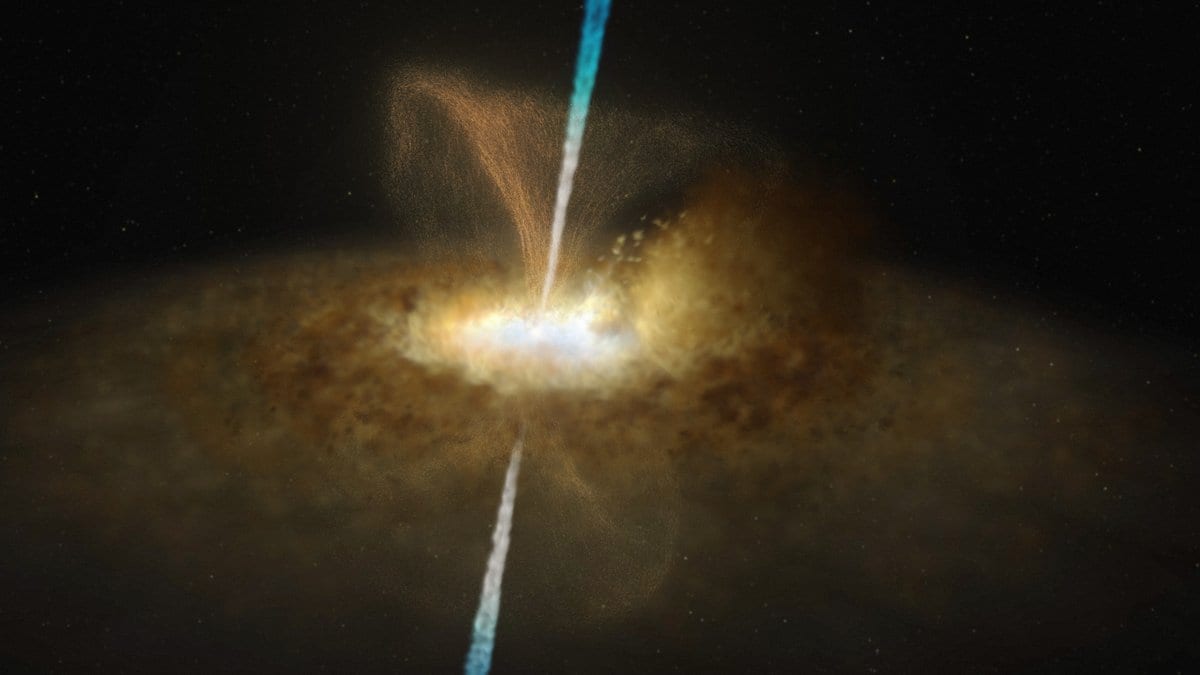
Six nearby galaxies picked as look-alikes of JWST's little red dots split into two kinds in a pilot study with the Einstein Probe satellite: some match ordinary active galaxies in X-ray brightness and variability, while the rest are markedly faint in X-rays. Little red dots are compact, very red objects JWST has found in large numbers in the early universe, and their apparent X-ray weakness is an open question.
Shi-Jiang Chen, Jun-Xian Wang and colleagues at the University of Science and Technology of China report the observations in The Astrophysical Journal Letters, published Nov. 13, 2026. They write that even deep stacked Chandra exposures of the distant dots yield only tentative detections, too little to separate the leading explanations: a black hole feeding faster than theory's usual limit, an intrinsically weak source, or gas thick enough to bury the X-rays. Nearby counterparts, the authors argue, need far less telescope time for the same signal and reach the X-ray energies that tell those cases apart.
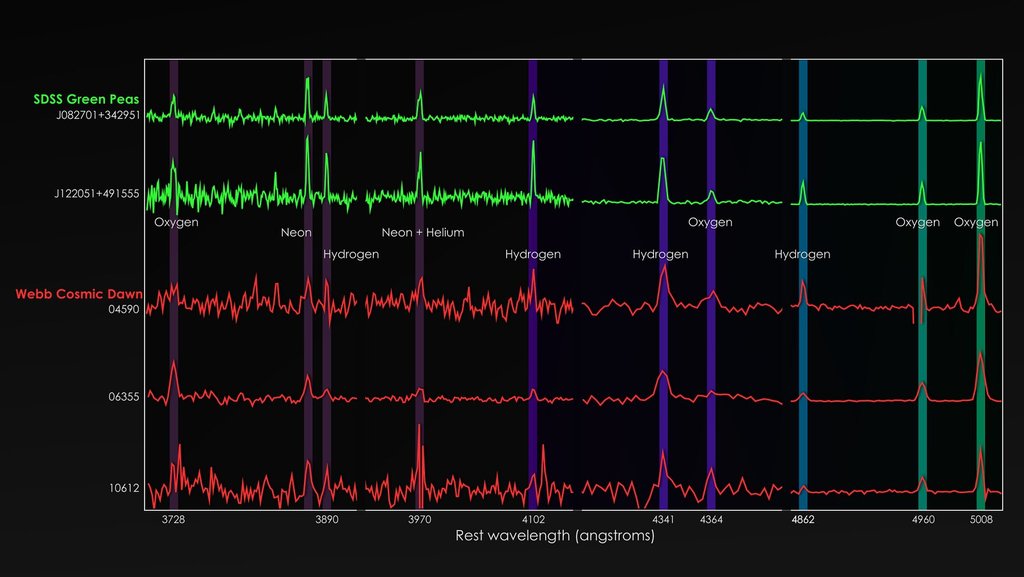
The six lie at a redshift of about 0.3 on astronomers' distance scale, against about 4 to 8 for JWST's little red dots. The faint ones, stacked into a single measurement, sit 0.5 to 0.7 dex below the standard scaling relation for unobscured quasars (a factor of a few). That stack is detected at about 3.3 sigma.
In the paper's reading, those numbers are hard to reconcile with an unobscured source feeding above that limit, or with the thick-obscuration geometry it tested, though modified versions remain possible. The simplest alternative it names is a mildly X-ray-weak corona, the hot gas close to the black hole, seen through gas that absorbs some of its light rather than all of it.
The six are not the early-universe objects themselves but nearby stand-ins, so what the result says about JWST's dots runs through that resemblance. The authors call it a pilot of six sources and say growing samples of local look-alikes offer a practical way to test the distant population's X-ray weakness.
Sources
- The Astrophysical Journal LettersPeer-reviewed