JWST Sees Methane Glowing, Not Absorbing, in a Newborn Brown Dwarf
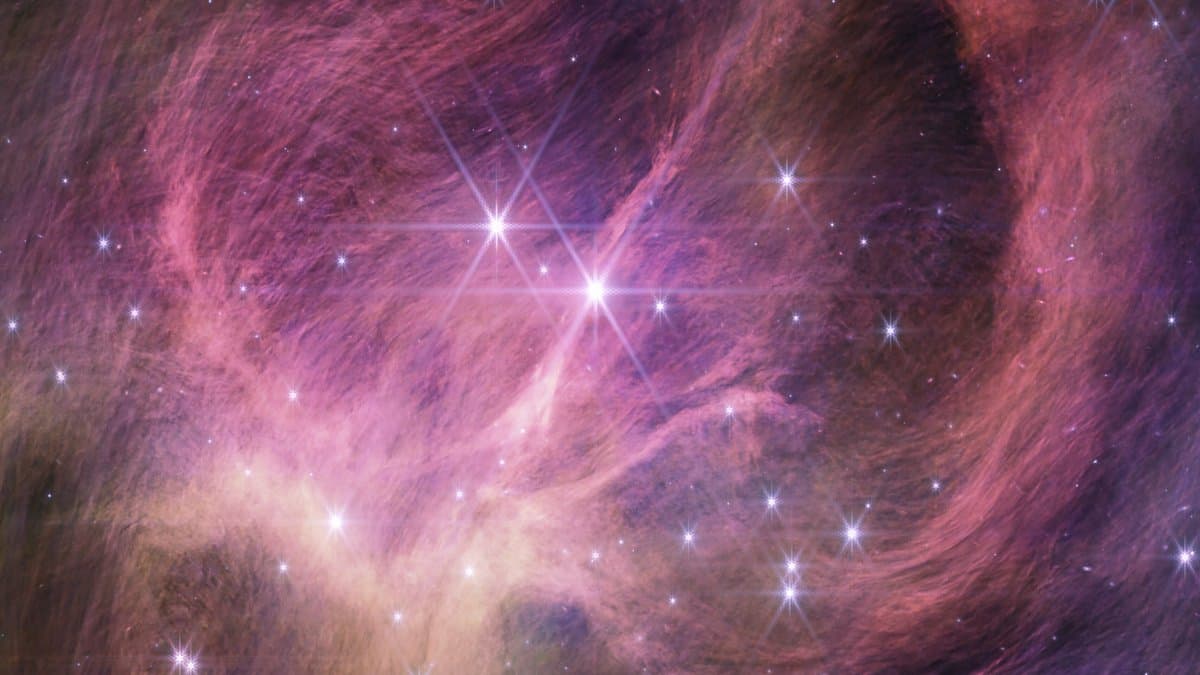
The James Webb Space Telescope has recorded methane giving off light rather than absorbing it in the atmosphere of a young brown dwarf, in what the observing team reports as the first detection of its kind.
Kevin Luhman and colleagues report the lines in a paper accepted by Astronomy & Astrophysics Letters and not yet published. The measurement adds to a puzzle in the same objects: the authors write that atmospheric models do not predict the 3.4-micrometer hydrocarbon band these young brown dwarfs show, and that the methane absorption that models did expect in the coolest newborn brown dwarfs was never detected.
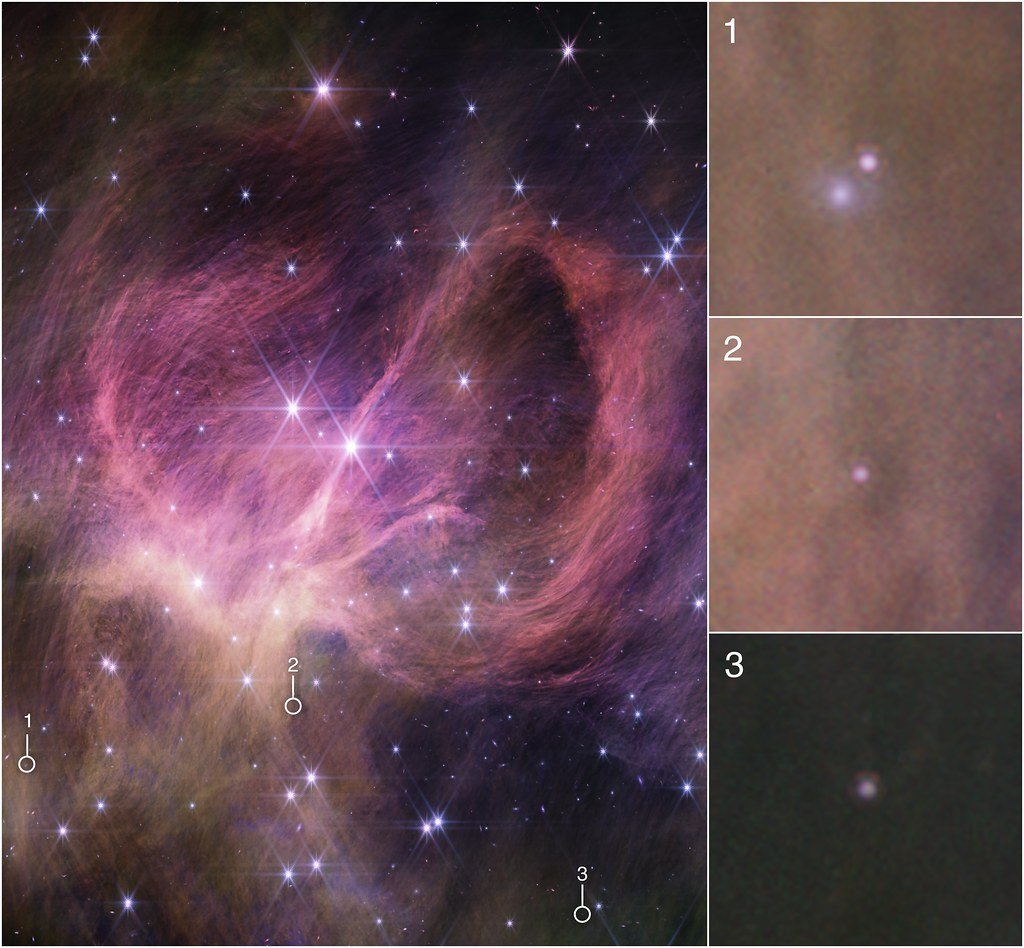
The object is LRL 11001, a brown dwarf of about six times Jupiter's mass in the young cluster IC 348. A brown dwarf is too light to sustain the hydrogen fusion that makes a star shine. The team re-observed it with JWST at ten times the spectral resolution of the earlier survey, and the new spectrum carries emission lines at 3.324 and 3.333 micrometers, which they attribute to methane. That is the first detection of 3.33-micrometer methane emission from a young brown dwarf.
The authors write that the emission probably comes from the brown dwarf's own outer layers rather than from a disk of material around it, because no disk around a star or brown dwarf is known to emit at these wavelengths.
What excites the methane is unsettled. The paper says modeling is needed to decide whether heat from gas falling onto the object does it, or light from neighboring cluster members.
The sharper spectrum also pins down the 3.4-micrometer band, whose shape the authors read as the signature of a large alkane, a long chain of carbon and hydrogen. They offer one speculation for how both can be true at once. Vertical mixing, the churning of gas between layers, has suppressed methane and enriched large alkanes in the visible atmosphere. Methane survives higher up, where it can produce the glow.
Sources
- arXivPreprint