At COP31, a Himalayan Scientist Says Satellites Recorded Nepal's Deadly Slope Moving Before It Collapsed

ANTALYA, Türkiye — Radar satellites recorded a Himalayan slope moving before it collapsed on the Nepal-China border on Aug. 26, 2026, but the signal was found only afterward, a scientist said at COP31 in an interview recorded for ALLATRA Media.
Nepal's disaster authority counted 1,451 dead by Sept. 20, 2026, in the Gyirong-Rasuwa disaster, which a preliminary report by the International Centre for Integrated Mountain Development (ICIMOD) calls a rock-and-ice collapse, not a burst glacial lake. ICIMOD said the report found Sentinel-1 satellites recorded the slope moving up to 40 cm between July 7 and Aug. 24, 2026: a sign of instability, not of exactly when it would fail.
Scientists found that movement only after the collapse, according to Rajesh Bahadur Thapa, a radar scientist and senior project coordinator of the Glaciers-to-Ocean initiative that ICIMOD runs with the Ocean Policy Research Institute of Japan's Sasakawa Peace Foundation (OPRI-SPF). "Oh yes, there was a signal," he said. "Satellite can detect." What is missing, in his view, is a system that ranks the most fragile slopes and watches them with free Sentinel radar.

At OPRI-SPF's session "From Glacier to Ocean" on Nov. 11, 2026, Thapa said the disaster showed "the data we have is not enough."
The session turned to the Arctic, where meltwater acidifies the seas and carries pollutants stored in glaciers into marine food webs, said Rolf Rødven, executive secretary of the Arctic Monitoring and Assessment Programme.
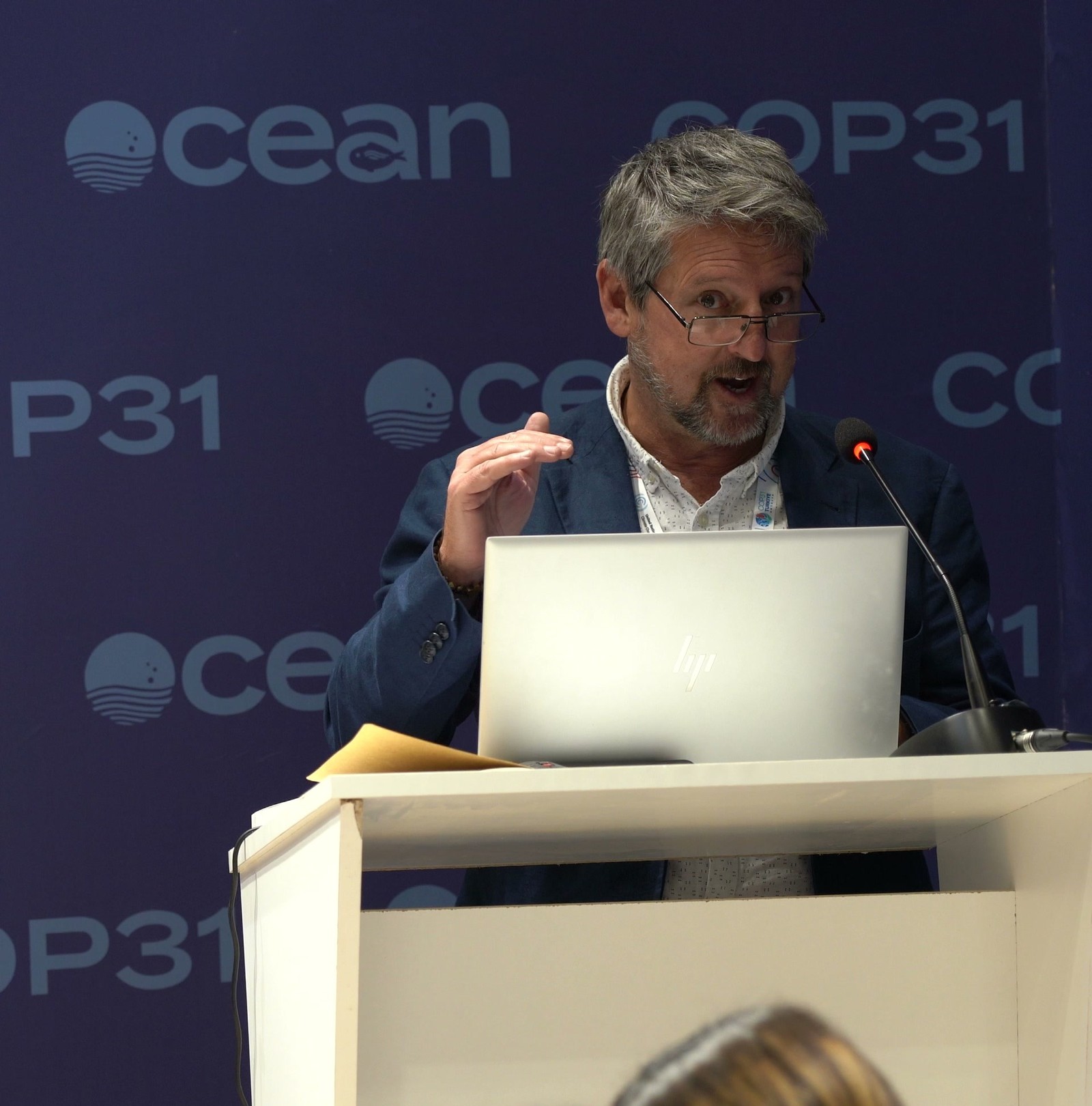
What happens in the Arctic, with glaciers and in rivers, affects the coast, Matt Frost, head of the international office at Britain's Plymouth Marine Laboratory, told the session. "Climate change is happening to a greater degree and faster than we ever thought," he said. More than 50 years of local records, he added, show rising rainfall and river flow freshening coasts and adding nutrients.
Sivendra Michael, Fiji's permanent secretary for environment and climate change, who opened the session, said: "The ice that melts on the roof of the world does not stay there. It runs down the rivers into the ocean and at the end it arrives on the shore as rising seas." He asked for the U.N. loss-and-damage fund to be "replenished by 2027 with direct simplified access."
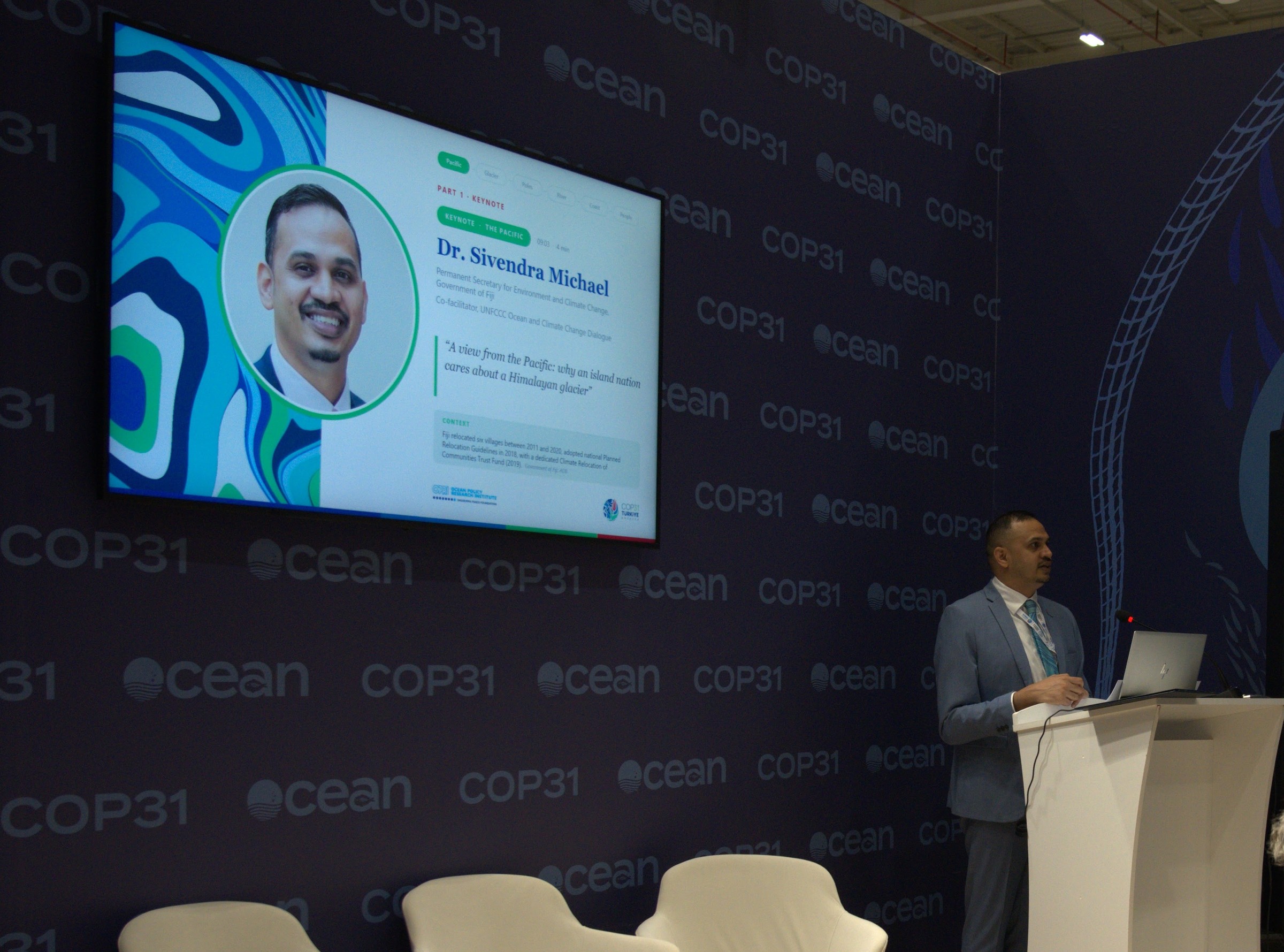
Speakers at the "From Glacier to Ocean" session came from Himalayan research, Arctic monitoring, marine science and a Pacific island government, and each traced one stretch of the path melting ice takes to the sea.
Sources
 By Nika Kulpin and Oli Kotyk