Skip to content
See the World Through ScienceA project of ALLATRA
Source: Peer-reviewedGeophysical Research Letters1 source

Japan's Arase Satellite Found High-Energy Electrons Inside a Barrier Thought to Block Them
Space

Republish this story

Our work is licensed under Creative Commons BY-NC 4.0. You may republish this piece for free — with credit to ALLATRA Media and a link to the original, unedited beyond length trims, and not for commercial use.

Read the full license

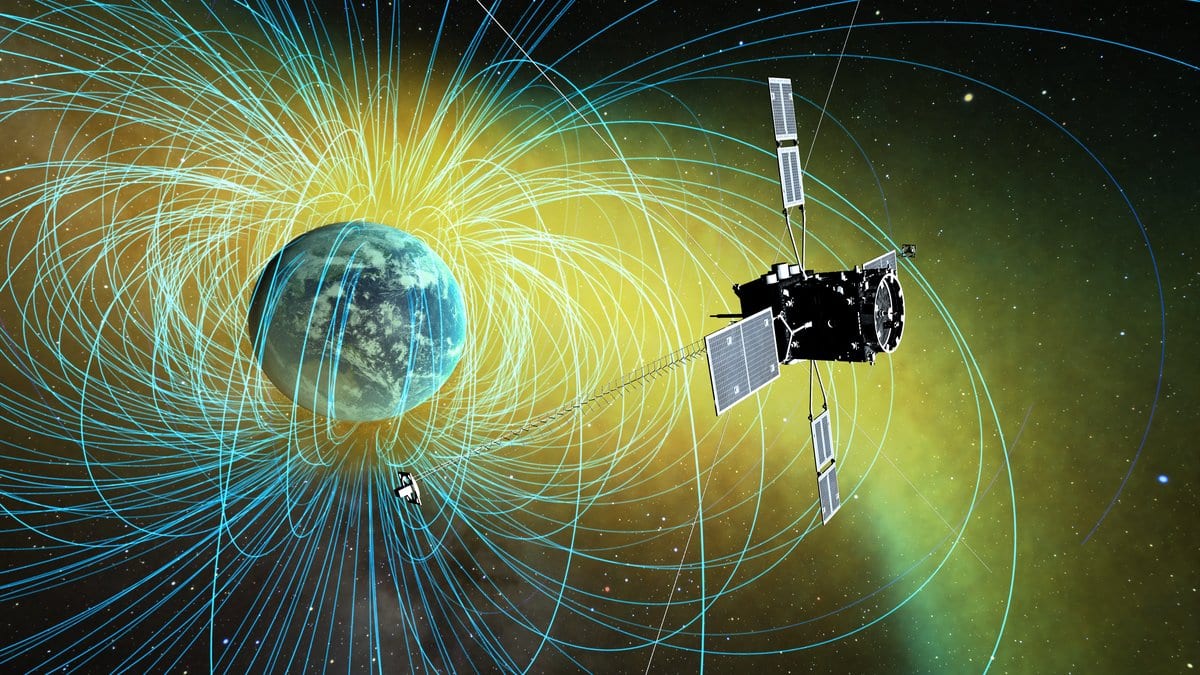
Artist rendering of the Arase spacecraft flying above Earth, surrounded by looping blue and yellow magnetic field lines.
An agency rendering of Arase in the inner magnetosphere, the region where the spacecraft recorded the May 2024 storm measurements (illustrative)."Arase ISAS" by 宇宙科学研究所(ISAS), via Wikimedia Commons, CC BY 4.0

Japan's Arase satellite recorded electrons carrying millions of electronvolts deep inside the inner part of Earth's radiation belt during the superstorm of May 2024, in a region that space physicists have long called an "impenetrable barrier" to particles that energetic. Y. Miyoshi of Nagoya University's Institute for Space-Earth Environmental Research and 19 co-authors report the measurement in Geophysical Research Letters.
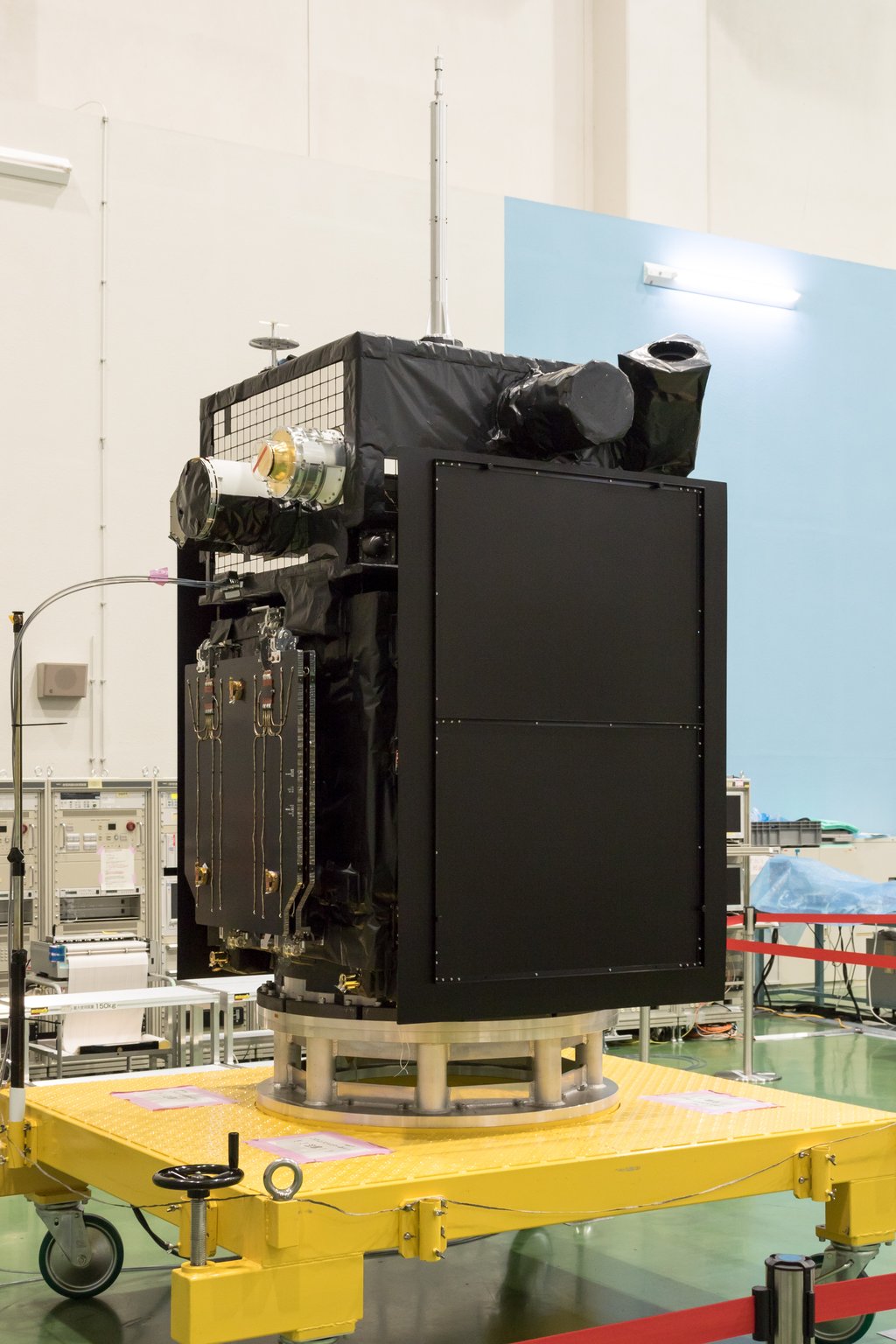
The boxy Arase satellite, wrapped in black thermal blanketing, standing on a yellow handling cart in an assembly hall.
The finished spacecraft on its handling cart at the Japanese space agency, shown to reporters Sept. 29, 2016, before the launch that placed it in the radiation belts. "ERGsat Appearance atPressConference" by 宇宙航空研究開発機構・宇宙科学研究所(JAXA/ISAS)、https://www.isas.jaxa.jp/en/researchers/data-policy/ 、https://www.isas.jaxa.jp/researchers/data-policy/, via Wikimedia Commons, CC BY 4.0

The inner belt has been treated as closed to electrons at those energies. Miyoshi and colleagues find that it can be breached when space weather turns extreme.

The evidence for where the electrons came from is the shape of the distribution. If they had been driven in from the outer belt, their numbers would thin steadily inward from the edge. Instead, the phase space density profiles, which count how tightly particles are packed at a given energy and orbit, peak inside the barrier. The authors read that peak as acceleration happening on the spot, building a source that then fed particles both inward and outward.

Arase also recorded intense chorus waves, electromagnetic waves that can accelerate electrons, inside a region where the cold, dense plasma had largely drained away. They call that combination consistent with acceleration driven by the chorus waves.

The measurements come from one storm, the May 2024 event, and from Arase's continuous observations near the magnetic equator. The paper was published online Oct. 26, 2026, and is open access under a Creative Commons license.

Sources

Spot an error?

Spot an error?

Report an error

Spotted a mistake on this page? Tell us what's wrong and our editors will take a look.

What kind of problem?

Only if you'd like us to be able to follow up. We won't use it for anything else.

We correct mistakes openly. Select any text to flag it. Fixes are logged under our Corrections Policy.

Report an error

Reporting on

Japan's Arase Satellite Found High-Energy Electrons Inside a Barrier Thought to Block Them

What kind of problem?

Only if you'd like us to be able to follow up. We won't use it for anything else.

We read every report. Corrections are logged publicly.