Skip to content
See the World Through ScienceA project of ALLATRA
Source: Peer-reviewedScience Advances1 source

Wildlife Trade Records List 107,356 Species, Double the Last Global Estimate

Environment

Republish this story

Our work is licensed under Creative Commons BY-NC 4.0. You may republish this piece for free — with credit to ALLATRA Media and a link to the original, unedited beyond length trims, and not for commercial use.

Read the full license

Rows of stacked wooden and wire bird cages line a narrow market street in Jakarta as shoppers walk past.
Caged birds on sale along a market lane in Jakarta, Indonesia, photographed Sept. 28, 2015. The new count covers species in legal use and trade, not only those taken illegally."Jatinegara wildlife market" by Wolf Gordon Clifton / Animal People, Inc., via Wikimedia Commons, CC BY 4.0

At least 107,356 species are in use or in trade worldwide, roughly twice the 50,000 that IPBES, the UN biodiversity science panel, estimated in its global analysis. The count comes from Alice C. Hughes of the University of Melbourne, Neil D. Burgess of the UN Environment Programme World Conservation Monitoring Centre and 22 co-authors, who published it on Oct. 30, 2026.

The figure counts species recorded in wildlife trade monitoring programs, not a fresh survey of the trade itself. Writing in Science Advances, the authors say that overexploitation of wildlife is one of the greatest global drivers of biodiversity loss, that data on what is extracted and traded is both incomplete and highly fragmented, and that those gaps obscure the true scale of the trade. Their own total is at least double the earlier estimate, not a final one.

Up to 47,685 of those species are animals, covering 42% of all described vertebrate species.
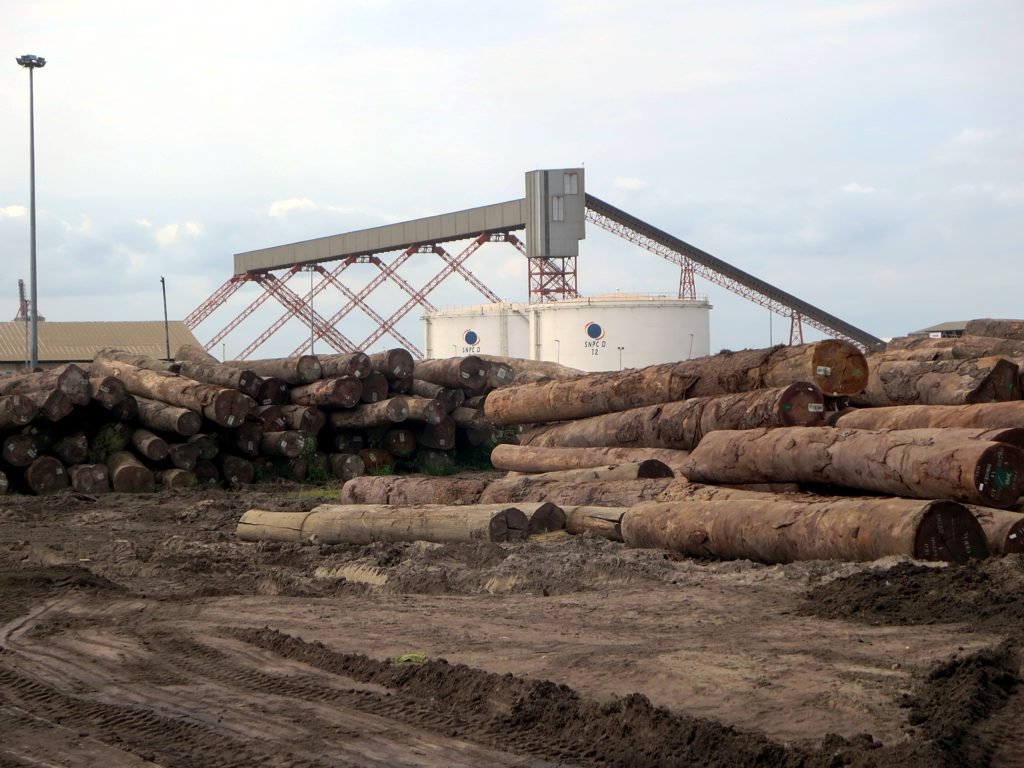
Stacks of felled tropical hardwood logs lying on bare ground at a port, with a conveyor and storage tanks behind.
Tropical hardwood logs, their cut ends marked and tagged, wait on the quay for shipment. Plants make up most of the 107,356 species the review counted; up to 47,685 are animals. "Timber for export at the Port of Pointe-Noire, Republic of Congo" by David Stanley, via Wikimedia Commons, CC BY 2.0

Most countries keep no systematic trade records for species that CITES, the global wildlife trade treaty, does not list. The one exception is the Law Enforcement Management Information System, a United States dataset that frequently held a higher diversity of species in trade than the global databases did. The authors call for national monitoring of that kind, and for a standard way of collating trade data beyond the species CITES lists.

Without those changes, the global indicators meant to guide sustainability and conservation will continue to cover less than 2% of the species in trade.

Sources

Spot an error?

Spot an error?

Report an error

Spotted a mistake on this page? Tell us what's wrong and our editors will take a look.

What kind of problem?

Only if you'd like us to be able to follow up. We won't use it for anything else.

We correct mistakes openly. Select any text to flag it. Fixes are logged under our Corrections Policy.

Report an error

Reporting on

Wildlife Trade Records List 107,356 Species, Double the Last Global Estimate

What kind of problem?

Only if you'd like us to be able to follow up. We won't use it for anything else.

We read every report. Corrections are logged publicly.