Skip to content
See the World Through ScienceA project of ALLATRA
Source: PreprintarXiv1 source

Eleven New Objects Beyond Neptune Turn up in Old TESS Images
Space

Republish this story

Our work is licensed under Creative Commons BY-NC 4.0. You may republish this piece for free — with credit to ALLATRA Media and a link to the original, unedited beyond length trims, and not for commercial use.

Read the full license

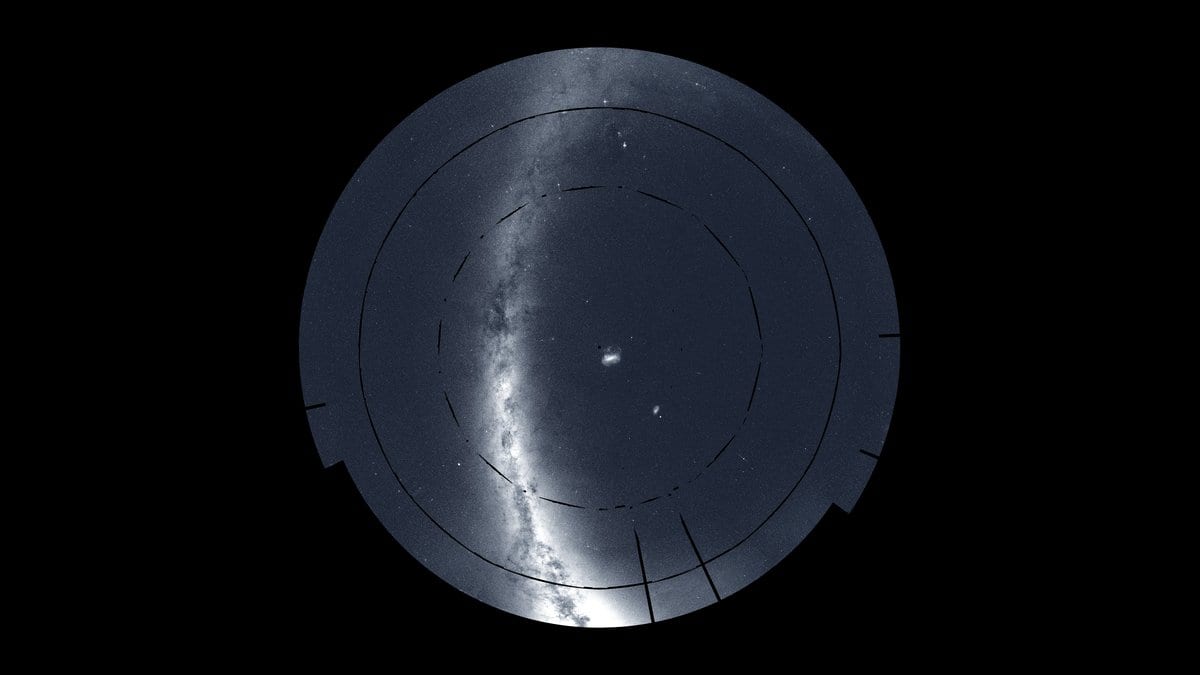
The Milky Way and the two Magellanic Clouds across a circular mosaic of the southern sky built from TESS full-frame images.
The Milky Way and the Magellanic Clouds over the southern sky, stitched from the spacecraft full-frame images. The blind search read frames like these along the plane the planets orbit in."TESS 2022 Sky Views (SVS14265 - TESS SouthernHemisphere 12-2022)" by NASA's Scientific Visualization Studio - Ethan Kruse, Francis Reddy, Scott Wiessinger, via Wikimedia Commons, Public domain

A blind search of eight years of images from NASA's planet-hunting TESS spacecraft has turned up eleven previously uncataloged trans-Neptunian objects, bodies that orbit beyond Neptune. Eight more objects remain candidates. Te Han and four colleagues report the search in a preprint posted Nov. 13, 2026, that has not been through peer review.

In the preprint, the authors say the results show TESS can find bright objects in the outer Solar System and extend how far back their paths can be traced. The same search recovered 314 objects already known beyond Neptune and among the giant planets, and nine of those had been discovered only after TESS photographed them. Among them is 2026 ED138, which appears in TESS images 6.8 years before the Vera C. Rubin Observatory discovered it.
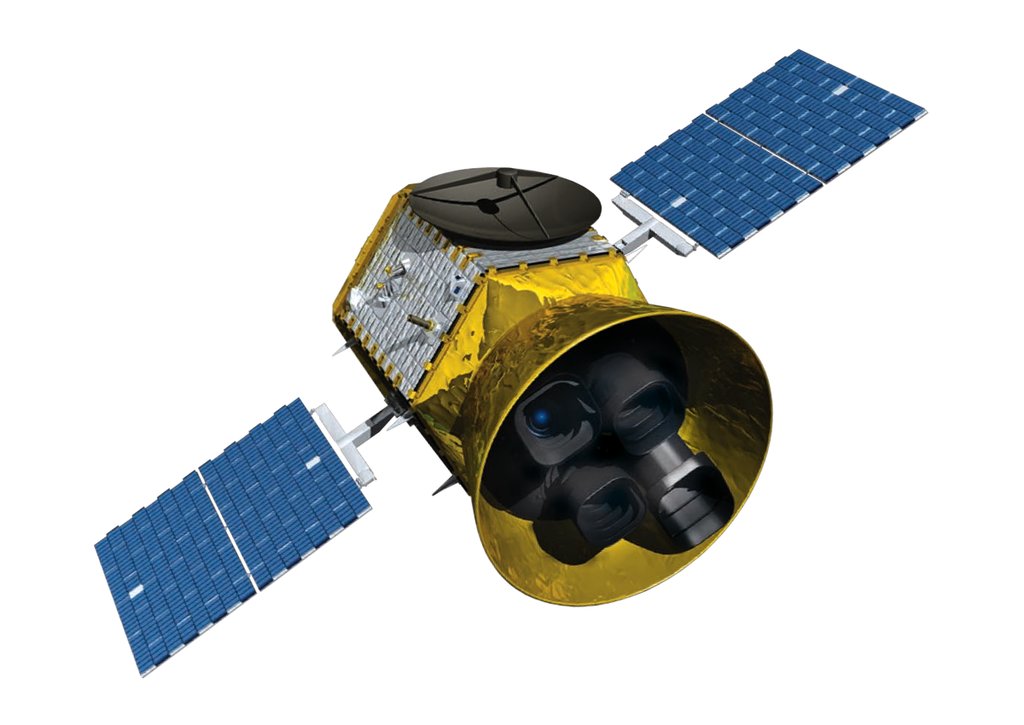
A rendering of the TESS spacecraft, four wide-field cameras clustered in a cylindrical housing between two solar panels.
The spacecraft carries four wide-field cameras that image a tall strip of sky at a time (artist concept). "Transiting Exoplanet Survey Satellite artist concept (transparent background)" by NASA, via Wikimedia Commons, Public domain

The search covered fields of sky near the plane the planets orbit in, using TESS full-frame images, the complete pictures its cameras return. The team modeled and subtracted the light of stars from the Gaia catalog, stacked what was left along curved paths a slow-moving distant object would trace, and matched detections from one observing sector to the next.

Each of the eleven new objects turned up in more than one TESS sector and was independently recovered in archival ground-based images, the authors report. They place the objects 25 to 57 times farther from the Sun than Earth is, with diameters of about 120 to 910 kilometers, a size estimate that rests on an assumed reflectivity rather than a measured one.
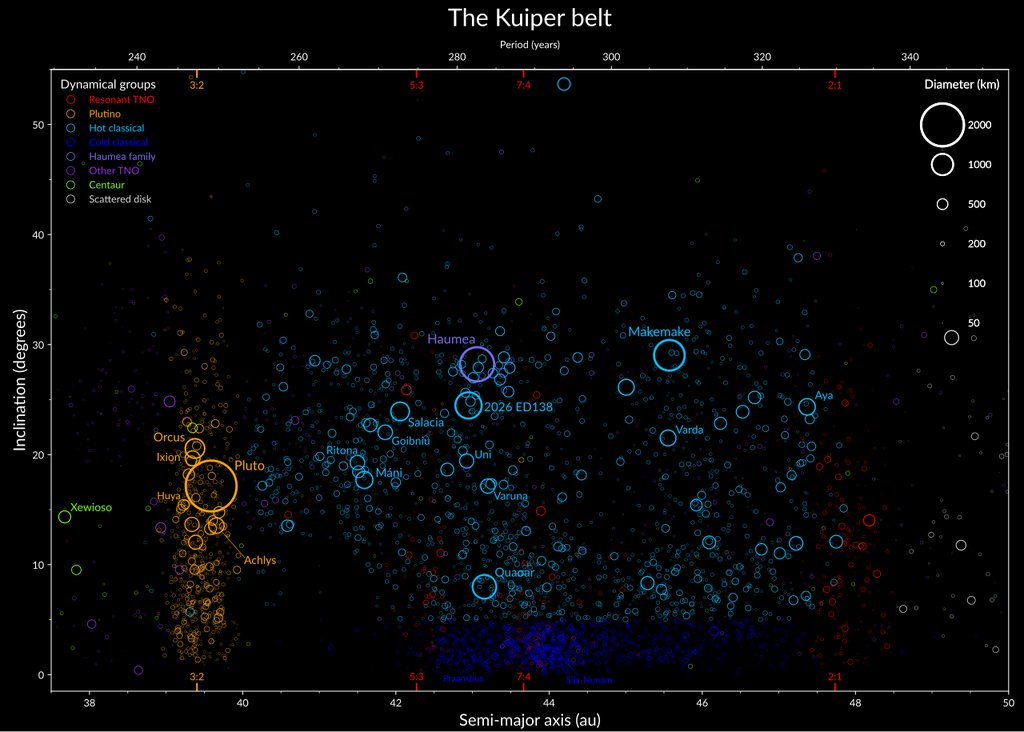
A scatter plot of Kuiper belt objects, orbital inclination in degrees against semi-major axis in astronomical units, with the larger bodies labeled.
Orbital tilt against distance from the Sun in astronomical units, for the known Kuiper belt (illustrative). The labeled 2026 ED138 is the object TESS recorded 6.8 years before Rubin Observatory found it. "Kuiper-belt-inclination" by Thunkii, via Wikimedia Commons, CC BY-SA 4.0

The candidate objects also appeared in more than one sector, but none has a secure independent recovery in the archives the team searched.

Sources

Spot an error?

Spot an error?

Report an error

Spotted a mistake on this page? Tell us what's wrong and our editors will take a look.

What kind of problem?

Only if you'd like us to be able to follow up. We won't use it for anything else.

We correct mistakes openly. Select any text to flag it. Fixes are logged under our Corrections Policy.

Report an error

Reporting on

Eleven New Objects Beyond Neptune Turn up in Old TESS Images

What kind of problem?

Only if you'd like us to be able to follow up. We won't use it for anything else.

We read every report. Corrections are logged publicly.