Two Telescopes Track Down an Asteroid That Hides in the Sun's Glare
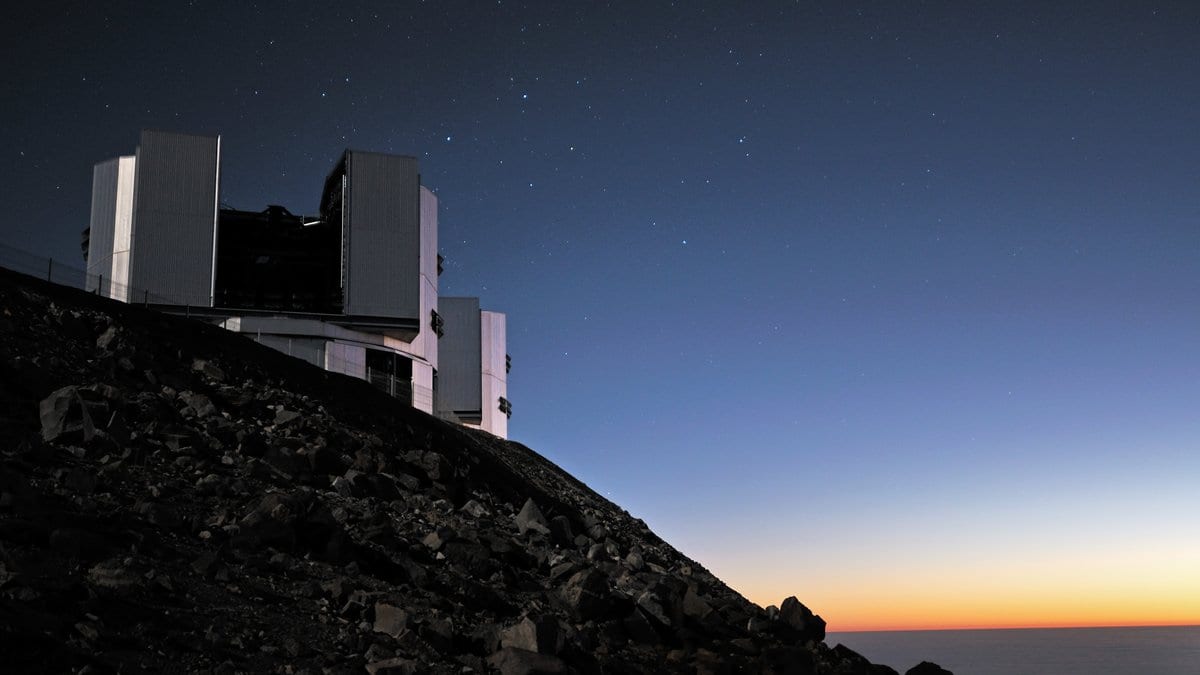
Two of the world's largest telescopes have re-found a small asteroid whose orbit lies entirely inside Earth's and measured the color of its surface, which most closely matches that of the basalt-like V-type asteroids. The authors say that is consistent with a fragment of a larger body that once melted.
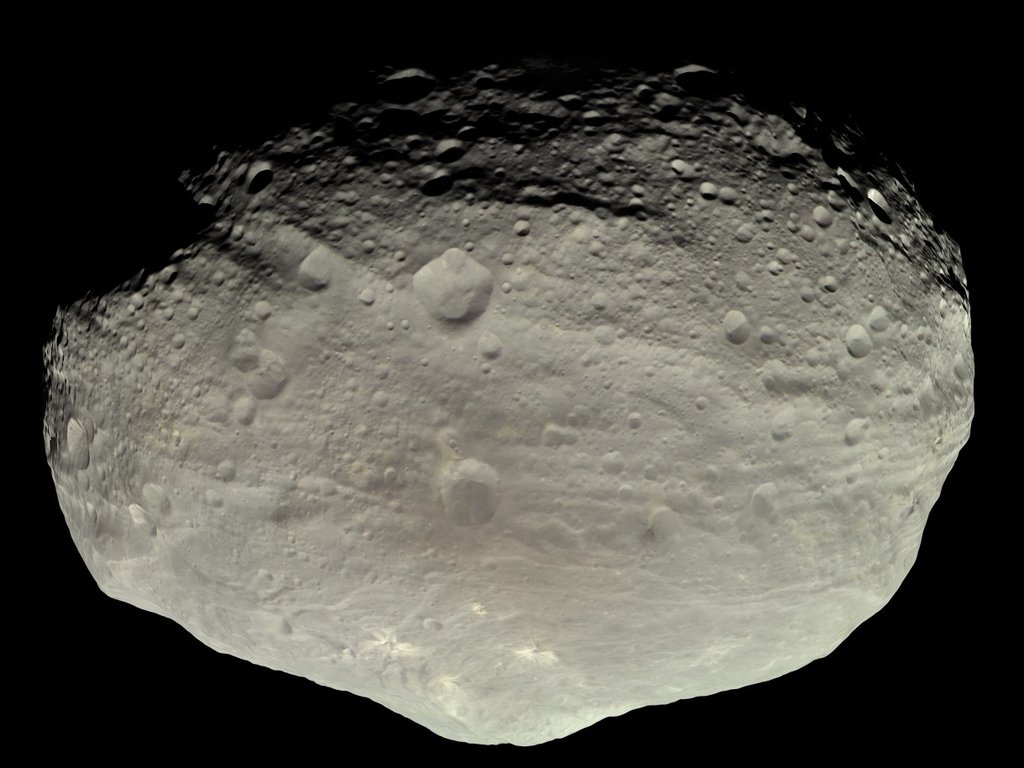
2025 SC79 sits on the boundary between asteroids that stay inside Venus's orbit and those that reach beyond it: the far point of its orbit lies less than a thousandth of the Earth-Sun distance outside Venus's closest approach to the Sun. The authors write that objects near that line can show how asteroids cross between the two groups.
Such asteroids are hard to find. Because they never appear far from the Sun in the sky, they can only be seen low in twilight, where a bright sky and thick air near the horizon cut a survey's sensitivity. A 2026 count cited by the authors lists 37 inside Earth's orbit, and one inside Venus's.
Bryce T. Bolin of Eureka Scientific and colleagues recovered the asteroid with the Keck I telescope in Hawaii on Oct. 7, 2026, and measured its colors with the FORS2 camera on the Very Large Telescope in Chile later in October 2026. Assuming the surface reflects light like others of its class, they put the diameter at 0.379 km. A published model of how asteroids reach the inner solar system gives a combined 95.4% probability that this one escaped from the inner main belt. Their preprint, submitted to Astronomy & Astrophysics, has not been peer-reviewed, and the authors say spectroscopy is needed to confirm the classification.
The team also followed 10,000 slightly different orbits consistent with the data, 5 million years forward and back. Those orbits cross the Venus line in both directions, and in the forward runs 14.56% of them end in a collision with Venus: a statistic about where a cloud of possible orbits finishes over millions of years, not a forecast for 2025 SC79.
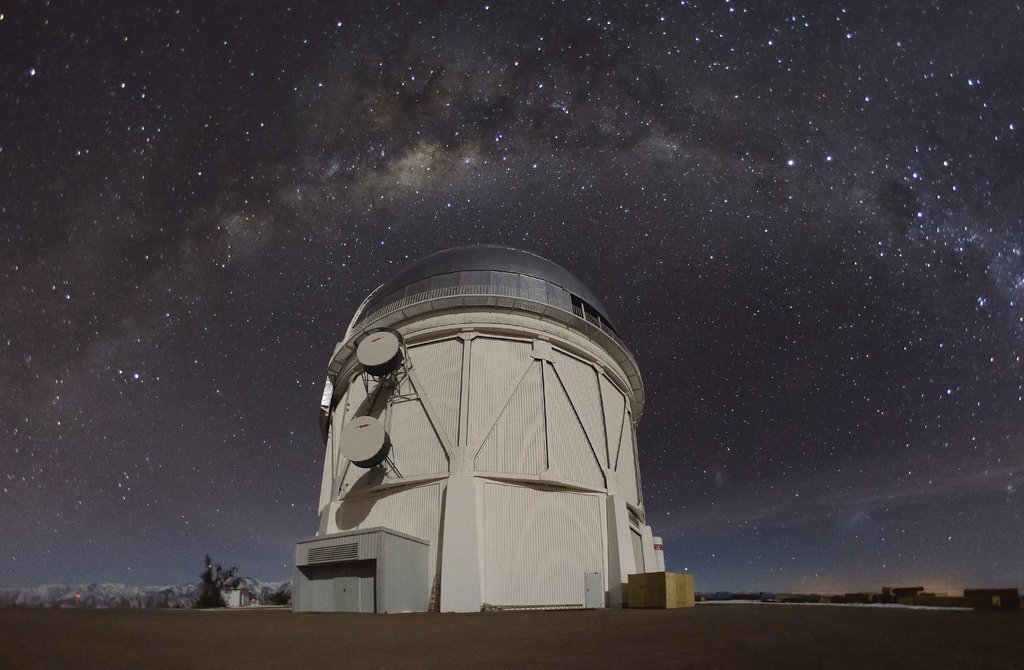
S. S. Sheppard discovered 2025 SC79 on Sept. 27, 2025, with the Dark Energy Camera on the Blanco telescope in Chile.
Sources
- arXivPreprint