Honey Bee Colonies Moved Onto the Tibetan Plateau Lost Their Mites, and Thin Air Is Why
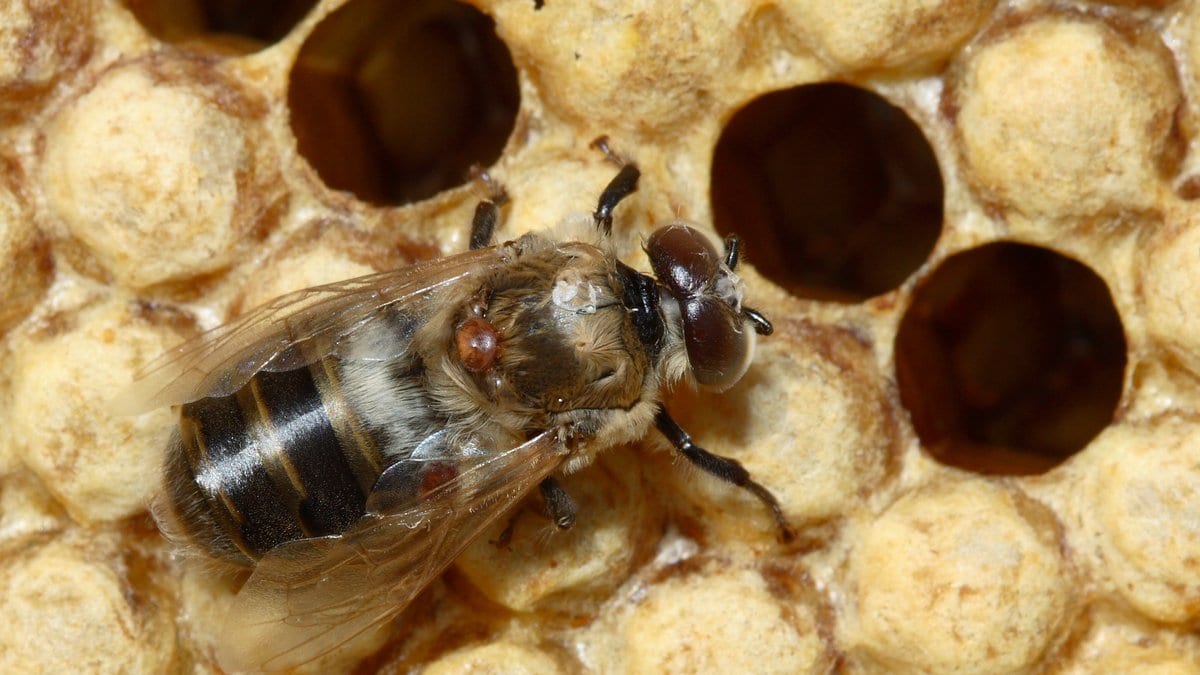
A study published Nov. 19, 2026, in PLOS Biology reports that honey bee colonies trucked from southern China up onto the Tibetan Plateau lost their Varroa mites within a year, and that the thin air is what removed them.
The mite Varroa destructor feeds on bees and their brood and spreads viruses between them, and the paper says beekeepers in China treat their colonies for it up to five times a year. The authors write that a physiological limit of this kind could open the way to mite control that uses no chemicals.
In May 2024, the group split 60 colonies from one apiary in Xishuangbanna, in southern China, and moved them to sites at different altitudes, the highest being Lhasa at 3,637 meters. In the Lhasa group, mite infestation of the worker brood fell from 9.3% to zero over the following year, while infestation rose at the two lowest sites and most of those colonies died. Thirteen of the 15 Lhasa colonies were still alive two years later — no miticide, no care beyond scheduled checks.
To test oxygen on its own, Ruike Wei, Huoqing Zheng and colleagues at Zhejiang University and the Xizang Academy of Agriculture and Animal Husbandry Sciences in Lhasa held the oxygen inside hives near sea level down at the pressure they had measured in Lhasa, and let the bees forage freely. Mother mites in those hives produced an average of 1.7 offspring each, against 3.9 in control hives breathing ordinary air, and almost all of the eggs stopped developing.
The authors argue against two other explanations. Brood-nest temperature and humidity were close to identical at the highest and lowest sites, the worker bees themselves emerged on schedule at both, and the colonies sent to the low sites were trucked the same way while their mites bred normally. Which part of the mite's biology fails at low oxygen remains to be determined, and the paper calls the result the first hypoxia-related limit found on this mite's reproduction.
Beekeeping on the Tibetan Plateau is recent, and colonies there have not been treated for mites since 2006. Reliance on honey bees is rising as other pollinators decline, the authors write.
The group also reports a pilot test of the idea: narrowing the hive entrance at night, so that the bees' own breathing lowers the oxygen inside, partly suppressed mite reproduction.
Sources
- PLOS BiologyPeer-reviewed