The Aphid Survives the Spray, and the Wasp Inside It Pays

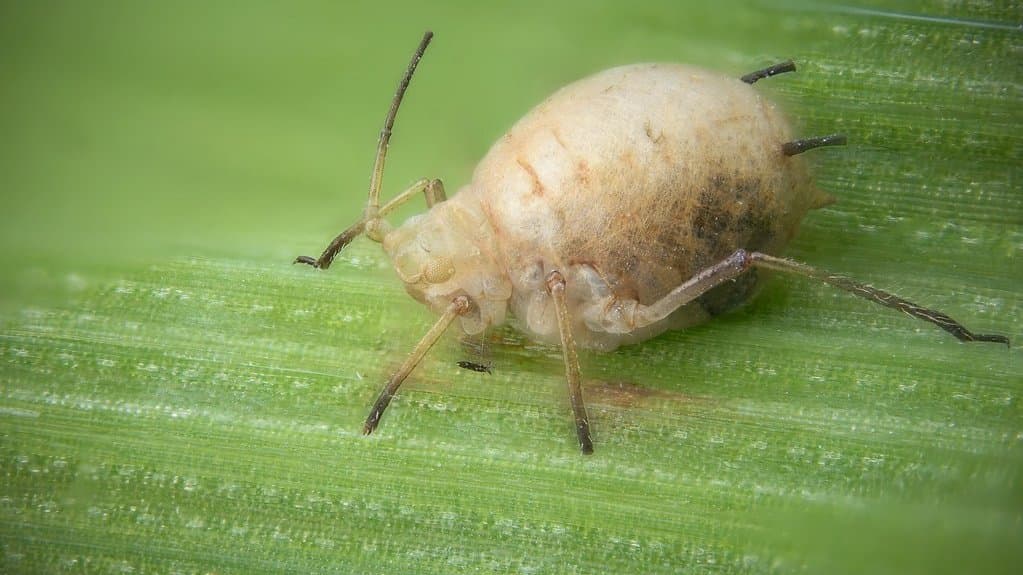
Spray a field of peppers and most of the green peach aphids under the leaves die. A few do not. They carry a small change in the protein the chemical was built to jam, so the dose passes over them. The usual worry about survivors like these is what happens next season: they breed, they pass the change to their offspring, and the spray works a little less well every year. A group of Chinese entomologists has been asking a different question about those survivors. What happened to the poison?
Writing in the Proceedings of the National Academy of Sciences on September 18, a team led from the Institute of Insect Sciences at Zhejiang University reports that the answer is frequently nothing at all. The chemical stays intact in the insect. And when a parasitoid wasp, which breeds inside other insects, lays an egg in one of those survivors, the larva develops in a body that is still loaded with insecticide.
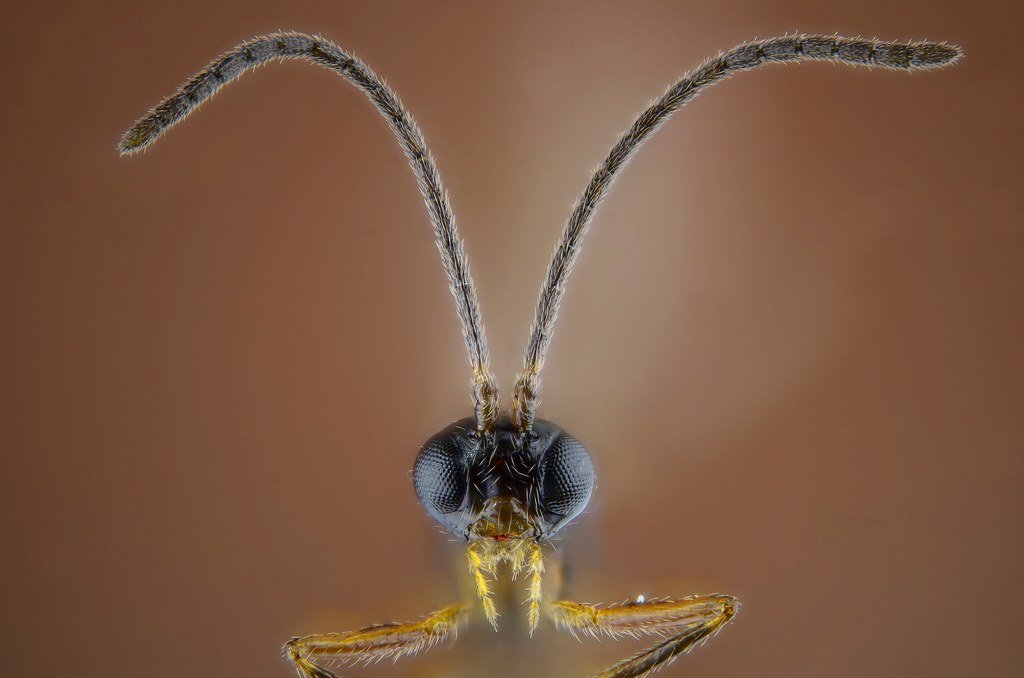
The distinction the paper rests on is between two ways an insect can beat a spray. It can break the chemical down, using enzymes that cut the molecule into something harmless. Or it can change the target: one small alteration to the protein the insecticide has to latch onto, so that the chemical arrives and finds that the lock no longer fits it. The second kind, target-site resistance, is common in the field, and it does nothing at all to the insecticide. The word the authors use is unmetabolized. The pest is unharmed. The dose is still there.
To find out what that means for anything feeding on the pest, the work used green peach aphids (Myzus persicae) resistant to two modern insecticide families, the neonicotinoids and the spinosyns, along with genetically modified fruit flies (Drosophila melanogaster). Resistant hosts that survived a high dose retained substantial residues, and those residues passed into the parasitoids developing inside them. Fewer wasps emerged. The ones that did were smaller and had shorter adult lives. The effect persisted across generations.
That is a statement about how a wasp's young fare inside a resistant aphid, and not about whether wasps go after resistant aphids at all. On that separate question the evidence runs the other way. A 2020 study in PLOS ONE found that insecticide-resistant grain aphids were parasitized at a significantly higher rate than susceptible ones, not a lower one. Resistance does not hide a pest from its natural enemies. What this paper describes is what the enemy's offspring find once they are inside.
The second half of the paper turns to an older chemistry, the cyclodienes and fipronil, and to the reverse question: not what the poison does to the wasp, but what the wasp has already done about the poison. Among parasitoids that attack hosts resistant to those compounds, the same resistance-conferring mutations turn up in a gene called Rdl, short for resistance to dieldrin, arising independently in species only distantly related to one another.
That half is not a 2026 discovery. That matters, because it is the half that sounds most like news. Lei Guo and Jia Huang, two of the paper's authors, posted it as a preprint in August 2022: the resistance mutation in a set of parasitoid wasps, with matching changes at the same site in several of their resistant hosts. It is the established ground the new work is set against rather than a second result confirming it. What is new is the route: unbroken insecticide moving up a food chain inside the body of a pest.
Both findings are set against something that happens with no human involvement at all. Plants defend themselves with toxins. Some insects have evolved not merely to tolerate those toxins but to store them and become dangerous to eat, and the things that eat those insects evolve their own tolerance in turn. A 2019 PNAS study of the western corn rootworm, which takes up maize's defensive chemistry, reported that insect-killing roundworms evolved resistance to those same compounds. Read that way, insecticides have been dropped into a system that was already running this sequence, and have started driving it themselves.
The practical argument is about accounting. Chemical control and biological control tend to be counted separately, in separate budgets and separate research programs, and what the paper adds is a reason to think the first can quietly tax the second. A spray that leaves resistant aphids alive does not only leave the pest standing. It leaves a pest the wasps will still go into, and come out of in worse shape.