Rock Found in China Is Only the Second on Earth Confirmed Older Than 3.9 Billion Years
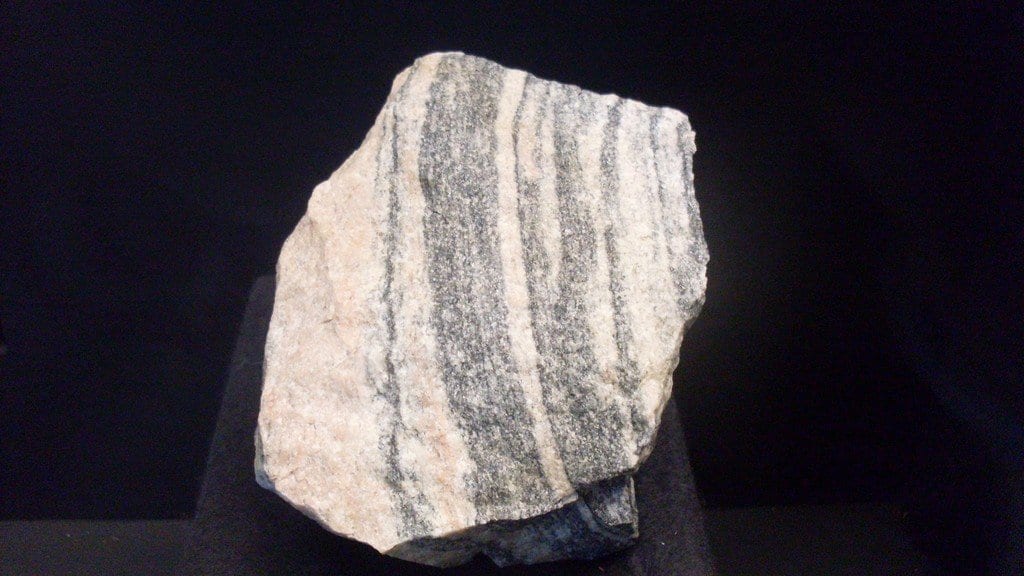
A rock from eastern Hebei province in northern China is 3.95 billion years old, making it only the second place on Earth with rock unambiguously older than 3.9 billion years. Hangqiang Xie, Yusheng Wan and colleagues at the Beijing SHRIMP Center of the Chinese Academy of Geological Sciences report the date in Nature.
Earth melts, buries and remakes its own crust, so very little of its earliest surface is left to find. The authors write that the shortage of such rocks has held back understanding of the planet's early history and keeps alive arguments over when the first continental crust formed and when plate tectonics started. Until this find, the only rocks confirmed to be that old came from the Acasta Gneiss Complex in Canada. The work was published Nov. 11, 2026, in Nature.
The rock is a gneiss, striped and reworked by heat and pressure underground. Its age comes from zircon, a crystal tough enough to outlast almost anything and hold a record of the magma it grew in. The authors report that the grains carry a heavy form of oxygen of the kind left when cold water alters rock near the surface, and that their hafnium points to a source in the mantle already stripped of part of its material during the Hadean, Earth's first eon.
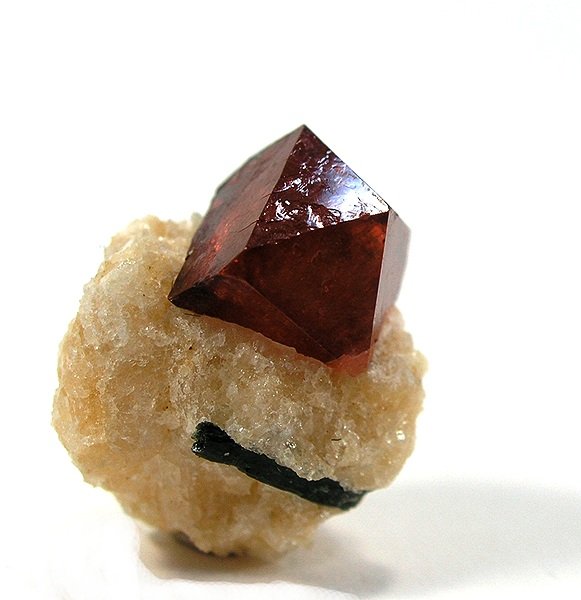
Their modeling puts the parent magma at a small degree of melting of basalt, the dark volcanic rock that floors the oceans, at more than 1.6 gigapascals of pressure and temperatures of 740 °C to 820 °C, cool for that depth. They read that as near-surface rock carried down quickly into the mantle, and propose a short-lived episode of subduction, one slab of crust sliding beneath another, as the likeliest way it got there.
The authors note that rocks of roughly the same age at Acasta have been read as forming at low pressure, whereas this one points to high pressure. The measurements behind the paper sit in supplementary tables deposited in a public Zenodo repository.
Sources
- NaturePeer-reviewed