Deleting One Enzyme Kept a Lung Cancer Drug Working Longer in Mice
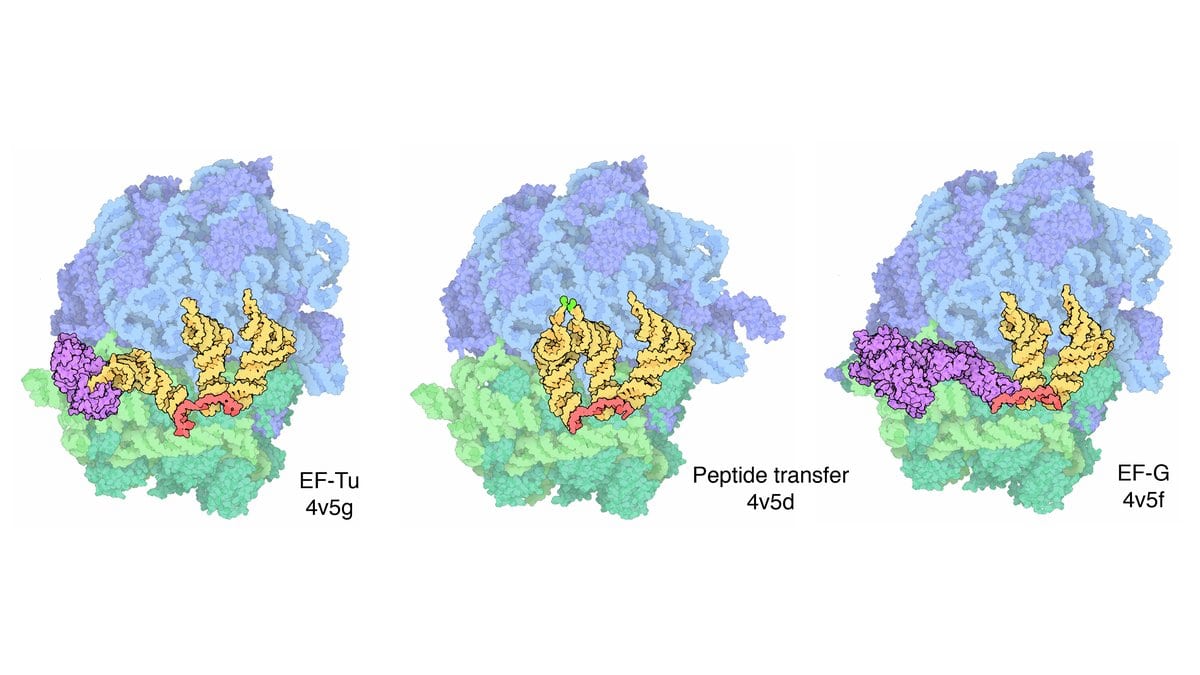
An enzyme that tags the cell's protein-building machinery makes cancer cells faster at reading one set of genetic code words, and the proteins built from those words include KRAS, a common cancer driver. Removing the enzyme slowed lung tumors in mice that had stopped responding to the KRAS drug sotorasib, and the mice lived longer.
The work appears in a paper published Oct. 29, 2026, in Nature Cell Biology by Shuo Liu of Stanford University, Pawel K. Mazur of the University of Texas MD Anderson Cancer Center and colleagues. The authors write that the findings "suggest METTL13 targeting may counteract KRAS-inhibitor resistance."
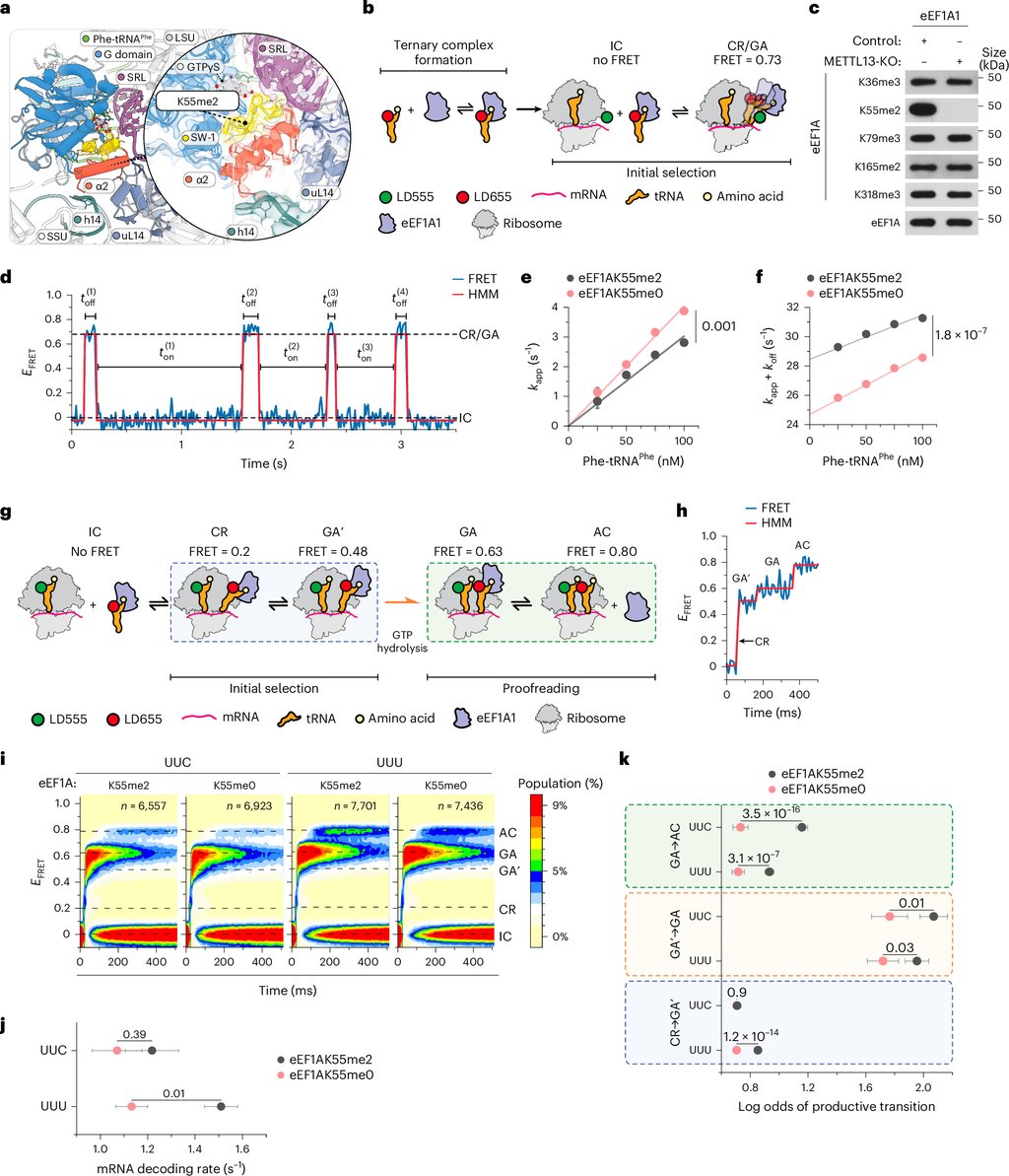
METTL13 places two methyl groups on eEF1A at a single spot, lysine 55. eEF1A hands each new building block to the ribosome. The authors report that the tagged factor decodes certain uncommon codons more efficiently. Codons are the three-letter words of the genetic code, and messages rich in the tag-dependent ones, KRAS among them, were built in larger amounts in cancer cells. Rewriting those messages with synonymous codons that do not depend on the tag reversed the effect.
The authors report that in mice whose lung tumors were driven by the KRAS G12C mutation, sotorasib alone raised median survival after treatment began from 25 to 57 days. Deleting METTL13 two weeks into treatment, as resistance began to emerge, raised it to 96 days. The enzyme was removed genetically in these experiments, not blocked with a drug. METTL13 loss also slowed sotorasib-resistant tumors grown in mice from patient tumor samples.
The authors also report that among 68 patients with lung adenocarcinoma treated with a KRAS G12C inhibitor in the KRYSTAL-1 trial, higher inferred METTL13 activity in biopsies taken before treatment was associated with shorter progression-free survival. That is an association in an existing trial cohort, not a test of removing the enzyme in people.
The tag itself is not new: the paper states the same group previously showed METTL13 promotes protein synthesis and tumor growth. What is new is the selectivity for particular codons.
Sources
- Nature Cell BiologyPeer-reviewed

Medical Disclaimer: This content is provided for general informational and educational purposes only. It is not medical advice and should not be used as a substitute for professional medical advice, diagnosis, or treatment. Always consult a qualified healthcare professional regarding any medical condition, concern, symptom, or treatment decision.