Arctic and Tibetan Glacier Microbes Live on Light in Two Different Ways
Researchers at Lanzhou University and the Chinese Academy of Sciences compared the microbial life in 85 samples of glacier-surface dust and found two different ways of making a living from light: one on Arctic ice, the other on the glaciers of the Tibetan Plateau.
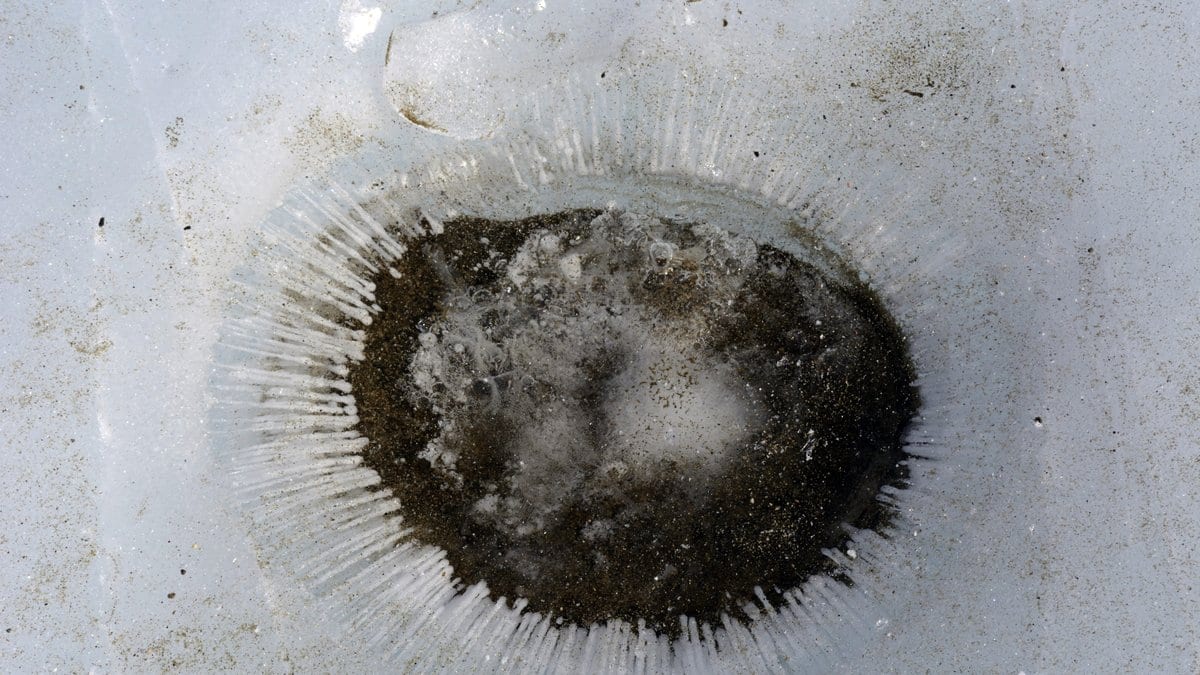
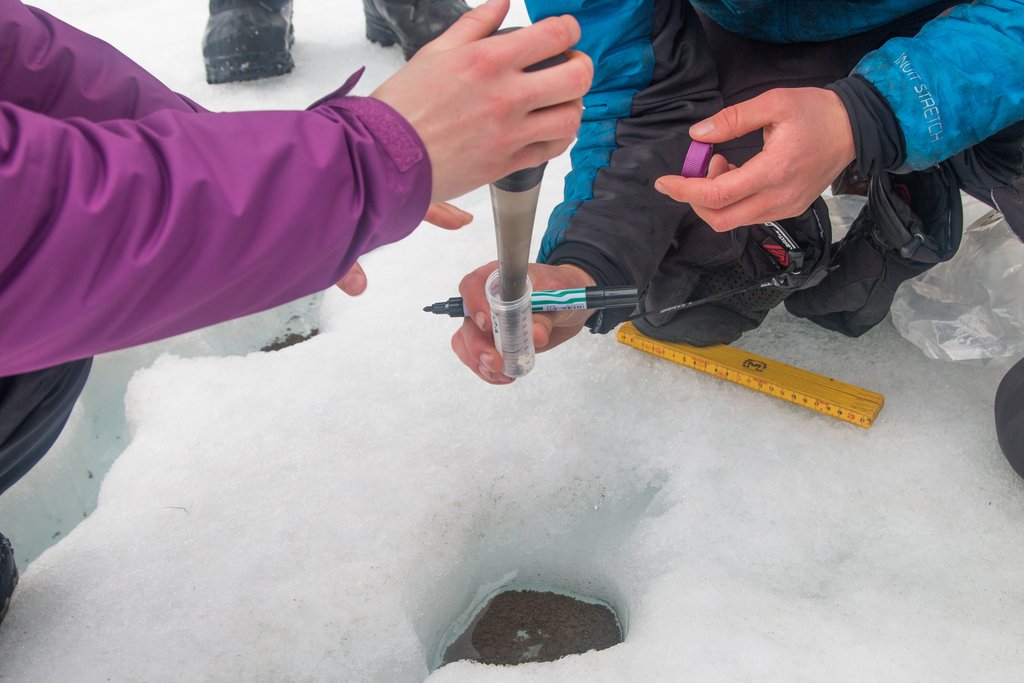
That dust is cryoconite: dark grit, blown onto the ice and gathered into shallow hollows, that holds a living microbial community. Writing in Communications Earth & Environment on Nov. 2, 2026, the authors note it has not been clear how a glacier's long-term light conditions relate to the way its surface microbes get their energy, or to how their community fits together.
The Arctic and the Tibetan Plateau gave the team two settings with contrasting long-term exposure to the sun. Each of the 85 samples is a metagenome, the pooled DNA of one community; 47 came from Arctic glaciers and 38 from glaciers on the Tibetan Plateau.
The authors report that genes for rhodopsin-based light harvesting were better represented in the Arctic communities. Rhodopsins are light-driven energy pumps: a cell carrying one tops up its energy from sunlight while still getting its carbon from its surroundings, rather than making it from scratch as photosynthesis does. In the Tibetan Plateau communities, the potential for photosynthesis was higher.
The two sets of communities were also built differently. The Tibetan Plateau samples had the more complex interaction networks, with light-using organisms sitting in the best-connected positions, while the Arctic networks were simpler and centered on rhodopsin-carrying microbes that still get their carbon by consuming it.
The team also reports that the Tibetan Plateau communities showed the higher potential for building biomass. Its own reading of the comparison is that the amount of solar radiation a glacier surface receives is associated with one strategy or the other, with consequences for how the community is organized and for what the ecosystem as a whole can process.
The study was funded by the National Natural Science Foundation of China and other Chinese research programs. The paper is open access.
Sources
- Communications Earth & EnvironmentPeer-reviewed