STAR Reports Strong Evidence That Oxygen-Oxygen Collisions Quench Jets

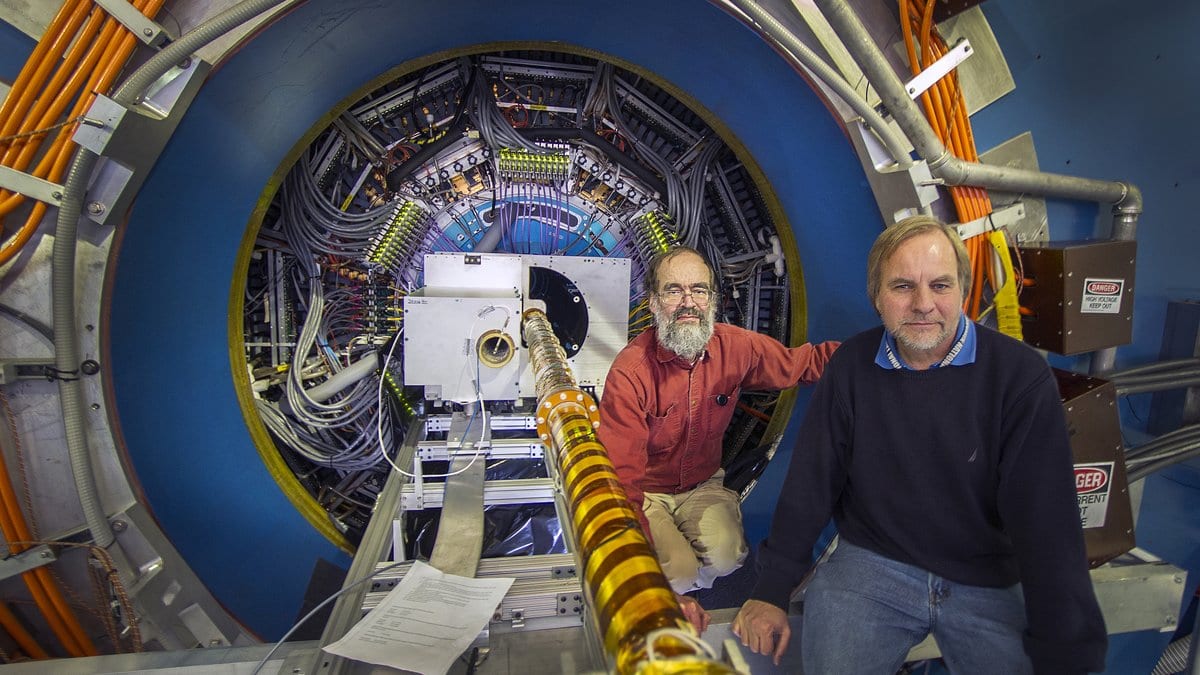
Two sprays of particles leave a nuclear collision back to back, and they almost never have the same amount of matter in front of them. One has the edge of the fireball close by; the other has to cross the whole thing, and if what is in there is dense enough to push back, that half of the pair should arrive thinner than its twin. Brookhaven National Laboratory says physicists at its Relativistic Heavy Ion Collider on Long Island have read that lopsidedness for years as one of the surest signs that collisions of gold nuclei make a quark-gluon plasma (QGP), a soup in which quarks and gluons are no longer locked inside protons and neutrons.
How little matter it takes to do that is the question those physicists have been circling. On Oct. 20, 2026, the STAR collaboration reported an answer in Physical Review Letters for two oxygen nuclei, eight protons and eight neutrons apiece, collided at 200 GeV per nucleon pair. In the busiest of those collisions, the ones that throw out the most particles, about 20% fewer particles and jets came back on the recoil side. The count is per high-momentum particle the experiment triggered on, and the comparison is against the quietest oxygen-oxygen collisions at the same energy.
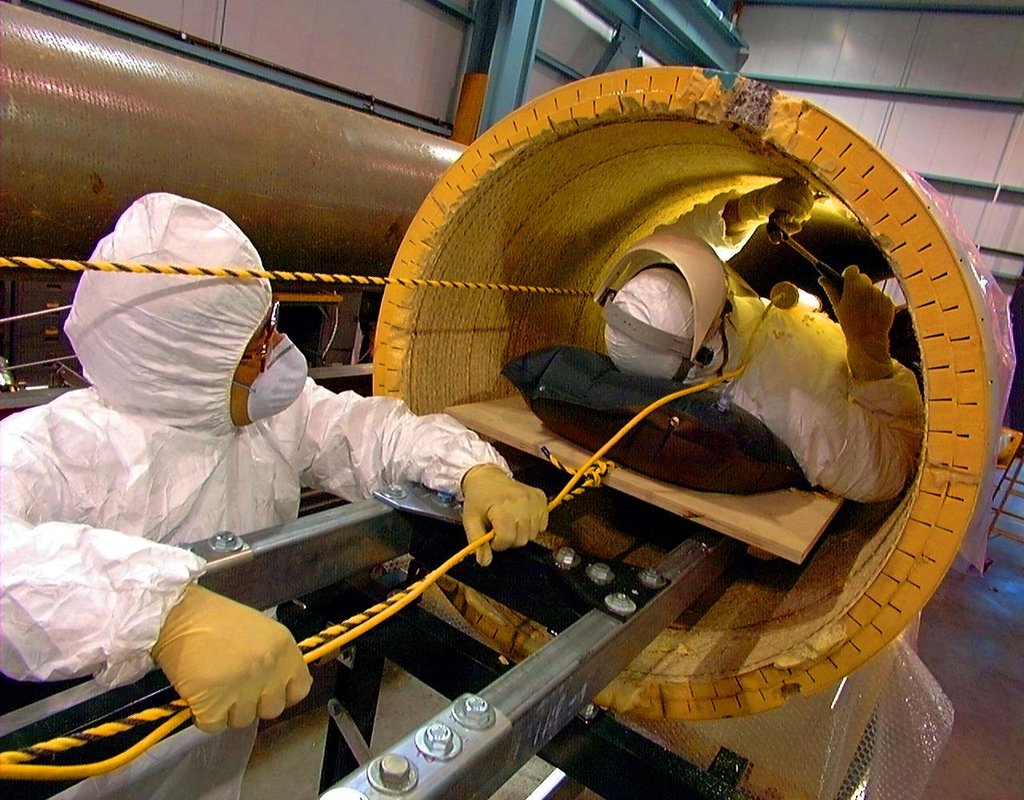
That, the collaboration writes, is strong evidence for jet quenching, meaning jets sapped on their way out. Li Yi, the Shandong University physicist who oversaw the analysis, offers a mundane image for it: "You can think of it like shooting a bullet through, say, water."
Oxygen matters here partly because nothing smaller has been tried in a matched pair: among the symmetric pairs of nuclei STAR has collided, oxygen is the smallest. It also matters because of what came before it. Brookhaven's account traces signs of coordinated motion, the collective flow of the plasma, through collisions of protons, deuterons and helium-3 nuclei into gold or lead, and the same patterns turned up at the LHC in proton-proton collisions. Whether flow on its own is enough to say a plasma formed has stayed unsettled. "We haven't seen any unambiguous signal, so it's still kind of under debate in these small systems," said Rongrong Ma, a STAR physicist at Brookhaven. Quenching is the other signature, and Ma said the collaboration wanted a sharper test: "We want to search for the smallest system where we can still see an unambiguous jet-quenching signal."
Everything here comes down to counting
The method is direct. The detector picks events in which one charged particle came out with high momentum, then counts what recoiled against it on the far side: lower-momentum charged particles, or whole jets. "Our measurements are essentially counting experiments," said Sijie Zhang, who did the work for her master's thesis under Yi and Maowu Nie at Shandong University and is now a doctoral student at Yale.
Then comes the choice that gives the result its shape. Rather than measure oxygen against a run of proton-proton collisions, STAR sorted its own oxygen collisions by how much came out of them and compared the two ends. Head-on collisions make the most particles and so, Nie said, have the best chance of making a plasma; he set those against "collisions where the two oxygen nuclei barely strike each other, which aren't expected to generate a QGP." The busy end came up about 20% short of the quiet end, a result the paper reports "with an absence of suppression excluded with high significance."
Expressed as momentum instead of as a count, the same suppression comes to a shift of 0.70 ± 0.15 (stat.) ± 0.10 (syst.) GeV/c. That figure applies only to the widest jets in the analysis, those built with a cone of radius 0.5. The paper's own word for what that shift quantifies is redistribution: "their energy redistribution due to final-state interactions."
Strong evidence is a smaller claim than a discovery
The collaboration's closing sentence stops where its evidence stops. The measurements "provide strong evidence for jet quenching" in these collisions, the paper says, "offering new insight into quark-gluon plasma formation in small collision systems." Nowhere does it report that a plasma was observed, created or discovered in oxygen-oxygen collisions.
Brookhaven's announcement of the same result reaches further. The laboratory presents the 20% suppression as a clear sign that these collisions are making a quark-gluon plasma, and says the analysis sets a new lower boundary for the conditions capable of producing the primordial plasma in a system this small. Those are the lab's characterizations, not the paper's.
Comparing oxygen with oxygen buys STAR something real: it needs no proton-proton baseline, so nothing has to be corrected for the plain effect of having a nucleus in the way rather than a single proton. What it gives up is an absolute number. A ratio of busy collisions to quiet ones cannot say how much momentum a jet surrenders in total. And the quiet end anchors the comparison because it is not expected to quench, in Nie's words, rather than because anything here shows that it does not.
The LHC got there first, at far higher energy
The LHC collided oxygen for the first time in 2025, and two of its collaborations reached the suppression before STAR. CMS published its measurement in Physical Review Letters: charged particles in oxygen-oxygen collisions at 5.36 TeV, with a nuclear modification factor reaching a minimum of 0.69 ± 0.04 near 6 GeV. That factor is the ratio of what comes out to what proton-proton data predict, and CMS reports its data agreeing better with models that include parton energy loss than with models without it. It is a different quantity from STAR's per-trigger count, taken at a different machine, and the two numbers are not comparable.
ALICE, in a preprint submitted to the same journal, took a different route. It measured proton-oxygen collisions as well and found their ratio compatible with one. Cold nuclear matter effects, the ordinary consequences of a nucleus being there, cannot by themselves account for the oxygen-oxygen suppression, the collaboration concluded. That is the correction STAR's busy-against-quiet comparison never has to make.
What RHIC adds is the energy. Higher-energy collisions should make a hotter, denser plasma and a bigger signal, Yi said: "That means the jet quenching signal, if it's there, should be bigger at LHC compared to RHIC." Turning the energy down goes the other way, toward the point where the signature should fail, and Yi says the useful information is in finding "where these signatures turn off."
The data are not fresh: STAR recorded them in 2021. RHIC itself has stopped colliding anything. Its final run ended with oxygen-oxygen collisions at STAR and at sPHENIX, the collider's newest detector, on Feb. 6, 2026, and Brookhaven says more oxygen results are to come from both.