X-Ray Scan Reveals Hidden Structure in a Superconductor Studied for Forty Years
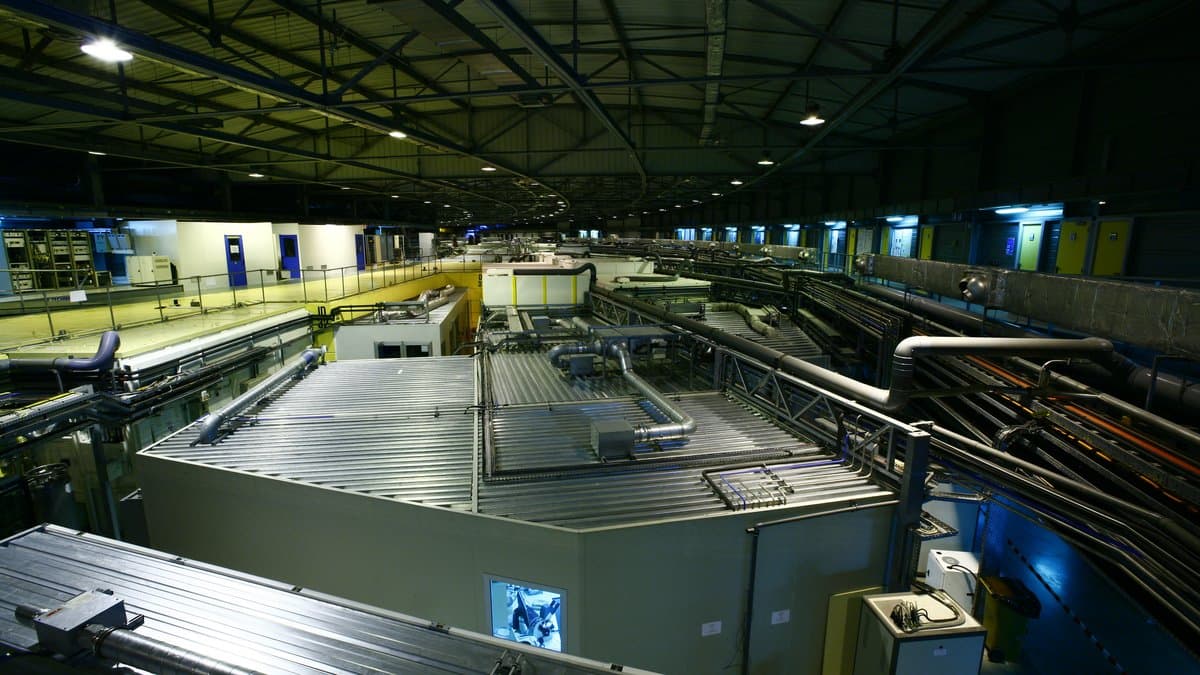
Physicists at the University of Warwick have mapped the internal structure of a widely studied cuprate superconductor and found it is far from the uniform crystal the field has assumed for roughly four decades. Their results, published Sept. 17 in Physical Review Letters, suggest that earlier experiments on this compound may need reinterpretation.
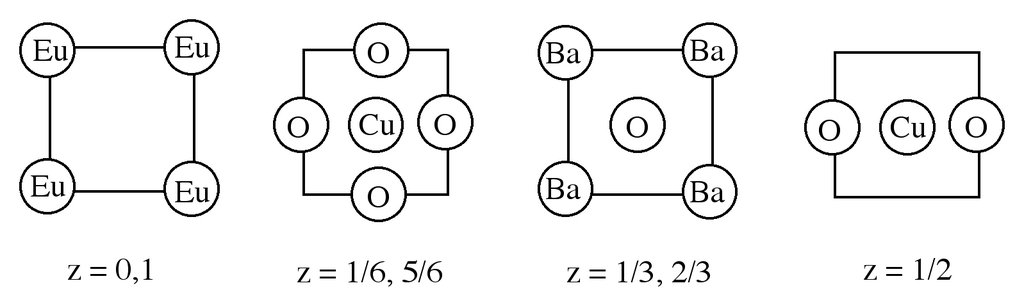
Evie Ladbrook, Jon P. Wright of the European Synchrotron Radiation Facility, and senior author Mark S. Senn used scanning three-dimensional X-ray diffraction, a synchrotron technique that builds a 3D map of how X-rays scatter from different grain orientations inside a bulk sample, to image the crystal structure of La1.675Eu0.2Sr0.125CuO4, a 1/8-doped cuprate in the so-called 214 family that sits at the center of high-temperature superconductivity research. The paper says the class had long been treated as uniform despite known electronic complexity.
What the scan showed was different. The paper reports "remarkably broad tetragonallike domain wall regions within the nominally orthorhombic crystal structure." When the team cooled the sample to 100 K, a second feature appeared: "a fine microstructure of orthorhombiclike stripes embedded within the tetragonal matrix." Both are structural heterogeneities, regions where the crystal's symmetry differs from the surrounding material, that bulk measurements had not previously resolved.
The authors state this "has significant consequences for interpreting the interplay between structural and electronic heterogeneity in this class of materials." Decades of transport, magnetic and spectroscopic measurements assumed a structurally homogeneous background; the newly mapped domain walls and stripes would alter that background in ways that have not been accounted for.
The paper also argues the approach generalizes: scanning 3DXRD, typically used in materials science for metals, "establishes" a path toward mapping microstructure in other complex oxides where similar phase-transition physics is active. The work was carried out at the European Synchrotron Radiation Facility in Grenoble. A preprint version appeared on arXiv in November 2025; the peer-reviewed text is the version of record.
Sources
- Physical Review LettersPeer-reviewed