The Mekong's Backward Flow Into Tonle Sap Now Lasts 28 Fewer Days

Dams and sand mining have together shortened the season in which the Mekong River flows backward into Cambodia's Tonle Sap Lake by about 28 days, according to a study published Nov. 5, 2026, in Hydrology and Earth System Sciences.
That annual reversal is what fills the lake. The study describes the backward flow from the Mekong as the largest single source of Tonle Sap's yearly inflow, swelling the lake by up to sixfold at the height of the monsoon and carrying in sediment and nutrients. Citing earlier work, the study says that exchange sustains one of the world's most productive freshwater fisheries.
Khosro Morovati and Fuqiang Tian of Tsinghua University, with Hongling Zhao of Northeast Agricultural University, worked from nearly half a century of daily and sub-daily gauge records at eight stations along the Mekong mainstream. The river now has to run much harder before the reversal begins. The median flow at onset rose from about 3,200 cubic meters per second before the dams to about 4,300 under post-2010 flows, and to about 7,200 once the lowering of the riverbed by sand mining is added.
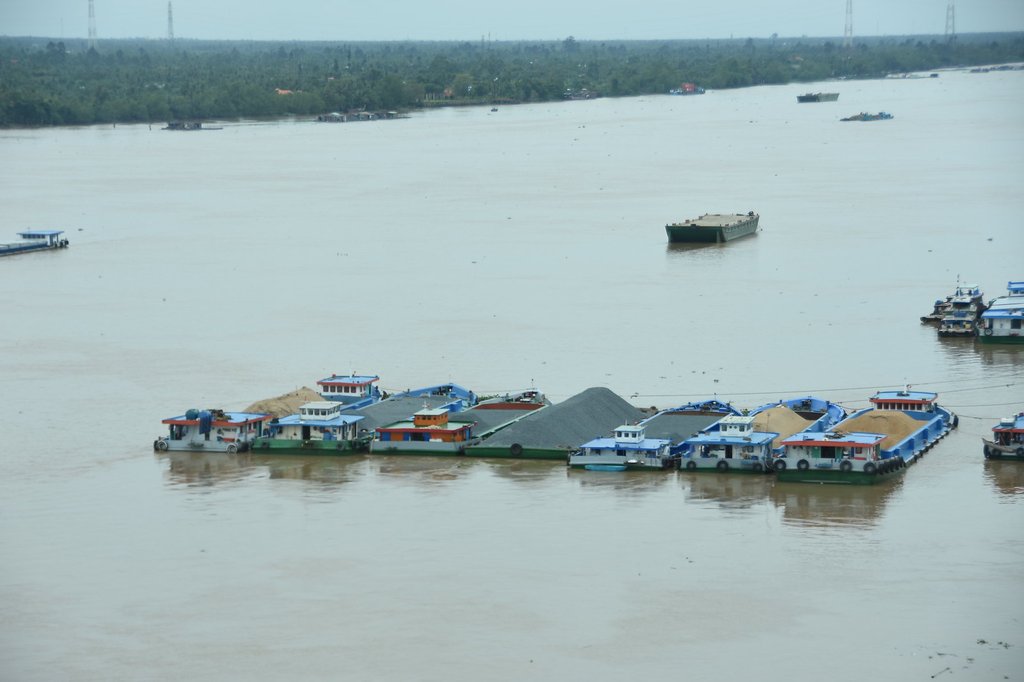
The authors say the middle figure is not dam operation alone: those recent flows carry dam releases, climate variability and other basin-wide change together, so the comparison separates the changed flow pattern rather than the reservoirs themselves. The bed lowering in their model is set from reconstructed bed levels year by year rather than simulated as it happens, which they say leaves the size of the mining effect loosely constrained.
The authors conclude that sustaining the yearly exchange between the Mekong and Tonle Sap will require basin-wide monitoring, open data sharing and coordinated management across the countries that share the river, directed at the timing and variability of flows rather than volume alone.
Sources
- Hydrology and Earth System SciencesPeer-reviewed