A Gene on the X Chromosome Offers a Clue to Autism's Sex Gap
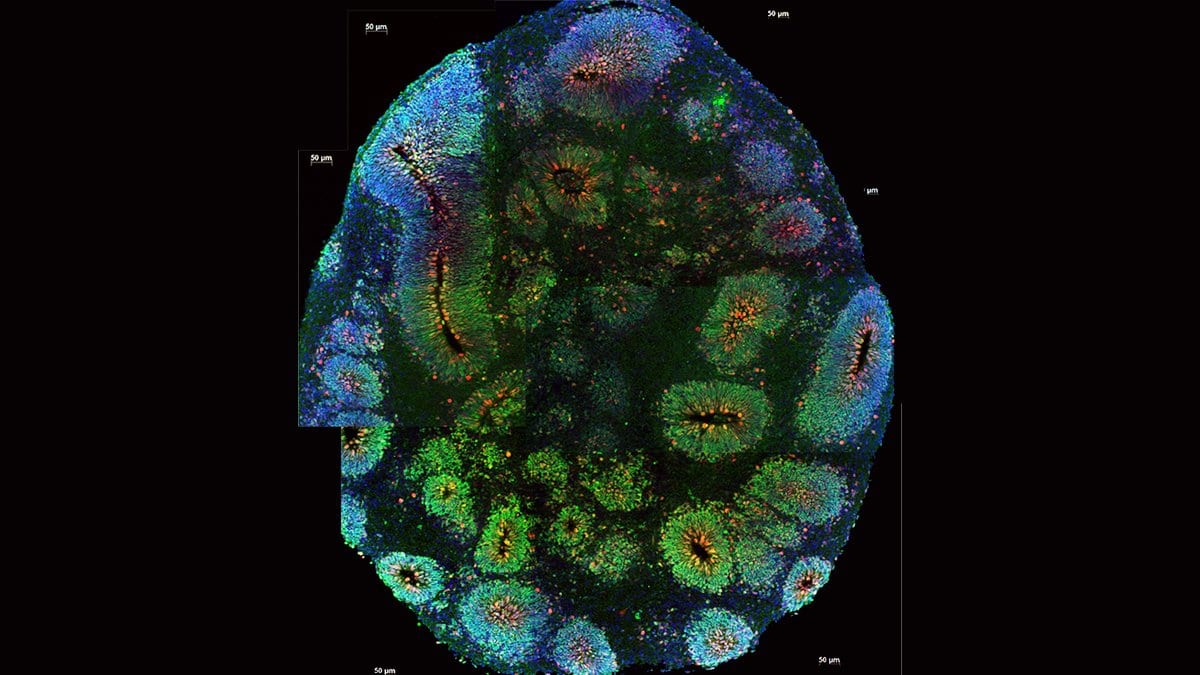
A team at Boston Children's Hospital and Harvard Medical School reports that switching off any one of 18 autism-linked genes in human cells that give rise to neurons produced the same broad shift in gene activity, including the widespread shutting down of other autism genes. The paper was published Nov. 4, 2026, in Nature.
Hundreds of genes have been tied to autism, and the paper frames its aim as working out how damage to genes with such different jobs ends up producing the same features. Earlier studies it cites report that autism is three to four times more common in males than in females, and that autistic females carry more risk variants on average; the biological basis of that pattern, the authors write, has remained unknown.
The genes were switched off one at a time in neural progenitor cells, immature cells that divide and later become neurons, grown from a single male stem cell line. Gene activity was then read 24 hours later. The team then built a map of which genes control which from those measurements, and found a small set of regulators at its center, among them the well-studied autism gene CHD8 and a candidate called REST.
Genes that were consistently turned down and are known to be sensitive to dosage were nominated as candidates: 397 of them, 113 already in the Simons Foundation's autism gene database.
The sex-difference proposal rests on ZFX, a gene on the X chromosome whose protein switches other genes on. Unlike most genes there, it is read from both copies in females. In the reconstructed network it came out as an activator of many autism genes. The authors write: "we propose that the higher ZFX expression level observed in the female brain can buffer damaging mutations in diverse ASD genes, contributing to the female protective effect." That is their reading of cell measurements; the study involved no patients, no animals and no measure of behavior.
ZFX has come up in autism genetics before: the paper cites a recent report linking harmful variants in it to autism. It is open access.
Sources
- NaturePeer-reviewed