Solar Power Costs Four Times More in Some West African Districts Than in Others, Study Finds
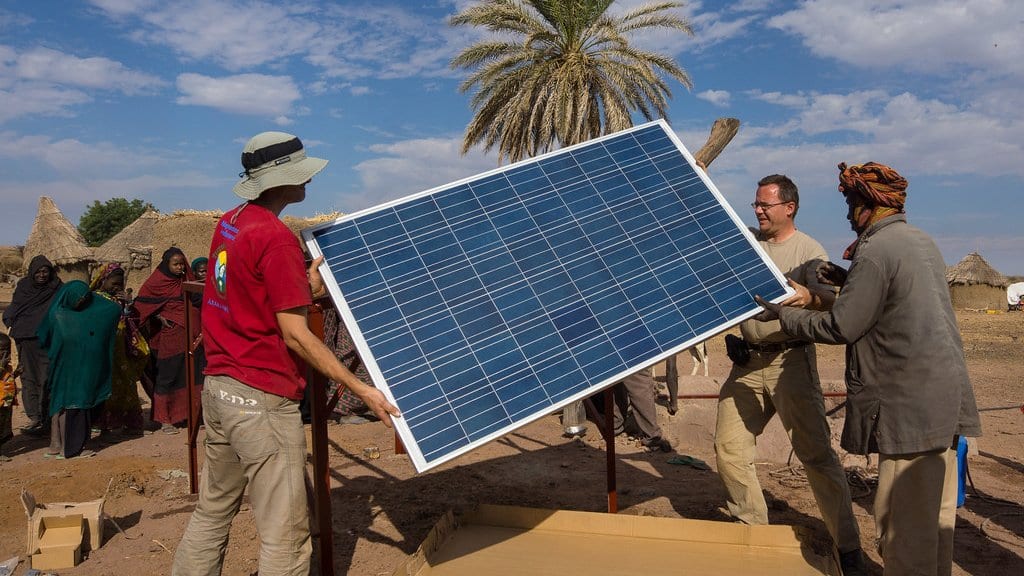
Baseline solar electricity costs range from $0.100 to $0.409 per kilowatt-hour across 184 districts of the West African Power Pool, a University of Groningen-led team reports in a modeling study published Aug. 29 in Communications Earth & Environment. That is a spread of about four to one between the cheapest and most expensive districts modeled.
The team, led by Xiaojing Lin and Xin Sun, evaluated utility-scale solar and off-grid solar paired with battery and hydrogen storage under 13 climate scenarios. They used what the paper calls a cost-disaggregated framework, which splits a project's costs by component and location. The figures are modeled projections, not prices recorded at built plants.
Uncertainty in the solar resource itself, meaning how much sunlight a scenario delivers, falls unevenly across the modeled regions. The authors report Liberia and Sierra Leone as the most vulnerable to it, while Senegal and The Gambia "show greater investment resilience."
Optimized storage mixes differ by district. Some favor battery-intensive systems and others larger hydrogen capacity, reflecting trade-offs among system cost, supply adequacy and renewable-energy utilization, the authors write. Set against solar-only systems, the selected configurations reduce the loss-of-power-supply probability, the chance that demand goes unmet, in all 184 districts. They also reduce the potential-energy-waste probability in 74% of them.
The authors say the results "support climate-aware electrification planning in data-scarce regions."
Sources
- Communications Earth & EnvironmentPeer-reviewed