Heat Risk Is Rising Nearly Five Times Faster in Global South Cities
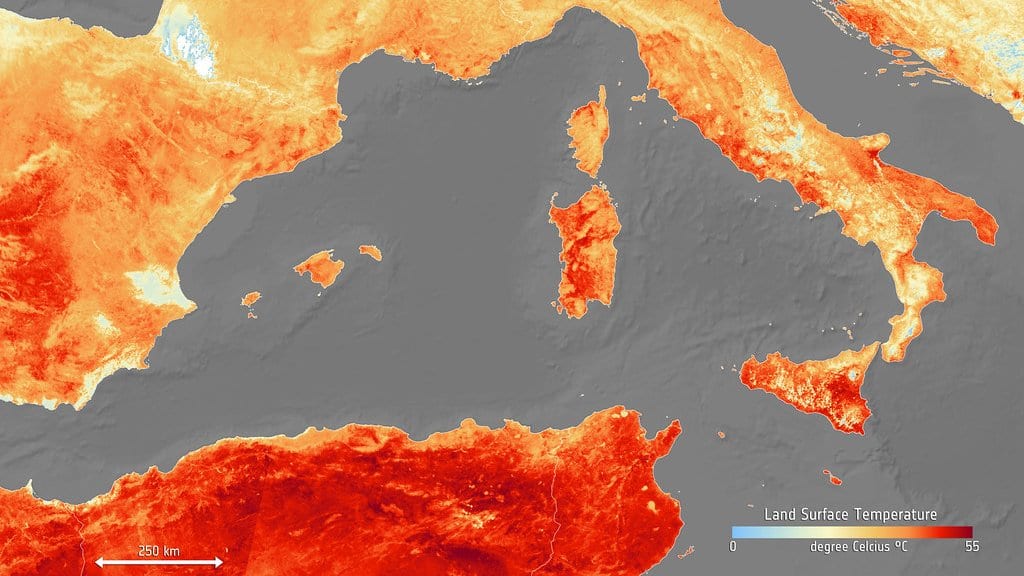
An assessment of 1,029 cities published Oct. 11, 2026, in Communications Earth & Environment reports that urban heat risk rose worldwide between 2000 and 2019, with the upward trend in the Global South nearly five times that in the Global North.
Most global assessments of heat risk assume that social vulnerability, meaning how well a population is placed to cope with heat, is the same everywhere, because data at the city scale is scarce. The paper replaces that assumption with an index built city by city, and reports that the even-spread version understates the gap in long-term heat risk between the Global South and the Global North by nearly 65%.
Within each region, the pattern differs. Unevenness in heat risk from city to city is larger in the Global North, and the even-spread assumption understates it by nearly 15%. That unevenness is measured with the Gini index, a standard yardstick for how unequally something is spread.
The work was led by Xuewen Lei of the Aerospace Information Research Institute at the Chinese Academy of Sciences in Beijing, with Chuanglin Fang of the academy's Institute of Geographic Sciences and Natural Resources Research and colleagues. It was funded by the National Natural Science Foundation of China. The study quantifies systematic bias in existing global heat-risk assessments and provides a foundation for advancing climate justice.
The paper is open access. The version posted is the accepted manuscript, which will be replaced by the final version of record.
Sources
- Communications Earth & EnvironmentPeer-reviewed