Warm Air, Not Sunshine, Drove Most of a Tibetan Glacier’s Extra Melt in 2022
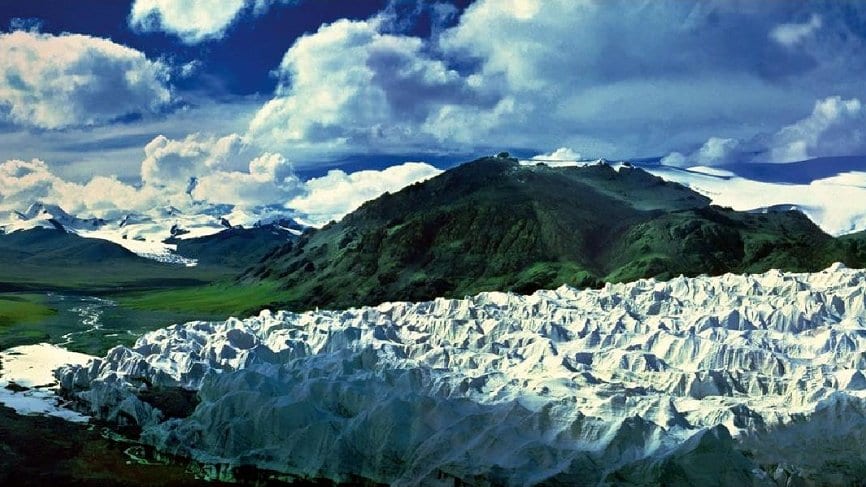
A glacier in the Geladandong mountains of the central Tibetan Plateau shed an extra 317.8 millimeters of water equivalent (the lost ice written as a depth of water) during the heat waves of summer 2022. The figure comes from a study of Sangqu Glacier published Nov. 11, 2026, in Hydrology and Earth System Sciences.
Geladandong is a headwater region of the Yangtze, China's longest river, and one of the source areas feeding Siling Co, Tibet's largest lake. Fei Zhu of Tongji University and colleagues write that the glacier's energy and mass budget there, and its link to that summer's melt, had not been quantified in enough detail. A melt year like this thins a glacier faster and temporarily swells the runoff below it.
Warm air, not sunshine, supplied most of the extra energy. The study puts the transfer of heat from the air into the ice at 60.3% of the extra melt energy across its three heat-wave windows in June, July and August 2022, ahead of heat radiated down by the atmosphere and extra sunlight absorbed by a darker ice surface.
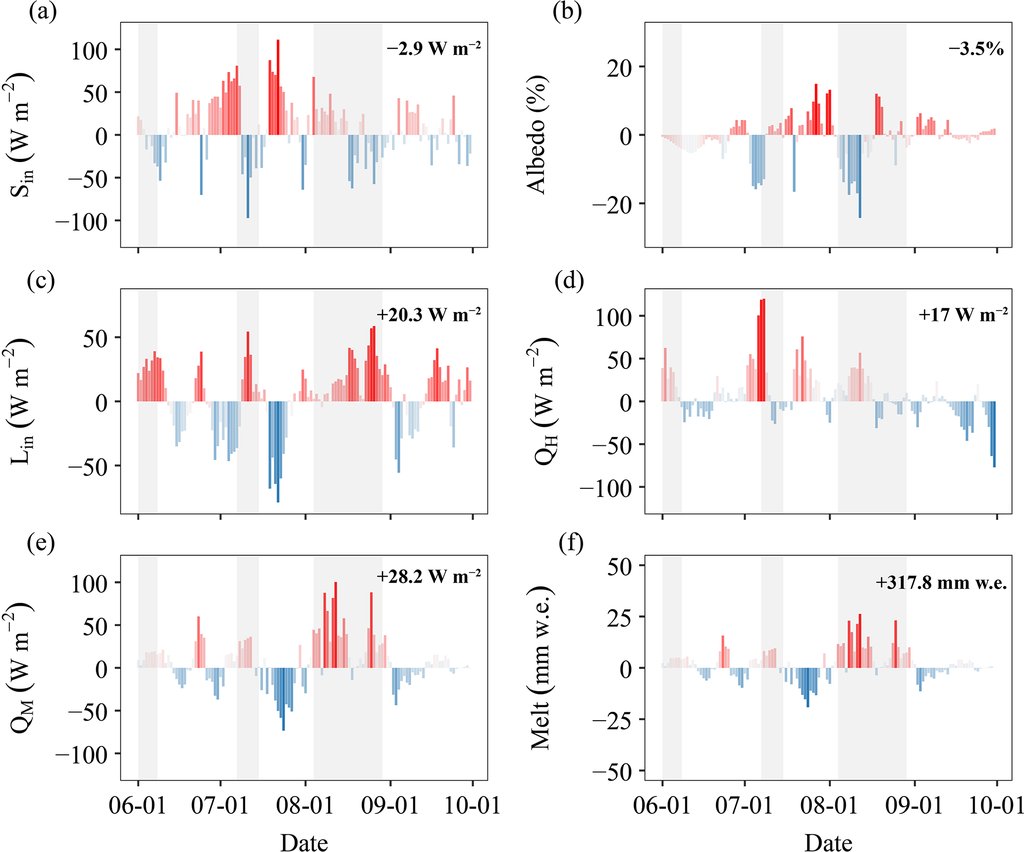
Melt over those weeks came to roughly 1.7 times that of the same stretch in each of the two preceding years. Over the full 2021/22 measurement year, the team's model put the glacier's loss at 920 millimeters of water equivalent, making that year what the authors count as an extreme mass-loss year under the looser of their two thresholds, though not a high-confidence one under the stricter. Their figures for the last two months of that summer are model estimates rather than observations checked directly against the ice.
Two other records point the same way. Measurements on neighboring Xiao Dongkemadi Glacier rank the same year as the third most negative in nearly 30 years, and that a satellite-informed product shows a strongly negative anomaly for Sangqu.
The team ties the heat to an eastward extension and northward shift of the South Asian High, the high-pressure system that sits over Asia in summer. Its measurements come from an automatic weather station that has stood on Sangqu Glacier at 5,700 meters since October 2020.