Dust Storms Cool the Southern Red Sea by as Much as 3 Degrees Celsius
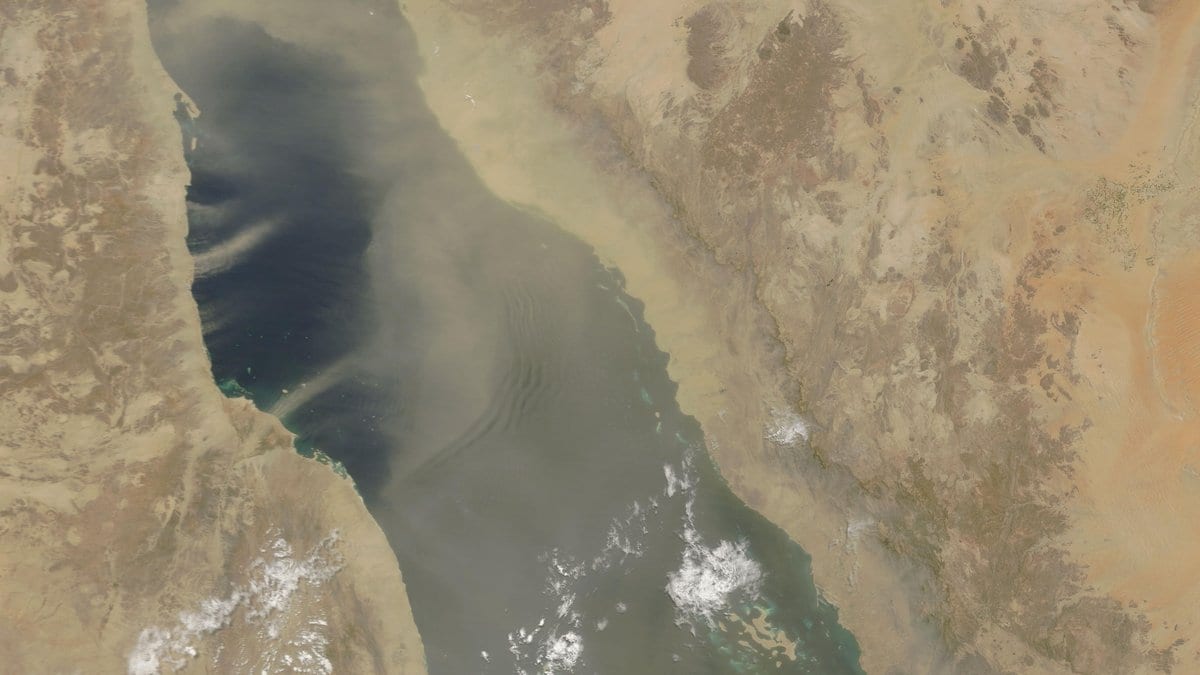
On the Red Sea's dustiest days, the surface of the sea's southern half cools by up to about 3 °C. That is the finding of a team at King Abdullah University of Science and Technology (KAUST) in Jeddah, Saudi Arabia, which analyzed satellite and model data covering 1980 to 2024.
Sravanthi Nukapothula and Yasser Abualnaja of KAUST, with colleagues in Greece and India, published the analysis in Scientific Reports on Nov. 11, 2026. They say the effect of dust on the sea's heat budget carries potential implications for how water circulates in the region and for marine life there, particularly if dust activity keeps increasing.
The team reports that extreme dust days, its term for the heaviest dust loads, are much more frequent over the southern Red Sea than over the northern part during the March to August dust season, and that their number has been rising over the period studied.
The analysis pairs sea surface temperatures measured from satellites with MERRA-2, a reanalysis that reconstructs how much heat the sea surface gains and loses. Over the southern Red Sea, dust on extreme days cut the sunlight reaching the water by about 35 watts per square meter, alongside smaller changes in the other ways the surface trades heat with the air.
In the northern Red Sea, the sunlight loss is nearly as large, about 30 watts per square meter, but the surface temperature responds far less. The authors attribute that to the north's extreme dust days being fewer and shorter-lived.
KAUST funded the work. Scientific Reports has published the paper open access as an accepted manuscript, which the journal says will be replaced automatically by the final version of record.
Sources
- Scientific ReportsPeer-reviewed