Ten Days of November Wind Help Explain Antarctica's Summer Sea-Ice Decline
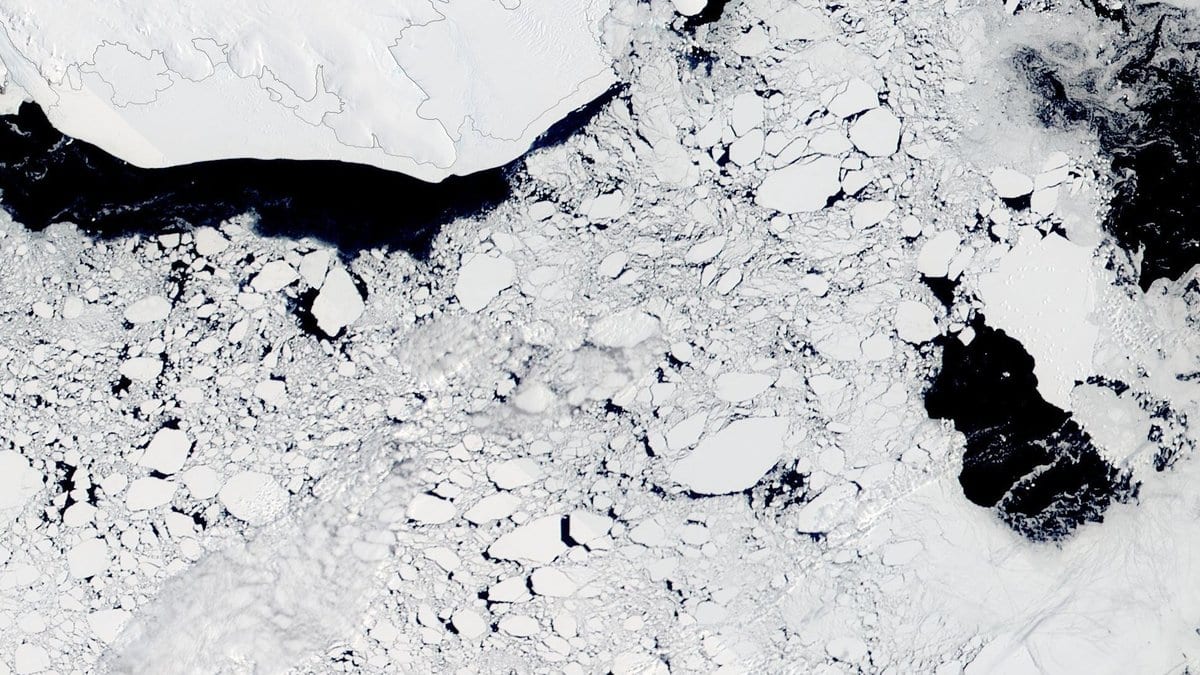
Two researchers in Japan have named a candidate driver of the sharp decline in Antarctic summer sea ice since 2016: a loop in which November wind pulls the ice apart, the newly opened dark water absorbs sunlight, and the warmed water melts more ice. The analysis appeared Nov. 10, 2026, in the journal Scientific Reports.
Sohey Nihashi of the National Institute of Technology, Tomakomai College, and Kay I. Ohshima of Hokkaido University write in the paper that wind-driven ice motion in early to mid-November "should be considered in future sea-ice predictions."
Sea ice reflects most of the sunlight that reaches it, while open water absorbs nearly all of it. The authors report that when wind spreads the ice apart early in the melt season, the upper ocean takes up more heat, more ice melts, and more water opens again. They call that loop the ice-ocean albedo feedback.
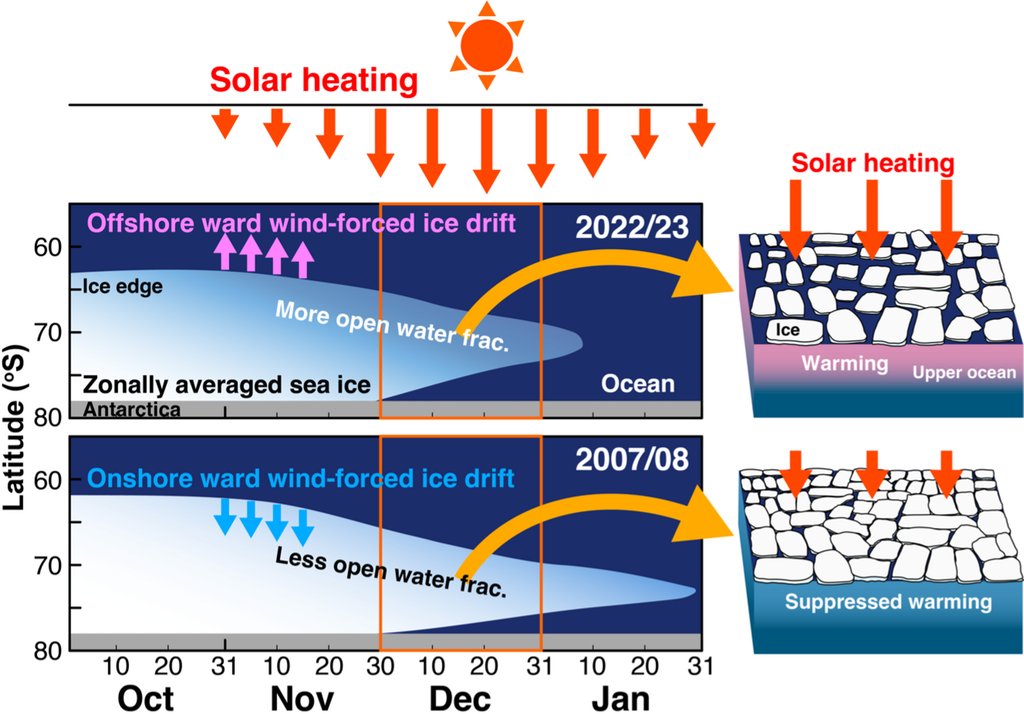
According to the satellite record the two analyzed, Antarctic sea ice reached its lowest summer extent in February 2023, about 1.96 million square kilometers. They also report that over 10 days in early November 2022, an index they built for wind-driven spreading of the ice edge reached its highest value in the 43 seasons of satellite data they examined, and that the open water fraction that December was the largest in the series.
Nihashi and Ohshima stop short of calling the feedback the cause. They describe it as "one of the key contributing processes" in the recent decline and call the correlation between their wind index and December open water "significant, albeit modest." They write that their simplified ice-and-ocean model "qualitatively reproduces some of the observed variability," including the declining trend and the record-minimum year, but that it is built to isolate the feedback rather than to reproduce the observed ice loss quantitatively, and that it leaves out the deep-ocean warming other studies have proposed as a factor.
They also expect the feedback to work more efficiently in the Antarctic than in the Arctic, where pools of meltwater on the ice surface drive much of the summer retreat.
Sources
- Scientific ReportsPeer-reviewed