January's Cyclone Harry Produced the Mediterranean's Highest Recorded Wave
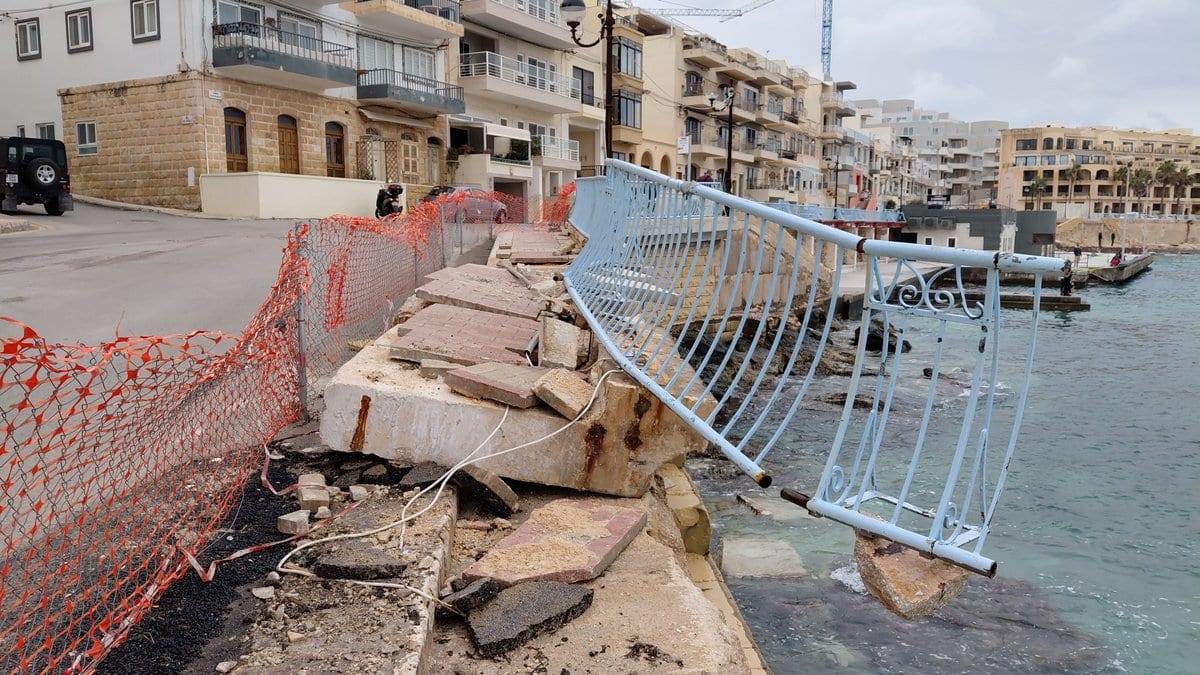
Extratropical Cyclone Harry produced the highest individual wave height ever recorded in the Mediterranean Sea, a research team reported Oct. 29, 2026, in Communications Earth & Environment. The storm crossed the central basin from Jan. 19 to 22, 2026, and caused widespread coastal flooding and erosion.
The study measures that January storm from two directions at once: computer simulations of the flooding at 19 coastal sites in Sardinia, Malta, Sicily and Calabria, and the seismic noise the waves generated across the region. Taken together, the authors say, the two lines of evidence show Harry caused "the most severe coastal impacts of any Mediterranean cyclone in recent decades."
The seismic half carries the second record. The team read broadband records from 55 Mediterranean stations and found that stations around the Ionian Sea reached their highest amplitudes of secondary microseisms, the faint ground shaking ocean waves set off, since seismic recording there began in 1990. On the measure the paper uses for that signal, Harry ran more than four times higher than previous storms and Mediterranean cyclones.
The flood simulations, run with the XBeach and HEC-RAS coastal models, came out very uneven from site to site. The authors attribute that to local landforms, with submarine canyons, buried ancient river channels and urban infrastructure pushing water higher at the shore and farther inland. They call the modeled inundation unprecedented, and read the storm as a sign of rising coastal risk as Mediterranean cyclones intensify in a warming climate.
The first author is Giovanni Scardino of Italy's National Institute of Geophysics and Volcanology, and the senior author is Giovanni Scicchitano of the University of Bari Aldo Moro; their co-authors are at institutions in Italy, Malta, Belgium, Austria and the United States. The paper is open access, and the journal published this accepted version early, ahead of the final edited text.
Sources
- Communications Earth & EnvironmentPeer-reviewed