Wild Tapirs and Anteaters Carry More Plastic the Closer They Live to People
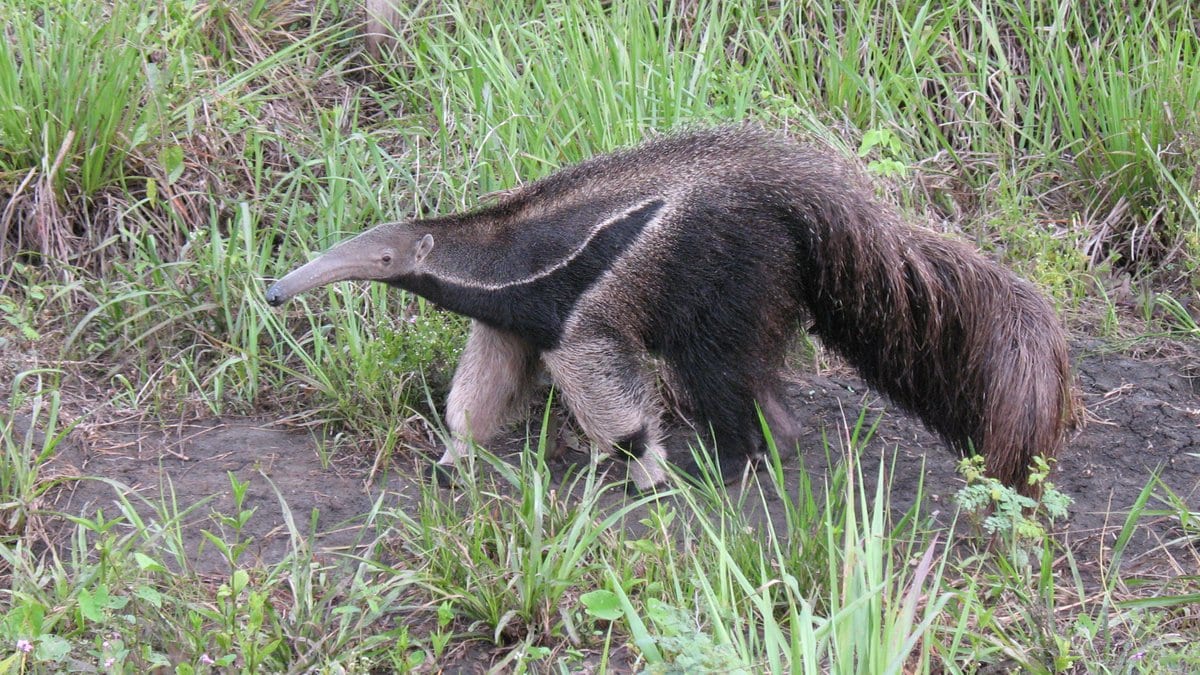
Wild tapirs and giant anteaters in Brazil carry more microplastics in their blood the closer they range to towns, mines and waste sites, according to a study of 47 tracked animals published Nov. 11, 2026, in Nature. The researchers paired blood tests with GPS collars, so each animal's plastic load could be set against where it had actually been. Earlier surveys of land animals, by contrast, had to assume that link.
The paper describes that pairing as a way to work out which wild populations are most exposed to plastic from the landscape around them, and says the approach can be applied to other species and regions.
The animals were caught in 2021 and 2022 in the Amazon's Arc of Deforestation, in farmed country in the Cerrado and on a cattle ranch in the Pantanal. Particles were counted with a Raman microscope, which identifies a material from the light it scatters. Plastic turned up in the blood of all but four animals, averaging 73.8 particles per milliliter, inside the range other work has reported for human blood using the same kind of method.
Forty animals had enough tracking data for the habitat analysis. In those, plastic levels rose with the extent of the most heavily human-modified ground inside the area an animal used, and fell with its average distance from built-up land and from the nearest waste facility. The study followed animals where they live rather than assigning them to groups, so these are associations, not demonstrated cause.
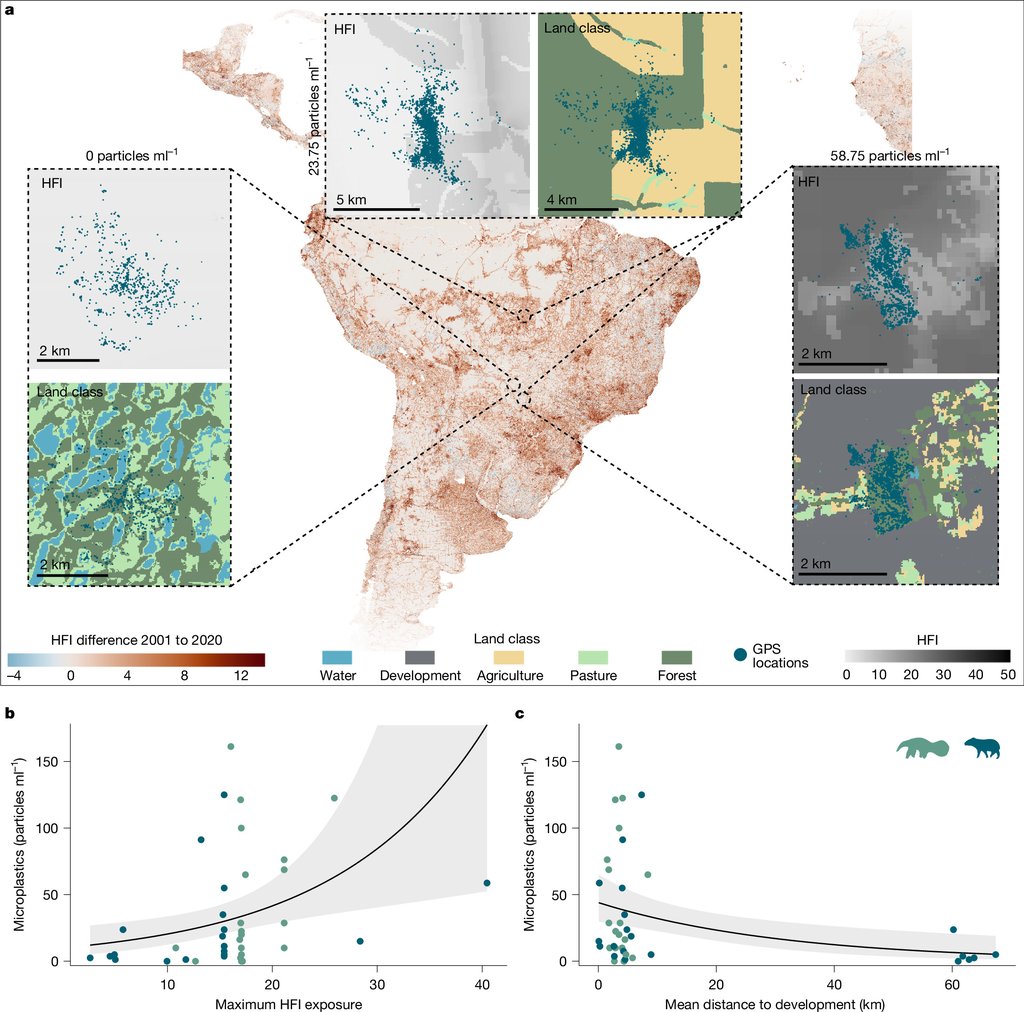
Every animal sampled in the Pantanal, a largely undisturbed wetland in Brazil's interior, carried plastic. Those animals ranged more than 65 kilometers from the nearest built-up land, and farther still from any waste facility. The authors write that direct contact with land that people have altered is therefore unlikely to be the only route into an animal's bloodstream, and point to particles carried long distances by air and water.
The blood measurements, the raw GPS tracks and the analysis code are openly posted on GitHub and figshare.
Sources
- NaturePeer-reviewed