Plastic Particles Found in the Flesh of Tuna and Dolphinfish
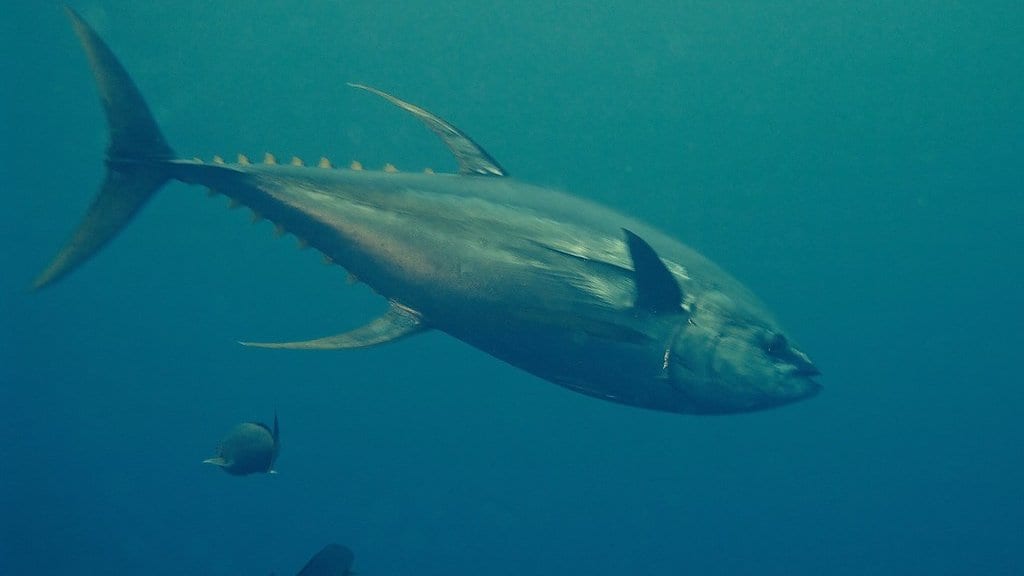
Jay R. Rooker of Texas A&M University and colleagues have measured plastic particles in the muscle of dolphinfish and yellowfin tuna caught across the Atlantic, Pacific and Indian Oceans. Muscle is the fillet, the part of the fish that is sold and eaten.
The paper was published Oct. 6, 2026, in Scientific Reports. The authors write that counting these nano- and microplastics in ocean predators is fundamental to understanding how widespread the contaminants are and what they may do to ecosystem health. The mix of plastics differed from place to place, which they say means a fish's plastic signature may work as a marker of its recent or accumulated exposure.
Five kinds of plastic accounted for about 99% of the total concentration measured in both species: polycarbonate, polyethylene, polypropylene, polyvinyl chloride and nylon-66. Polyethylene was the most abundant in the muscle of both fish, followed by nylon-66, polypropylene and polyvinyl chloride. The particles were measured by pyrolysis gas chromatography, which heats the tissue and identifies the plastics from the gases it gives off. The figures carry a correction for the fat in the muscle.
The authors found no relationship between a fish's plastic load and its trophic position, which is how high up the food web it feeds. Yellowfin tuna fed higher than dolphinfish in nearly all the regions examined and still carried less plastic, often markedly less within the same region or ocean basin.
Rooker and colleagues conclude that the particles are "pervasive" in the muscle of these predators in every basin they sampled. The paper is open access, and the analysis was supported by the Gulf Research Institute for Highly Migratory Species, the McDaniel Charitable Foundation and a Texas A&M University Edges Fellowship.
Sources
- Scientific ReportsPeer-reviewed