The Iron Mineral in the Mud Shapes Where Nanoplastics Go
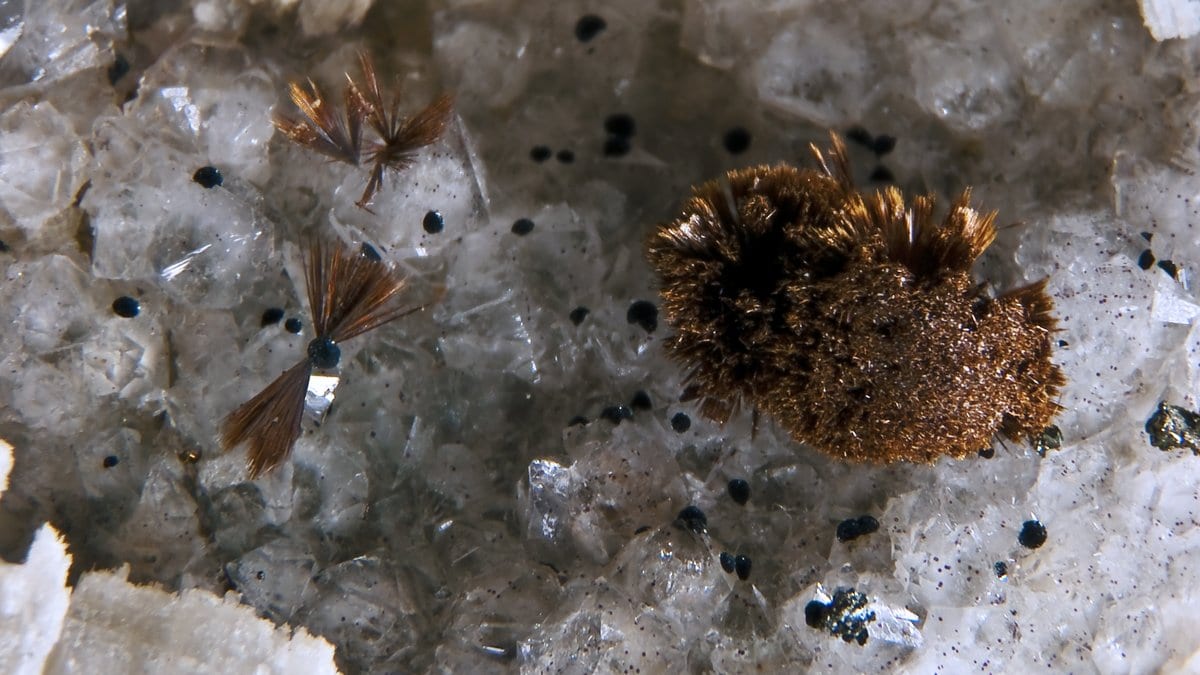
Researchers at the Southern University of Science and Technology in Shenzhen have measured how strongly nanoplastic particles bind to three of the iron minerals found in freshwater sediment, and the three do not behave alike: binding rates differ by up to 15.9-fold and binding capacities by up to 43.6-fold.
The minerals are ferrihydrite, lepidocrocite and goethite. Yihan Chi, Yuanyuan Tang and colleagues reported the comparison Nov. 9, 2026, in Communications Earth & Environment. Their paper describes interactions with iron oxides as governing how far nanoplastics travel in freshwater and what becomes of them, and offers the mineral comparison as a basis for predicting which sediments hold the particles and which let them through.
Ferrihydrite bound the particles fastest. The group attributes that to its rough, uneven surface, where particles attach and the surface itself rearranges as they do. Goethite took up the most, and its capacity changed least from one condition to the next, because its large pores trap particles inside the mineral rather than catching them on the outside.
The tests covered particles of different sizes, different surface chemistries and different stages of aging, and aging worked against binding. Particles that had shrunk and picked up new chemical groups on their surfaces bound less well: aging strengthens a reversal of electrical charge after the first particles bind, and that weakens the electrical attraction which would otherwise pull more of them in.
The paper was submitted Oct. 29, 2025, and accepted Aug. 27, 2026; the journal is publishing it early, as a peer-reviewed accepted version that will be replaced by a final one. The Shenzhen Fundamental Research Program and the National Natural Science Foundation of China funded the work.
Sources
- Communications Earth & EnvironmentPeer-reviewed