The Shape of a Piece of Plastic Changed How Deadly a Fish Virus Was

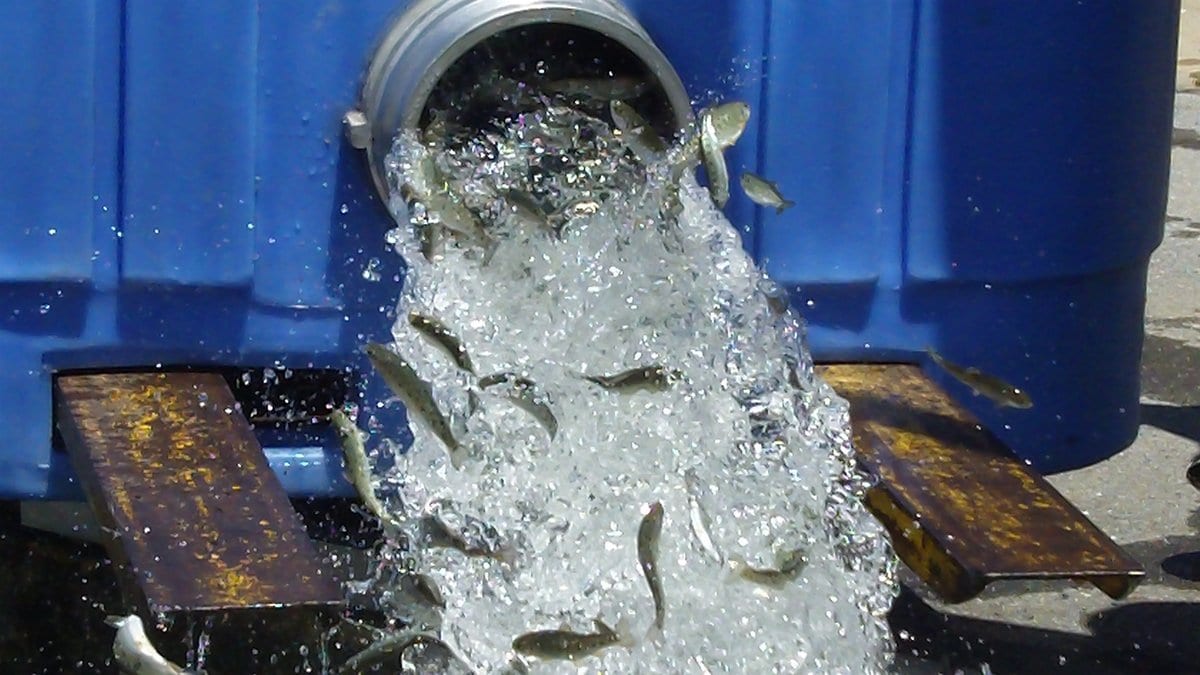
Nylon can be drawn into a thread or rolled into a rounded grain. It is the same plastic either way: the same chemistry, the same ingredients, the same line on a materials list. Put each form into a tank of young rainbow trout, introduce a virus that kills farmed trout, and the two stop behaving alike. That is what a team at William & Mary's Virginia Institute of Marine Science reports in work published Sept. 7, 2026, in the journal Environmental Toxicology and Chemistry, as an advance article ahead of print.
The virus was infectious hematopoietic necrosis virus, IHNV for short, which infects rainbow trout. Meredith Evans Seeley and her colleagues set long nylon threads against small rounded nylon particles, exposed groups of fish to one or the other, and infected some of those groups partway through. Fish that met the threads died at higher rates than fish given the virus alongside the rounded particles, or the virus on its own. The authors state it flatly: "mortality was significantly higher in fish exposed to virus plus microfibers than virus plus spheroid microplastics or virus alone."
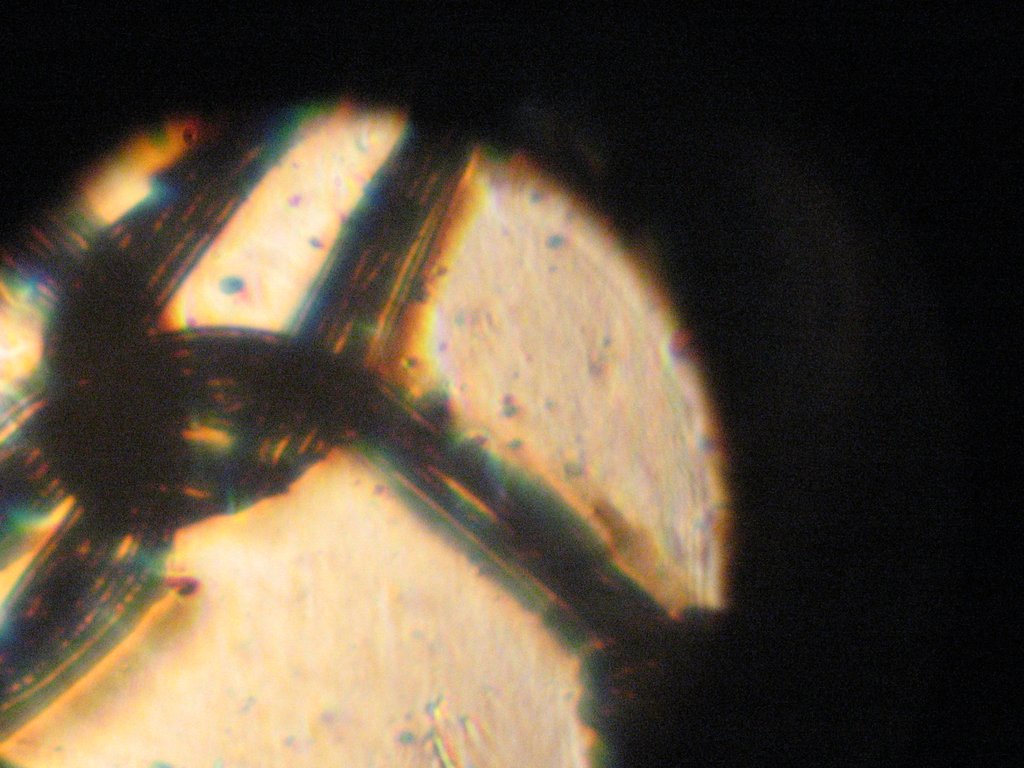
Shape was the question because of something the group had already seen. In 2023 the same team reported in Science of the Total Environment that microplastics raised death rates among rainbow trout infected with IHNV, and that nylon threads did it most sharply, which left an obvious ambiguity. "We saw the effect with the nylon fibers and had to ask, 'Is it the fact it's a fiber or is it the fact that it was nylon?'" Robert C. Hale, one of the co-authors, recalled in his institute's account of the study. Holding the plastic constant and changing only the form is how that question gets answered.
Timing mattered as much as form. Some groups met the threads for the whole experiment, some only before the virus arrived, some only after. Of the three arrangements, one produced a statistically significant effect: continuous exposure, running from about four weeks before the infection until about four weeks after. In the institute's account, fish that met fibers only beforehand showed the same trend without reaching significance, and exposure only afterward made comparatively little difference. So the finding is about plastic that stays in the water rather than plastic that happens to be there when a virus arrives, and it rests on one arrangement out of three.
William & Mary described the work in a release on Oct. 28, 2026. It gives the scale: 800 young rainbow trout at the institute, watched over eight weeks, with the virus introduced midway. By that account, trout exposed continuously to the threads had "approximately twice the odds of dying" from the infection as trout that met the virus alone, while the rounded particles "did not significantly increase virus-related mortality." The release also calls IHNV one of the main pathogens behind lost production at trout farms in North America and beyond.
Why a thread should do what a grain does not is unsettled, and the authors keep the hedge in their own sentence. They hypothesize, in the paper's words, that "this pattern relates to damage to epithelial tissue integrity," the thin lining a virus has to cross to get into a fish. In the institute's account the team points at the form itself: its length and its stiffness, what they colloquially call its "pokiness." That, they suggest, may damage protective tissues such as the gills. "It's likely creating an easier path for that virus to infect that host," Evans Seeley said there. It is the idea the next experiments are meant to test, not a measurement this one produced.
Other laboratories have put fish, plastic and disease together and found the same sign. Masud and Cable reported in 2023 in Diseases of Aquatic Organisms that guppies exposed to polypropylene, a different plastic, carried significantly higher burdens of a skin parasite over time than fish on a plastic-free diet, and died more often. A different host, a different pathogen, the same direction.
Andrew R. Wargo, a co-author who works on fish viruses, named the practical hope in the release: "Not all plastics are created equal, and so that creates an opportunity to identify the worst forms of pollution and come up with solutions." The result bears on a range of settings, fish farming and indoor spaces among them, and should push research toward particle form and exposure timing rather than quantity alone. Threads like the ones tested shed from clothing, from nets and from ropes. Microplastics, meaning plastic pieces under five millimeters across, are widespread in water. The team has begun work with a commercial trout producer to find out which plastics a working farm actually holds. Their own caution travels with the result: this was a controlled laboratory experiment, and how far it carries into other settings is not yet known.