More Than a Third of the World's Forest Loss Ends up in Goods Sold Abroad
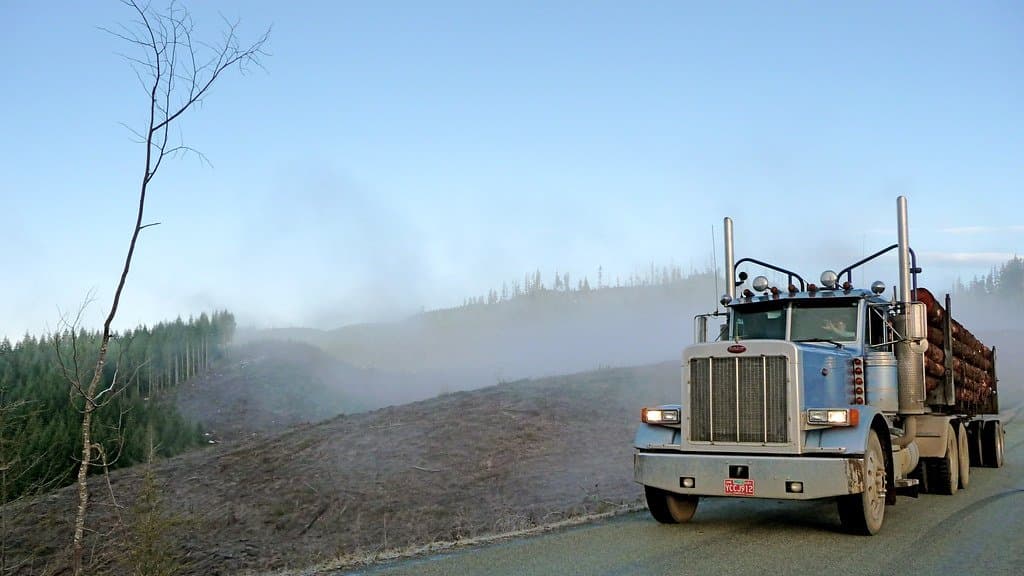
More than a third of the forest the world lost in 2022 was cleared to make goods that were finally bought in another country, according to a peer-reviewed study published Sept. 28, 2026 in Communications Earth & Environment.
Satellite monitoring shows where trees disappear. It does not show who ultimately buys what the cleared land produces. Zhouyi Liu, Shen Qu and colleagues at the Beijing Institute of Technology, with researchers at Beijing Normal University, linked satellite forest-loss data to an accounting of international trade and traced the loss to the countries where the goods end up. The authors write that the framework offers a foundation for advancing forest conservation and for sharing responsibility more fairly along international supply chains.
The traded share came to 38.15% of global forest loss, about 5.01 million hectares of the 13.12 million hectares lost that year. Five countries accounted for almost half of global deforestation, 48.16%: Brazil, the United States, China, Indonesia and Russia.
The observed part and the modeled part of that figure are different kinds of evidence. Where forests were lost is measured: fine-scale satellite monitoring records it. Who the loss is assigned to is modeled, an accounting that follows goods through trade rather than a new measurement of clearing.
A machine-learning step ranked the social and economic conditions behind those differences. Urbanization, manufacturing intensity and a country's own economic and conservation capacity emerged as the leading factors.
The paper is open access and was funded by Chinese national research programs, among them the National Natural Science Foundation of China.
Sources
- Communications Earth & EnvironmentPeer-reviewed