Cutting Car Travel in Cities Could Lower U.S. Urban Transport Emissions by 60%
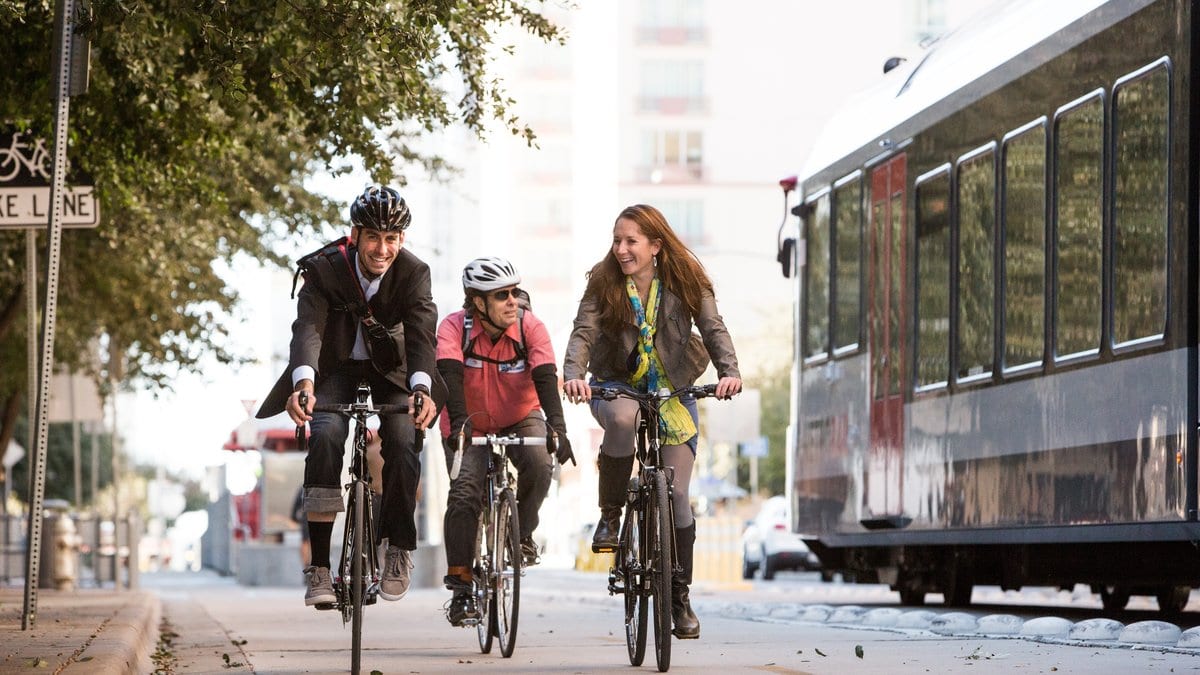
Six changes in how people travel within American cities could together cut urban passenger transport energy use and carbon emissions by about 60% in 2050, measured against a baseline case, according to a modeling study published Nov. 9, 2026, in Environmental Research Letters.
The authors write that earlier modeling work could not fully weigh those measures, because the models it used did not represent travel inside cities separately from travel between them. Their version of GCAM, a global model of energy use and emissions, splits U.S. passenger travel into those two parts, and the paper runs the measures through the split model.
The six are compact urban development, speed limits, shared mobility, remote working, a fuel tax and a congestion fee. All are demand-side measures, meaning they change how much people travel and by what mode rather than what the vehicles run on, and all enter the model as scenario settings. The paper runs one technology measure beside them, vehicle electrification.
Under ambitious electric-vehicle deployment, the authors project that most direct emissions from urban passenger travel disappear while electricity demand rises by 718 TWh between 2021 and 2050, as much as 16% of current U.S. total electricity consumption. In model runs that also apply the full set of demand-side measures, that increase comes to 299 TWh instead.
Xiangwen Fu, Christoph Bertram and Page Kyle conclude that the two approaches are complementary in cutting carbon emissions and meeting other sustainability goals, with the demand-side measures lowering energy use and emissions directly and also holding down the extra electricity that electrifying city travel would call for.
Sources
- Environmental Research LettersPeer-reviewed