Warming Is Changing How Much Carbon Northern Conifers Store in Each Ring
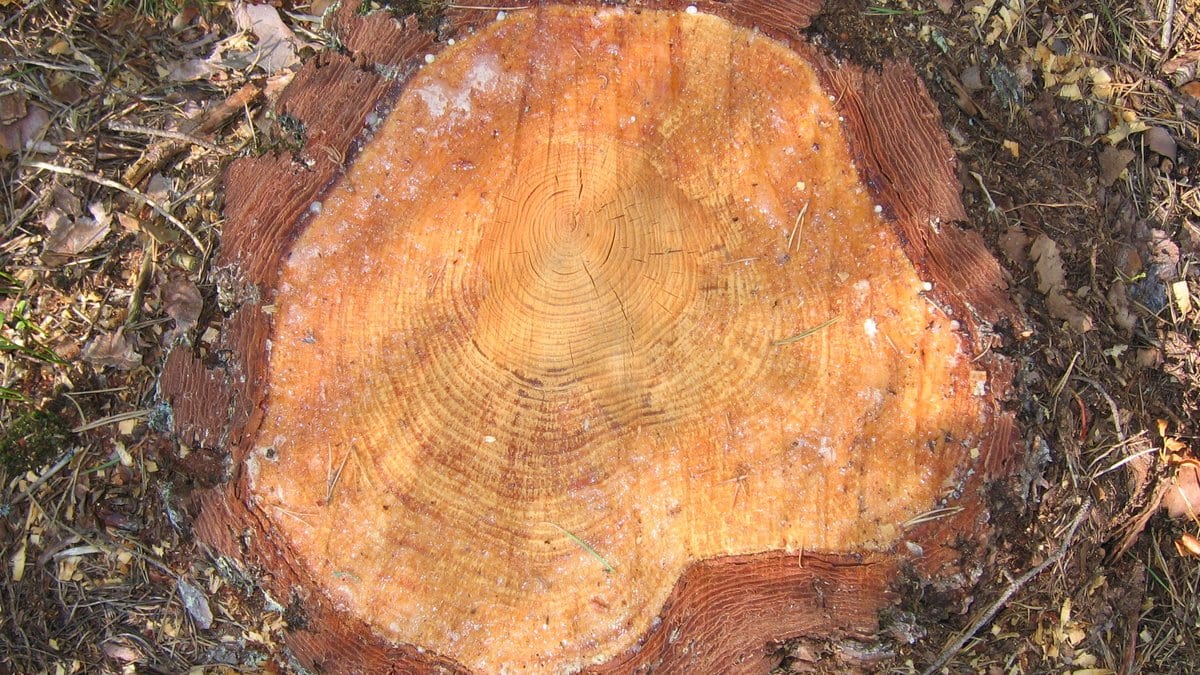
Tree rings from 551 northern conifer sites put the air temperature that governs a tree's densest annual wood at 15–21 °C, in a study published Nov. 3, 2026, in Communications Earth & Environment.
Density is what decides how much carbon a given volume of trunk holds, and the study reports that the temperature band governing it had not been established before. Ziming Wang of Beijing Normal University, Rob Wilson of the University of St Andrews and colleagues measured how dense the late-season layer of each ring is in wood samples from conifer forests across the northern latitudes, then reconstructed how many hours those forests spent inside the band.
That reconstruction runs back more than three centuries. Over the past three decades, the hours spent inside the band rose to about 10% above preindustrial levels, an increase the authors call unprecedented in the record and attribute to human-caused warming.
Across most of last century, more hours inside the band were associated with an estimated extra 0.12 mg of carbon a year in every square centimeter of the densest part of a ring. The figure is an association drawn from the ring record, and it covers that one layer rather than a forest's whole carbon balance.
The paper's projections reach up to 23.3% above preindustrial levels for the second half of this century, with the larger gains farther north narrowing the difference between latitudes.
The authors' own reading is that carbon estimates treating wood density as fixed may understate what northern conifers bank as the climate warms. They report no estimate of how that would weigh against warming's other effects on the same forests.
The study was funded by the National Natural Science Foundation of China. Communications Earth & Environment is publishing it as an early citable version of the accepted paper, which it says may be edited further before the final version appears.
Sources
- Communications Earth & EnvironmentPeer-reviewed
