Blood From Communities Downwind of a Coal Plant Shows Signs of Inflammation
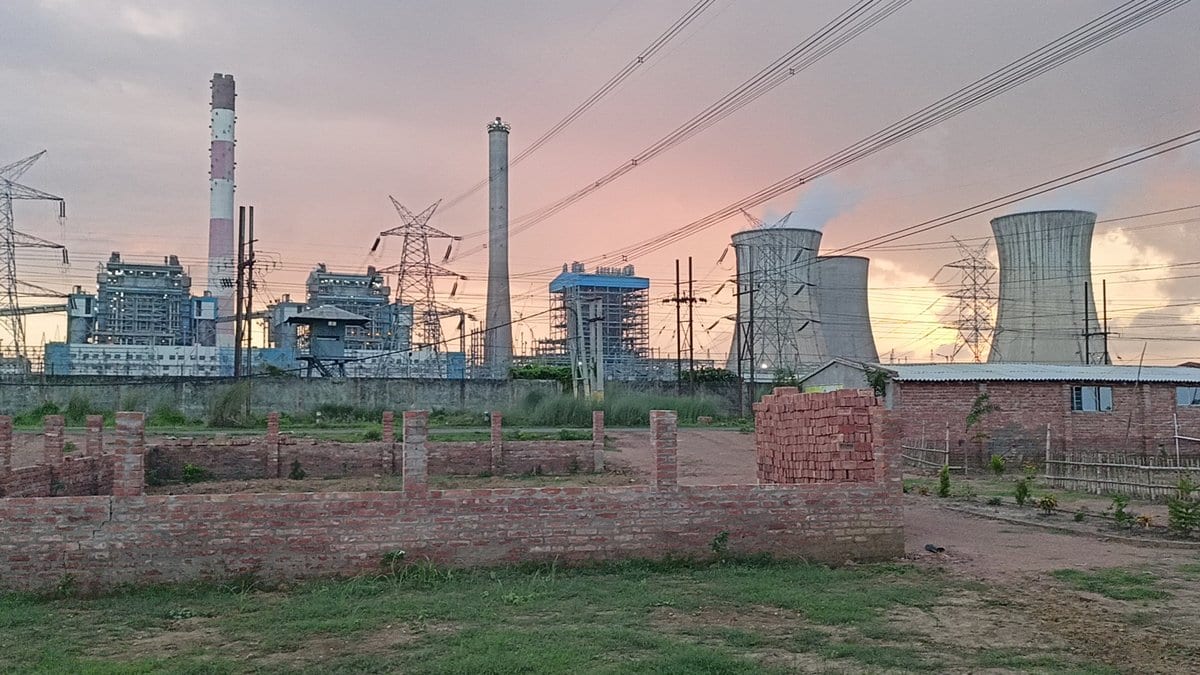
Anoop T. Ambikan of Karolinska Institute and colleagues report that people living downwind of a coal-fired power plant in eastern India carry blood gene-activity signatures of inflammation, even though the weight of fine dust in the air did not differ significantly between the two sides of the plant. What differed was the chemistry of the dust.
The authors present the study, published Nov. 23, 2026, in Communications Earth & Environment, as a proof of concept for adding molecular markers to environmental health assessments. Both sites lie in the Indo-Gangetic Plain, where pollution blows in from the west all winter.
Air filters were collected upwind and downwind of the Farakka Thermal Power Plant through the winter of 2021–2022, the season when the region's pollution peaks. Bulk PM2.5, the mass of fine dust per unit of air, did not differ significantly between the sites. Vanadium, iron, thallium and selenium were all significantly higher downwind, along with several organic compounds that are combustion markers.
Blood was drawn from 29 adults upwind and 31 downwind, all living beside the samplers; samples that passed quality checks were sequenced. The downwind group carried 728 gene transcripts, cells' working copies of genes, at higher levels and 898 at lower ones. Genes for inflammation and for programmed cell death were turned up, and genes for the cell's main energy-producing machinery were turned down.
An aging clock that estimates age from gene activity in blood put the downwind group a median 7.62 years above their actual age, against 2.14 years upwind — a gap the authors report as not statistically significant given the small group. Women showed more of that acceleration than men at both sites, significantly so downwind.
Households downwind were more likely to cook with biomass, and the authors raise women's combined exposure to outdoor and cooking smoke as an untested explanation. The design, one winter at two sites, cannot separate household smoke from the plant's plume.
The work was funded by the Swedish Research Council. The raw sequencing data is in NCBI's Sequence Read Archive and the analysis code on GitHub.
Sources
- Communications Earth & EnvironmentPeer-reviewed

Medical Disclaimer: This content is provided for general informational and educational purposes only. It is not medical advice and should not be used as a substitute for professional medical advice, diagnosis, or treatment. Always consult a qualified healthcare professional regarding any medical condition, concern, symptom, or treatment decision.