Less Sea Ice, More Big Waves for Canada's Northernmost Community
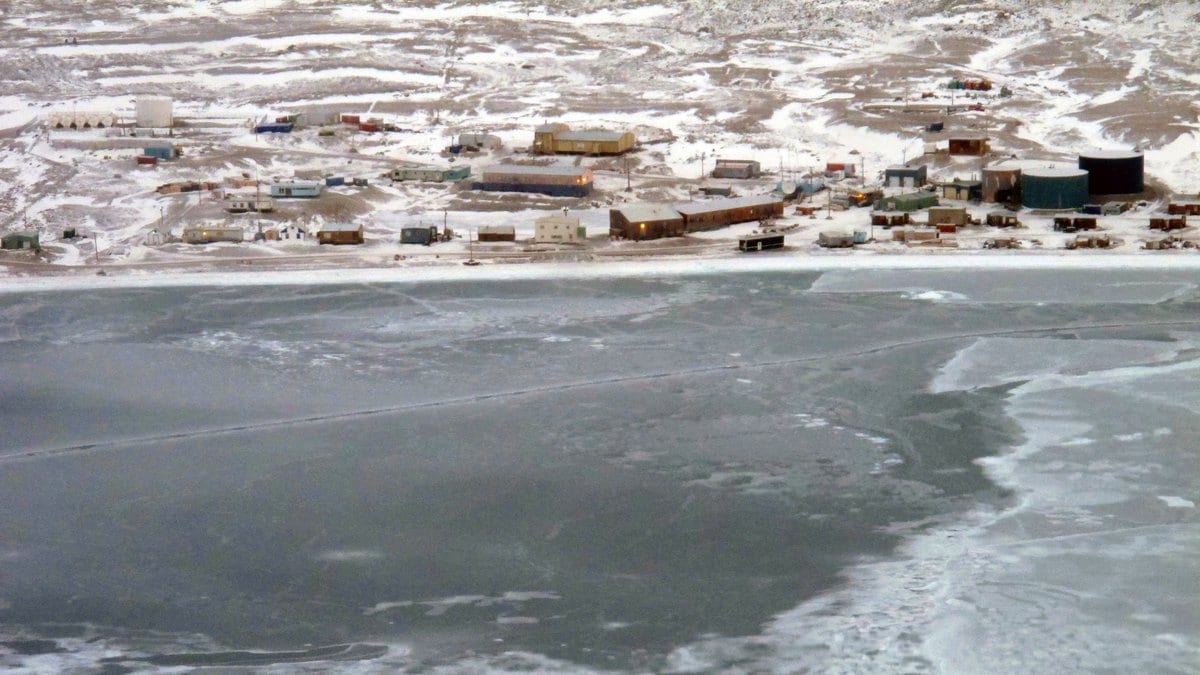
Waves running up the shore directly drive 25% of extreme high-water events at Ausuittuq, the northernmost civilian community in Canada, and contribute about 30% of the highest water level its coast reaches each year. A research team that works with the Nunavut community published the measurements Nov. 23, 2026, in Communications Earth & Environment.
The authors report that Ausuittuq, also called Grise Fiord, has flooded repeatedly over the past decade. Their study separates which part of a storm's water is responsible for that flooding — the tide, the storm surge driven ashore by wind and pressure, or the waves themselves.
For the decades ahead, the team combined wind and sea-ice projections from the Coupled Model Intercomparison Project Phase 6, the model collection used in climate assessments, with a wave model calibrated to the local shoreline. Under an intermediate emissions scenario, SSP2-4.5, they project 41% more extreme wave events by mid-century than in the years 1985 to 2000. Under the higher-emissions SSP5-8.5, the increase is 62% against the same baseline.
The authors attribute most of that increase to a later autumn freeze-up, which leaves open water for storms to build waves across. In their account, the loss of sea ice raises hazard exposure in seasonally ice-covered Arctic regions mainly by making extreme waves more frequent, a shift toward more persistent wave-driven coastal hazards.
Jeremy Baudry of the Université du Québec à Rimouski is the paper's first author and its contact for correspondence. Most of its authors also list ASIQ, a research group based in Ausuittuq, among their affiliations, and the acknowledgements credit community members, the IVIQ Hunters and Trappers Organization, and the Hamlet of Grise Fiord with hosting the project.
The paper is open access, and the journal is posting the accepted, peer-reviewed version ahead of the final version of record. Funding came from Crown-Indigenous Relations and Northern Affairs Canada and from the Natural Sciences and Engineering Research Council of Canada.
Sources
- Communications Earth & EnvironmentPeer-reviewed