Green Turtles Swam Offshore as Storms Passed, but Loggerheads Stayed Close
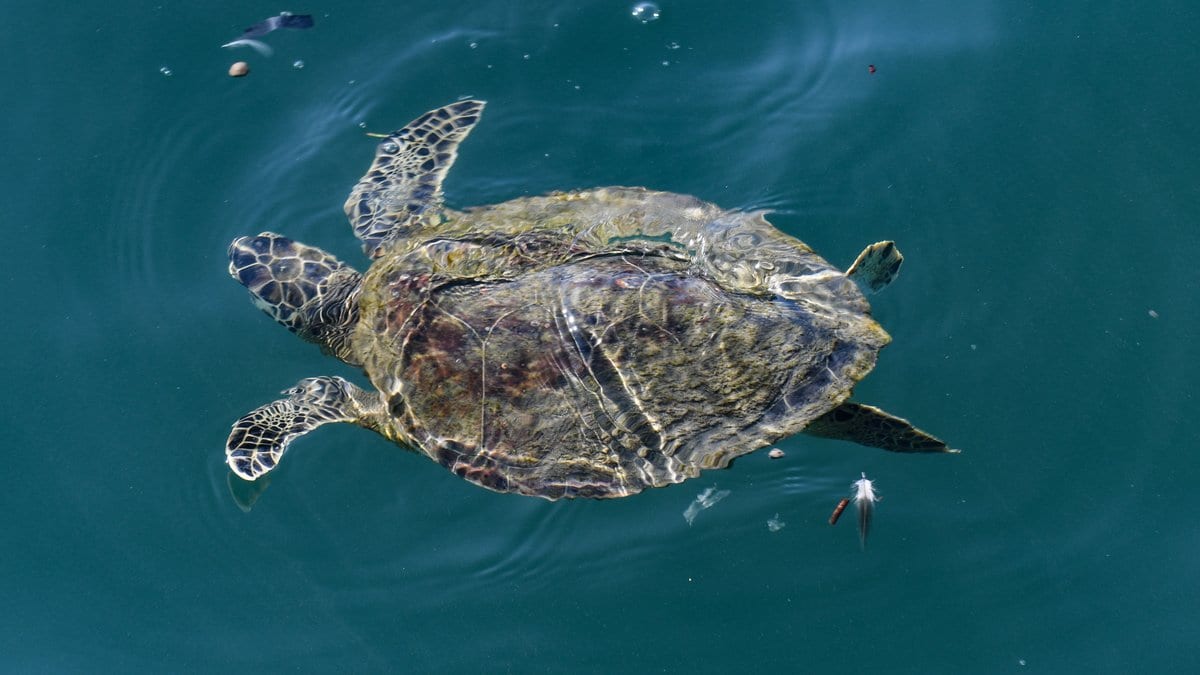
Green sea turtles tagged through two tropical cyclones off southeast Florida made long, directed moves offshore, while loggerhead turtles nesting on the same beaches stayed in local waters. The result was published Nov. 14, 2026, in the journal Scientific Reports.
Both species nest along that coast from May through October, which overlaps the most active months of the Atlantic hurricane season. The authors write that tropical cyclones are projected to increase in frequency and intensity under climate change, and that their tracking gives insight into the potential energetic and behavioral consequences for the animals.
Joseph Iafrate of the Naval Undersea Warfare Center Division Newport, Kenneth Oliveira of the University of Massachusetts Dartmouth and colleagues followed both species with acoustic and satellite tags during and after the nesting season. The paper reports "greater displacement and highly directed movements" for individual green turtles in association with the onset or passing of the storms, including directed offshore movements and long-distance travel. It also reports "more localized behavioral responses" from loggerheads.
Wave height and water temperature were the two conditions most strongly associated with how fast the turtles moved, how deep they went and how far from shore they traveled.
The tagging and the satellite data collection were funded by the U.S. Bureau of Ocean Energy Management, through an interagency agreement with the Naval Undersea Warfare Center Division Newport. A dissertation fellowship from that center supported the analysis, and the paper is open access.
Sources
- Scientific ReportsPeer-reviewed