Listening to Volcanoes Underwater: An Overlooked Way to Hear Them Breathe

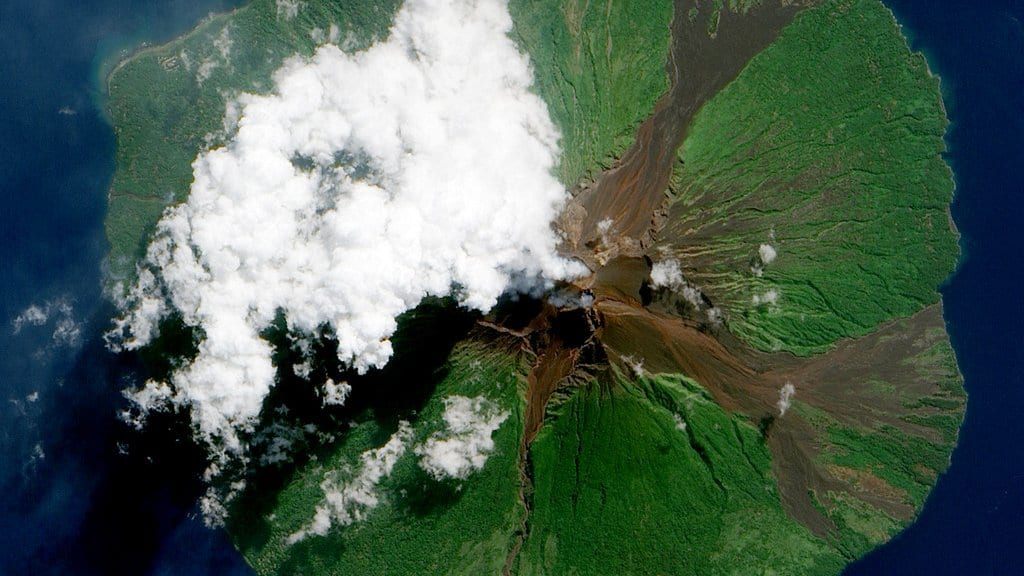
A volcano does not have to be quiet just because it is underwater. It bubbles, hisses, and occasionally coughs, and all of that makes sound. Sound travels well through water, better in many ways than through air. So a hydrophone, essentially an underwater microphone, sitting in a crater lake or on the seafloor near a vent can hear activity that is otherwise nearly invisible.
That is the premise of a study published July 24 in the journal Seismica by Corentin Caudron, Ben Roche, Jean Vandemeulebrouck, Julien Barrière, and Leonardo Van der Laat (Caudron et al., 2026). Over four years, the team deployed hydrophones across a range of subaqueous volcanic settings, from open ocean to crater lakes, at depths spanning one meter to 350 meters. Their case is straightforward: hydroacoustics is, in their words, an often-overlooked tool, and it can record a wide sweep of volcanic behavior.
The range they captured is what makes the point. At the quiet end, the instruments picked up the release of millimeter-sized bubbles, the faint fizz of gas escaping through water. At the loud end, they recorded small phreatic eruptions, the steam-driven blasts that happen when magma heat flashes water to vapor, and gas blowouts. These are exactly the kinds of events that conventional monitoring, seismometers listening for ground shaking, and instruments sniffing gas at the surface, can struggle to catch cleanly, especially underwater.
The team did not keep the sounds to themselves. They published their recordings through the open repository Zenodo, so other researchers can analyze the same data. Shared reference libraries of this kind are how a niche technique earns a place in the standard toolkit: the more ears trained on what a bubbling vent or a phreatic burst sounds like, the more reliably anyone can recognize it next time.
Hydroacoustics here is offered as a complement to seismic and gas monitoring, another sense to add to the ones volcanologists already use, particularly for volcanoes that sit inconveniently underwater where the usual instruments have the hardest time.
Whether that complementary role grows into routine practice will depend on the next round of work: longer deployments, more sites, and instruments that can flag meaningful sounds in real time. There is a way to listen to underwater volcanoes breathe, it works across a surprisingly wide range of activity, and the recordings are now open for anyone who wants to learn the sound.
Sources
- SeismicaPeer-reviewed