In a New Simulation, the Shape of Ocean Plastic Decides Where It Goes

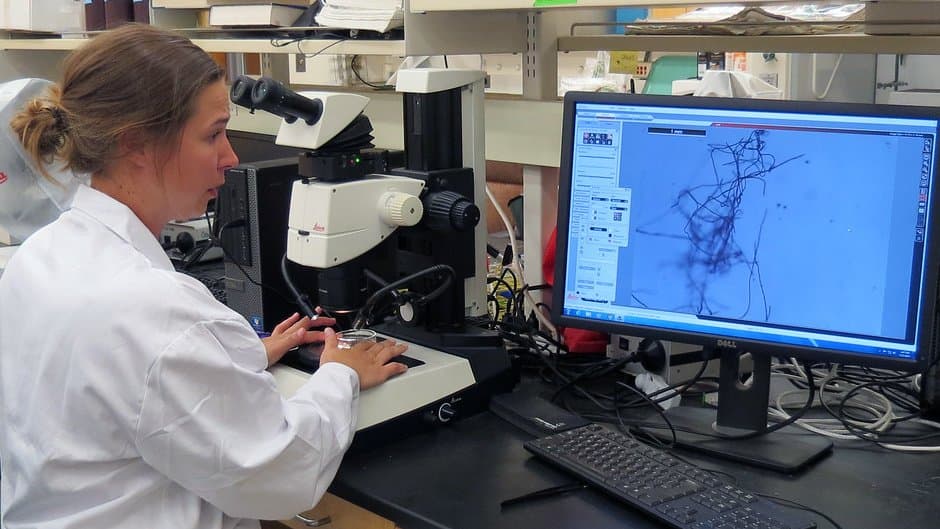
Wash a fleece jacket and a little of it leaves with the water. The plastic threads that come off are too small to notice, and they head down a drain, through a treatment plant and eventually out to sea. What becomes of them there has mostly been worked out by pretending they are something else: a generic plastic particle, no different from a flake off a broken crate or a crumb of tire rubber ground off on a wet road. A new ocean simulation suggests this difference determines where they end up.
Anne Gaymard, at the French ocean laboratory LOPS, and colleagues report the result in the open-access journal Environmental Research Letters, published online Sept. 22. Their tool is a global ocean model called NEMO/PISCES-PLASTIC. It carries plastic through the sea much as it carries plankton and nutrients: with currents, with mixing and with each particle's own tendency to rise or sink. Unlike older versions, the model no longer carries a single generic particle. It carries several kinds at once, sorted by shape and by where they came from.
The split is first between fibers and fragments, then by where each came from: fibers shed by laundry and household dust, beads from personal care products, wear ground off car tires and pieces broken from larger objects. Rivers and runoff bring them in. Sorting the particles this way changes what the model produces: the map of where plastic sits and the totals for how much the ocean holds.
That picture has always been thin below the surface. Almost everything known about plastic at sea comes from nets towed at the top of the water column, which is how the garbage patches were mapped and how the floating load is estimated. Deeper down, measurements are scarce and hard-won. It is the part of the ocean where a model has the most to say and the least to be checked against.
The study's primary finding sits between 100 and 1,000 meters down, in the water oceanographers call the mesopelagic, or the twilight zone. In these simulations, fibers are the dominant microplastic there. Nothing was sampled to arrive at that: it is model output, and the researchers note that their results merely "indicate" this possibility. Nor is the abundance of fibers itself a discovery here. The fact that they make up a large share of the plastic entering the ocean is an input the model was given, drawn from existing inventories of what goes in.
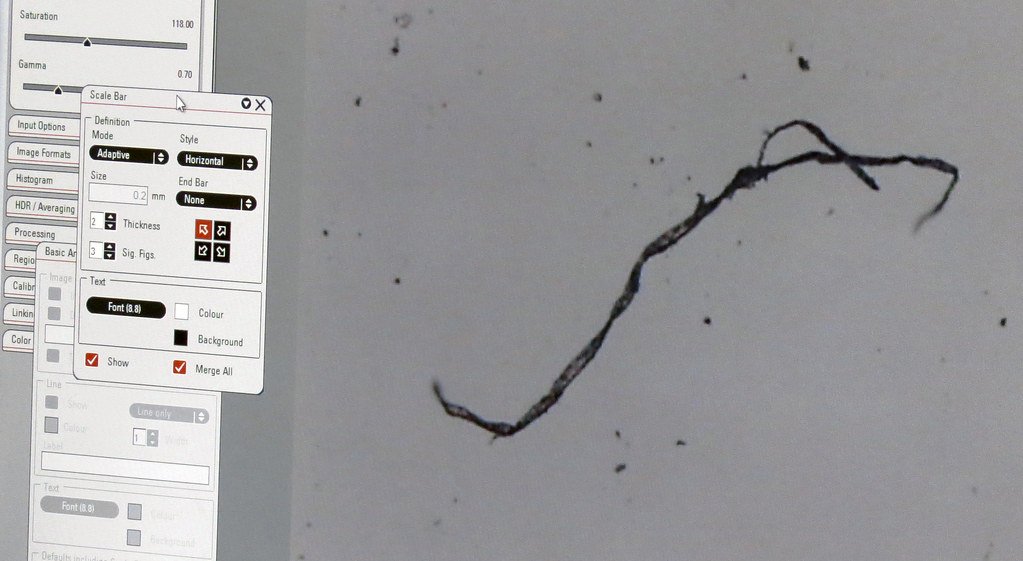
The second finding is a matter of arithmetic. The budget that comes out of these simulations reconciles the latest assessment of what enters the ocean with existing estimates of how much microplastic is in it only when large plastic objects are allowed to break apart at sea. According to the study, fragmentation in the water is not a minor detail; it is a source in its own right, and leaving it out is part of why the books have not balanced.
Two of the authors, Matthias Egger and Laurent Lebreton, work for The Ocean Cleanup, the nonprofit that builds systems to take plastic out of the sea. The organization also funded part of the study, alongside ISblue, a French marine science program.
Against measurement, the central claim is in an awkward position, because there is very little to check it with. The closest thing to a test of the depth pattern alone came from Monterey Bay, where remotely operated vehicles filtered seawater through purpose-built samplers and found the highest microplastic concentrations between 200 and 600 meters. That study, published in 2019, covers a single bay. It also provides no data on the shape of what it caught.
The broadest measured picture is a synthesis in Nature from 2025, which pulled together depth profiles from 1,885 sampling stations. It sorts particles by size rather than by shape, so it cannot verify these results. Its authors, two of whom also wrote the new study, warn that the lack of standardized sampling leaves substantial uncertainty in the whole record. Shape-resolved counts by depth, worldwide, do not exist. Until they do, the claim about fibers in the twilight zone can be neither confirmed nor contradicted by the ocean.
What the simulation offers, then, is a place to look. Ship time in deep water is expensive, and a prediction at least names the band worth spending it on and the measurement worth making there. The distinction is not academic either. A barrier that catches floating plastic does nothing for a fiber drifting hundreds of meters below it, and the researchers write that their conclusions bear on how marine plastic pollution is assessed and what is done to reduce it.
Sources
- Environmental Research LettersPeer-reviewed
- doi.org
- doi.org