When Wind and Sunshine Fail Together, the Lulls Are Projected to Last Longer

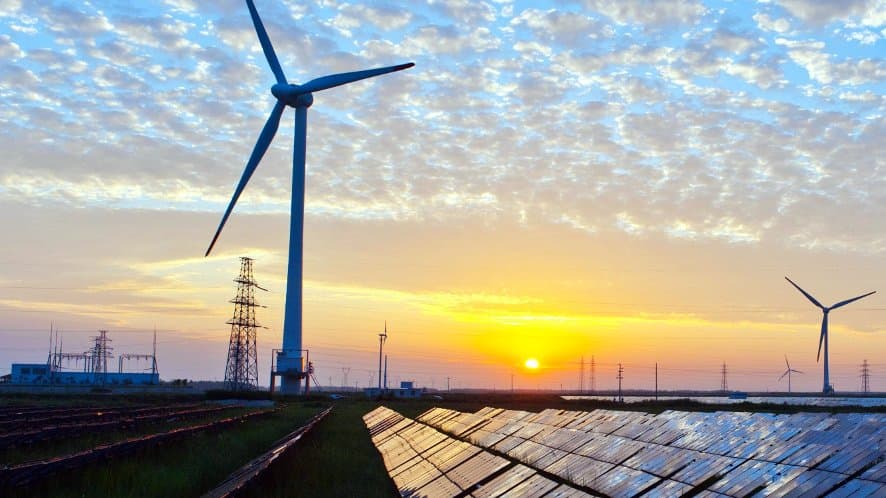
The hardest hours for a grid that runs on weather are not the still ones, and not the overcast ones. They are the hours that are both at once, and the worst of those arrive sharply rather than slowly.
A study published Sept. 21 in Nature Climate Change gives that situation a name and a global count. Yuanyuan Lin and colleagues at Tsinghua University call these events flash energy droughts: sharp declines in wind and solar generation followed by a long stretch of low output. The team includes Steven J. Davis at Stanford University, and the senior author is Qiang Zhang, of Tsinghua's Department of Earth System Science. The name borrows from flash drought, the term for a dry spell that sets in over weeks instead of seasons. The borrowing is about onset. A lull a forecaster watches build for a week is a scheduling problem. A lull that arrives in a day is an operations problem.
In the model projections, those events get longer, and the headline figures are the ones for a world that cuts emissions fast. Under SSP1-2.6, the low-emissions pathway, the study projects that wind droughts last 25.6% longer and solar droughts 29.8% longer. Compound events, which take both resources at once, last 155.7% longer under SSP1-2.6. All three figures are increases in how long an event lasts. Not in how often one arrives, and not in how much electricity is lost while it does.
The compound number is the one that stands out, several times the size of the two single-resource figures. An increase of that size means an event lasting about two and a half times as long. It is also the number that bears on the way these systems are designed. A grid leans on wind when the sun is down and on sunlight when the air is still, and that arrangement works because the two rarely fail together. These events are the exception, and on this projection they are the part that lengthens most.
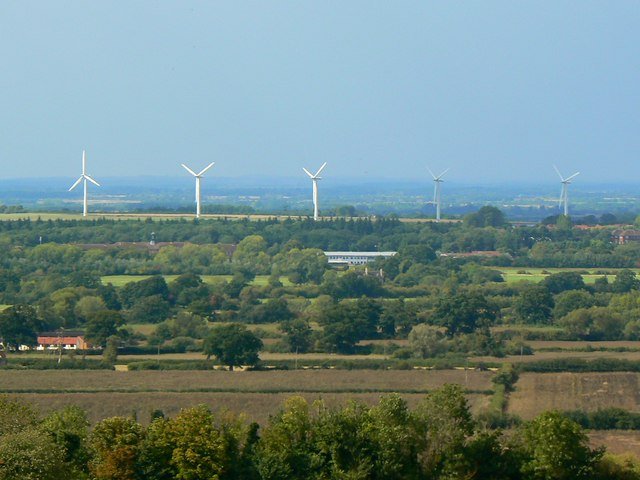
Roughly 70.8% of the world's installed wind and solar capacity already stands where the study projects these events to grow both more frequent and longer. That share is measured in generating capacity, the megawatts already built, and not in a count of turbines, panels or farms.
What that does to a power system is where the authors are most careful. Flash energy droughts, they write, "may be associated with" higher unserved energy, greater need for flexibility, and higher electricity costs. That is an association offered as a maybe, not an outcome the study says will follow. Unserved energy is demand the system cannot meet, electricity that is called for and, in the model run, not delivered. The flexibility is storage, backup generation and demand response, held ready for the hours when the weather does not cooperate.
None of this is a tally of events that have happened. The analysis runs on CMIP6, the shared international climate model archive, averaged across models and laid over datasets of the wind and solar farms standing today. The processed data and the custom code are posted on Zenodo under a CC-BY license, so another group can download them and run the analysis again.
The phenomenon itself is not a discovery. Compound wind and solar lulls have a research literature of their own, and several of the same authors reported in Nature Communications in 2024 that extreme shortage events in wind-solar systems had been trending upward since 1980. That study counted frequency, duration and intensity in weather records rather than in projections, and reported that small shifts in compound low-wind, low-sun conditions may give rise to disproportionately large swings in shortage events. What the new paper adds is the emphasis on how fast an event sets in, a global scope, and an explicit link to what a system operator would have to do about it.
The study points at one lever. Exposure could be reduced by choosing carefully where new wind and solar farms go. The researchers attach a condition: how much that helps depends on climate ambitions and on how much of the technically buildable potential is actually realized.
Nature Climate Change published a commentary alongside the paper, by Kavan Javanroodi, under the title "Flash energy droughts strain grids." Its summary line puts the operational case plainly: sharp declines in wind or solar generation may leave electricity systems little time to respond. For an operator, a lull seen coming and a lull that has arrived are different problems. This paper is about the second kind, and about how long they may hold.
Sources
- Nature Climate ChangePeer-reviewed
- doi.org
- doi.org
- doi.org