Little Lost, Little Gained: What Wind Farms Might Mean for Oregon's Fishing Boats
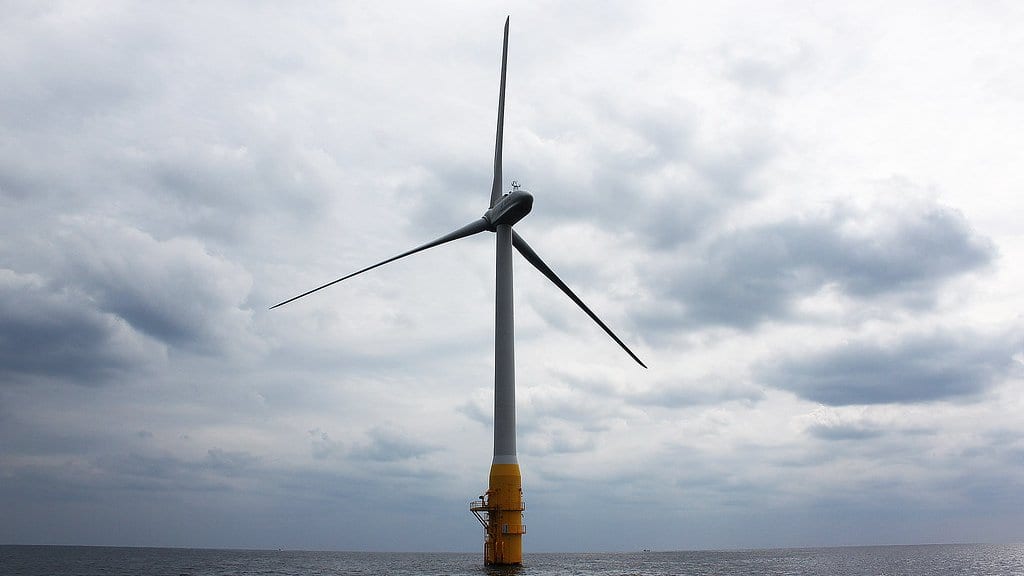
Closing a stretch of seabed off Oregon to trawlers to make room for floating wind farms would change the groundfish catch very little, and would not hand the fishery much of a bonus either, according to a population model published Sept. 7 in Scientific Reports.
The study comes from M. Campbell and J. W. White of Oregon State University's Coastal Oregon Marine Experiment Station, with O. R. Liu and J. F. Samhouri of NOAA's Northwest Fisheries Science Center. The authors write that wind farm structures are expected to limit the access and movement of most vessels, in effect creating a permanent closure for some fisheries. Their stated aim was to advance understanding of what offshore energy development does to fisheries and to conservation.
Nothing has been built off Oregon. The model covers proposed installations, and it simulates short-term effects on two trawl-caught groundfish species under two assumptions: that the fleet holds its fishing effort steady outside the closed area, or that it holds its catch steady. It was built from survey data collected independently of the fishery and from logbook records supplied by the Oregon Department of Fish and Wildlife.
On those terms, the authors report that the closures "would lead to minimal changes in fishing yield," and that fish building up inside the closed area and spilling into water still open to fishing "would not produce a substantial increase in fishery yield." Both are outputs of the simulation rather than measurements of a wind farm in operation.
The paper was accepted Aug. 21 and posted early, ahead of the final version of record, which the journal says is still subject to edits. It is open access, and the work was paid for by the David and Lucile Packard Foundation under award 2022-74730.
Sources
- www.nature.comPeer-reviewed