An X-Ray Blast May Have Puffed Up the Gas Disk Feeding Its Star

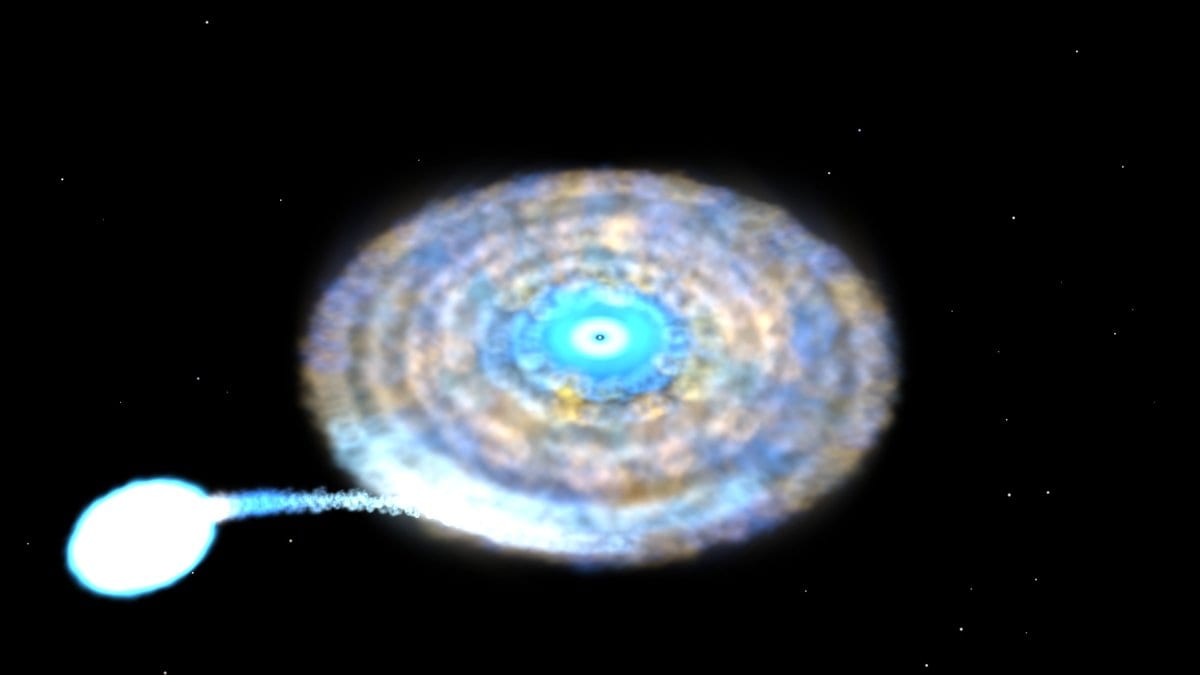
For a few seconds on Aug. 21, 2019, the brightest thermonuclear flash ever recorded by NASA's NICER telescope washed across its detectors. Gas stolen from a companion star had piled up on the surface of a neutron star some 11,000 light-years away until it ignited all at once. Astronomers who have gone back to that archived recording now say part of the explosion never reached us.
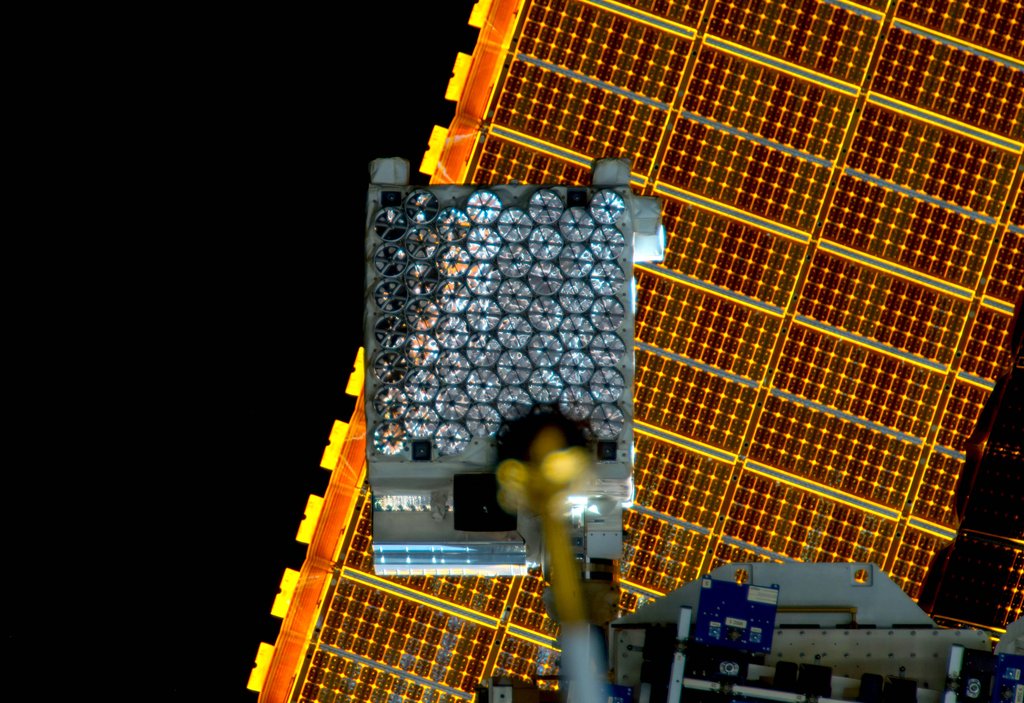
Their explanation is that the disk of gas feeding the star got in the way. A. C. Albayati of the University of Southampton and colleagues posted the analysis to arXiv on Nov. 18, and it has been accepted for publication in Monthly Notices of the Royal Astronomical Society. The journal version is not yet out.
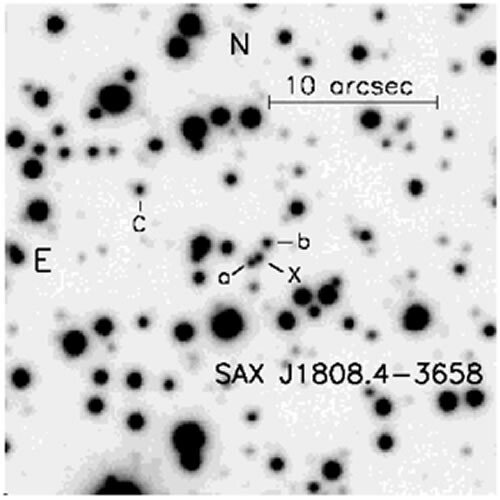
The star is SAX J1808.4-3658, a fast-spinning neutron star that pulls gas off a small companion. The burst was already well known: it peaked at about 33,000 counts per second in NICER's detectors, with two peaks and a brief pause on the way up. the team that first reported it found more low-energy X-ray light in the spectrum than standard models could account for.
Two things about the peak did not add up. A burst this bright is expected to approach the Eddington limit, the luminosity at which a star's outward radiation pressure balances the inward pull of gravity. This burst showed the classic sign of reaching that limit: its outer layers swelled. Yet in the model the team prefers, the direct burst light amounts to only about 68% of the limit. The second oddity concerns the reflected light. According to earlier modeling cited by the authors, a flat disk tilted at this angle should reflect less than 0.3 times as much light as reaches us directly. Their fits give a ratio of 0.82.
The new evidence is in the tail. Albayati's team followed the fading glow farther than the original analysis did, starting a few minutes after ignition. There, a model built from the star's quiet-time spectrum predicted more low-energy X-rays than NICER had recorded. Two adjustments brought the model into agreement with the data. The inner disk had to be about 15% hotter than its usual temperature in the first slice of the tail, then return to normal within a few hundred seconds. More gas also had to sit between us and the source.
How much more gas is the one figure to treat carefully. The manuscript puts the rise in the absorbing column at about 34% in its abstract and in two other places, but at 46% in a fourth. The measurements in its own tables support the larger figure. Something like a half is the honest reading. Peer review is complete, but copy-editing is not, and a mismatch like that is what copy-editing should settle.
Four oddities, then: a peak too dim, too much reflected light, a hotter inner disk and extra gas in the way. The authors connect them with a single mechanism. Burst light heats the inner disk, which then swells. The expanded disk both hides part of the neutron star from our line of sight and intercepts more of the burst's light, reflecting it toward us. They phrase it carefully: disk heating "could cause the disc to puff up and inhibit burst photons."
None of this was directly observed. No telescope can resolve the disk of a binary system at that distance. The disk here is a component in a model fitted to NICER's X-ray spectra, and its expansion is the interpretation that makes the four anomalies fit together. The modeling matters: when the reflected light is fitted without also scaling up the ordinary accretion glow, the models require more light to be reflected toward us than arrives directly, with the burst peak falling well below half the Eddington limit. If the disk's own temperature is allowed to vary instead, the fitted temperature comes out lower, not higher, alongside a much more distant inner edge. The paper itself calls these results "seemingly unphysical."
The paper's own alternatives start with its model. The reflection code assumes a fixed gas density, and the authors write that "we could be over-predicting the reflection flux if we are under-predicting the disc density," in which case part of the missing burst light could be an artifact of the fit rather than a shadow. The extra gas in the tail has other possible explanations too: hydrogen blown off the star during the burst or a wind driven off a thickened disk. The authors are also explicit that whatever the disk did, "the disc cannot be puffed up in a way that completely blocks all photons."
Another team has analyzed the same observation. Manoj Mandal, Sachindra Naik and Birendra Chhotaray fitted a different reflection model to the data and published in MNRAS in April. They too found more light reflected than arrived directly, but their estimate was about a third lower. Same burst, same instrument, a different modeling choice, a different number.
Something turned up before the burst, too. The steady X-ray emission from the system had been rising for about 150 seconds before ignition, and its spectrum showed a hot component that grew hotter as the burst approached. By the authors' count, SAX J1808 is the third such pulsar seen to brighten ahead of a burst and the second in which spectroscopy has linked that emission to a hotter component. They cannot tell whether the light comes from the disk or the star's surface.
What the work gives astronomers is a way to distinguish two effects of the burst. Fitting the reflected light and a scaled-up accretion glow at the same time is, the authors say, "the first time, to our knowledge" that the two have been pinned down together. Earlier analyses used one or the other. Their claim about the heating itself carries the same qualification in the paper's body, though not in its abstract: it is, to their knowledge, the first spectroscopic evidence consistent with a burst heating its own disk. The case rests on a single flash from a single star.