Some of the Most Energetic Objects in Other Galaxies Are the Hardest to Spot

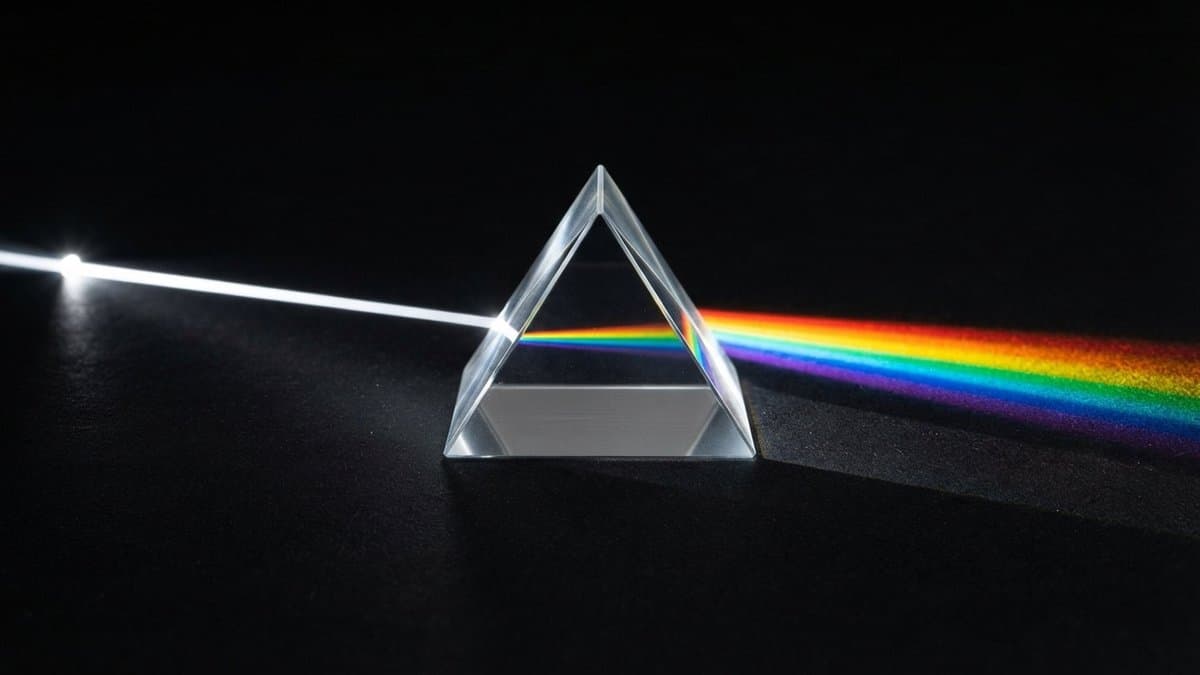
Between the softest X-rays Chandra can detect and the extreme-ultraviolet light that gas between the stars absorbs lies a slice of the spectrum that has been difficult to survey. Chandra's sensitivity falls at its lowest energies, while the interstellar gas itself is close to opaque to extreme-ultraviolet radiation. Anything luminous but cool enough to radiate mostly in that range could leave a hole in the record and stay there.
Three astronomers went looking in the hole and came back with 84 objects. Mustafa Muhibullah and Jimmy A. Irwin of the University of Alabama, working with Rosanne Di Stefano of the Center for Astrophysics | Harvard & Smithsonian, published the catalog in Nature Astronomy on Sept. 9. Every one of the 84 lies in another galaxy, away from a galactic center, and all were pulled from data that had been public for years.
The method was comparison rather than new observation. The team searched the Chandra archive for points of light that appeared in images made at the lowest X-ray energies and then disappeared at higher ones. Detected primarily or exclusively below 0.3 keV, in the paper's phrase, the brightest of them radiate near 10^38 ergs per second in that narrow window alone. They rank among the most luminous non-explosive sources in galaxies, and earlier surveys largely missed them.
They are spread across the six galaxies the team searched, according to NASA's Chandra X-ray Center: the Andromeda galaxy, M31, and the Pinwheel, M101, among them. Two things had kept them out of sight. Chandra's sensitivity at the softest energies has declined over the course of the mission as a contaminant layer built up on the filter in front of its main camera. The team tracked that decline using repeated observations of a galaxy cluster and found that the ratio of soft to harder counts remained steady. The other obstacle is the interstellar gas itself: helium and hydrogen between the stars absorb extreme-ultraviolet radiation, leaving little of it to reach us.
What the paper says, and what the announcement says
The announcement that went out with the paper says scientists have discovered a new class of objects behaving unlike any they have seen before. The peer-reviewed title is more measured: Hypersoft X-ray Sources as a Low-Energy Class of Luminous Cosmic Emitter. The abstract calls them a notable class. What the authors have established is a population picked out by an observational signature, the near-absence of emission at ordinary X-ray energies, while its physical nature remains unsettled.
"We propose that hypersoft sources represent X-ray binaries spanning several physical classes," the authors write. The possibilities they list are already familiar: accreting white dwarfs or post-nova systems, and systems hosting accreting black holes. The Chandra X-ray Center likewise notes that it remains unclear what kinds of objects are responsible for the low-energy X-rays and intense ultraviolet emission.
"We've never encountered a group of objects that act like this," Muhibullah said in the release. "Of course, the next step was to try to figure out what these things are." The proposed systems involve a black hole, neutron star or white dwarf accreting material from a companion star, with the material heating as it falls inward. Some of the sources recur: two in NGC 4472 appear again in Chandra images from different epochs. Systems involving these compact objects are well known. What is unusual is finding sources this bright in the ultraviolet and this faint in ordinary X-rays.
How much energy is involved altogether depends on which model is fitted. Both models the authors tried put the peak of the emission in the extreme ultraviolet, below the X-ray band, and both imply considerably more total output than the X-rays alone show. But a simple blackbody model at about 24 eV and an accretion-disk model at about 27 eV differ in their estimated bolometric correction by a factor of about three to four. The total output is therefore model-dependent.
The neighborhood is not empty, either. The paper's reference list runs back through the supersoft X-ray sources that ROSAT found in the Magellanic Clouds, objects with related physics at higher temperatures. Where one class ends and the next begins is a judgment about a continuum, not a sharp measurement, which is roughly what the shift from a "new class" to a "low-energy class" captures.
The two mysteries, and why neither is closed
"These clandestine X-ray sources are actually among the most energetic objects in galaxies, and they could be solving two cosmic mysteries at once," Muhibullah said. The first is where Type Ia supernovae come from. A white dwarf steadily stealing gas from a companion is one proposed progenitor scenario, an idea traced in the paper's references to Whelan and Iben in 1973, and in half a century nobody has caught one before it detonated.
"If we could find a way to spot these Type Ia supernova explosions before they go off, that would be really important," said Irwin. "Right now, we study them after they've exploded, and astronomers have struggled to understand what is actually ignited." Whether any of these sources is such a system remains a question for follow-up.
The second mystery is what ionizes the gas between the stars in some galaxies, a process that can affect the conditions for star formation. Hot, massive stars do much of the work, but other sources may contribute, and ultraviolet this intense could be one such source. There is a complication: a study by Woods and Gilfanov in Monthly Notices of the Royal Astronomical Society found only one nebula around six known close-binary supersoft sources in the Large Magellanic Cloud, although the authors argued that most supersoft sources should lie in lower-density environments where their nebulae would be harder to detect.
Anyone can check this one
One feature of the work is easy to overlook: the analysis can be checked. The master catalog, the notebook that produces it and the per-galaxy working files are deposited on Zenodo under an open license, roughly 24 gigabytes in all, for analysis with CIAO, the Chandra analysis software. The catalog carries coordinates, counts, fluxes and luminosities with their uncertainties, along with the candidate counterparts that tie individual sources to earlier detections by other instruments.
If these things really do send most of their energy into the extreme ultraviolet, detecting that emission directly will require instruments sensitive to the extreme ultraviolet rather than ordinary X-ray energies.
"By combing through the Chandra archive, we were able to eliminate what used to be a blind spot for telescopes," said Di Stefano. "That's how we found what appears to be a new class of cosmic objects with remarkable qualities."
Appears to be. Eighty-four positions on the sky, and a question attached to every one.
Sources
- Peer-reviewedNature Astronomy
- chandra.si.edu
- doi.org
- allatra.media