Salt Crystals Kept About 18% of an Amino Acid in a Ceres-Like Brine

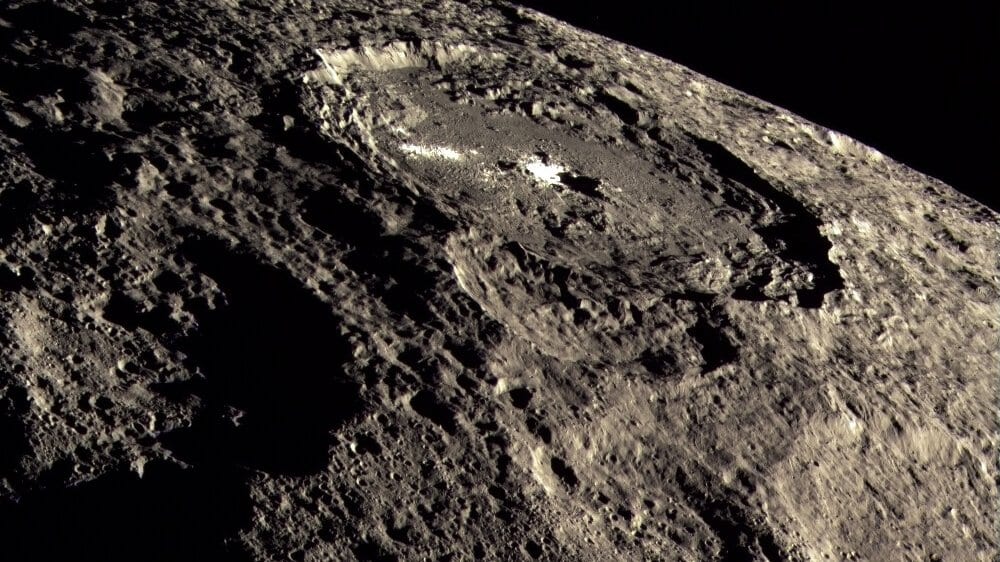
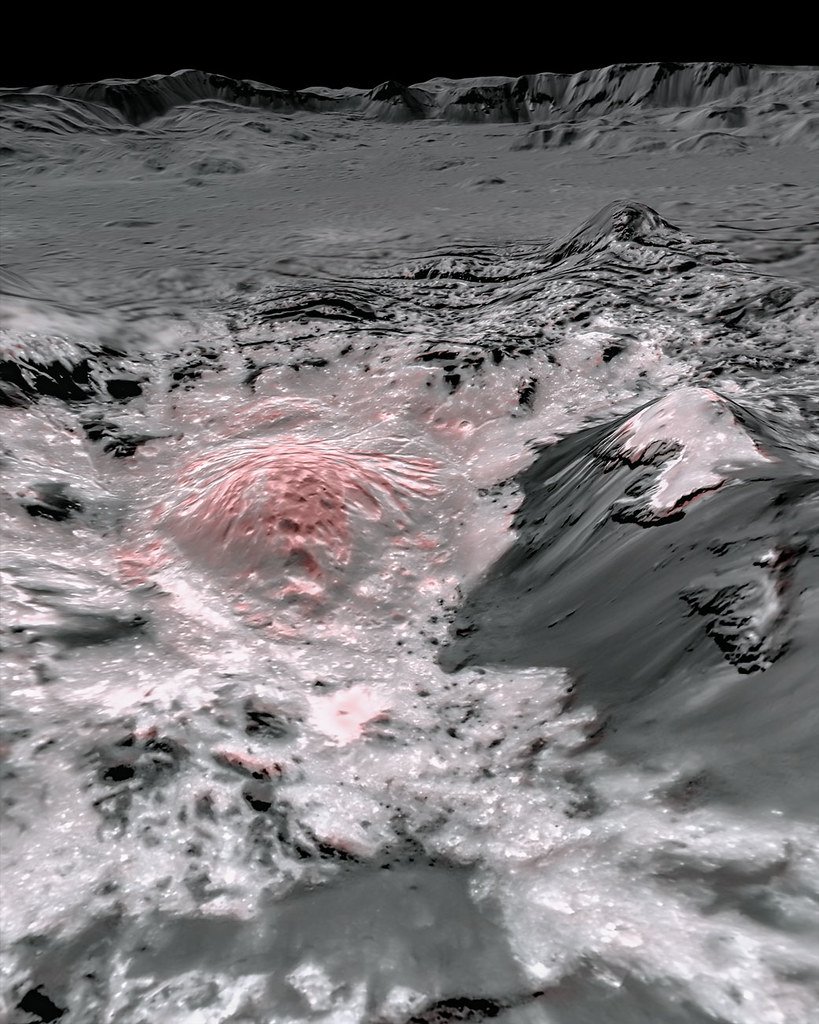
Ceres is dotted with bright patches of salt, and each one is a kind of receipt. Salt like that is left behind when briny liquid reaches the surface and the water evaporates. Whatever was dissolved in the brine had a chance to become trapped in the crystals as they grew, while anything that did not was left behind. So a spacecraft that one day collects a grain of Ceres's salt and finds an organic molecule in it will face an awkward question: Was the brine faintly flavored with that molecule, or soaked in it?
Lucas R. Reynoso of Arizona State University and colleagues have now measured the answer for one molecule. Their paper was published Oct. 9, 2026, in The Planetary Science Journal, and it explains why the measurement matters: salts on Ceres "may act as messengers of interior ocean chemistry." Interpreting that message requires knowing how much of a dissolved substance the salt retains. The researchers grew table salt from a Ceres-like brine containing glycine and measured how much glycine the crystals retained. Glycine is the simplest amino acid and one of the most commonly reported amino acids in extraterrestrial material, which is why the team chose it.
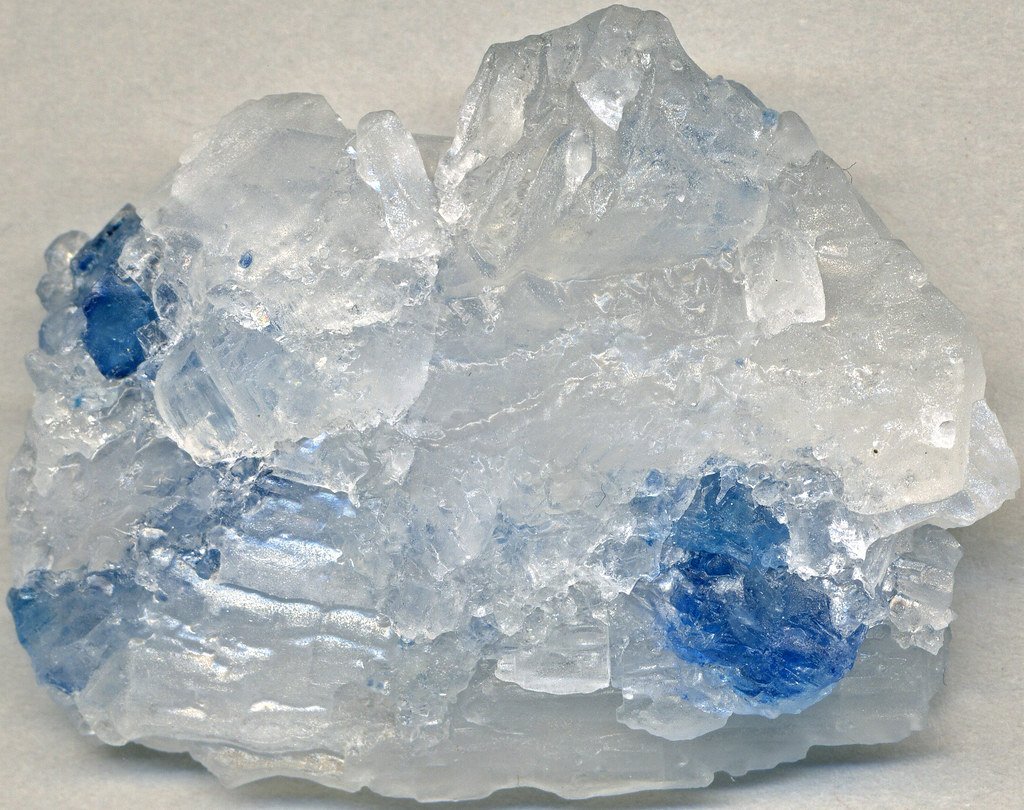
The team reports an apparent partition coefficient of 0.177 ± 0.019, which it interprets as the salt retaining about 18% of the glycine concentration in the brine. The researchers measured glycine in dissolved crystals using gas chromatography and found that, across the range tested, its concentration in the crystals increased linearly with its concentration in the brine. To their knowledge, the authors write, this is the first such ratio measured for an organic compound and salt pairing relevant to ocean worlds, icy bodies thought to contain liquid water. Earlier work, including the group's own, had shown that glycine preferentially associates with salt rather than ice, but had not quantified the relationship.
Applying the ratio in reverse, the authors infer that glycine in Ceres's subsurface brine reservoir could be at least five times more concentrated than in surface salt deposits. This is a lower bound, not a direct estimate of the concentration in Ceres's brine. The inference is based on laboratory experiments with Ceres simulant brines, not measurements made on Ceres itself.
Where the glycine ends up matters as much as how much the crystals retain. Reflected-light images and X-ray scans show glycine trapped in micrometer-scale inclusions, tiny pockets inside the crystals, rather than replacing atoms in their regular structure. The amount varied from crystal to crystal, consistent with the trapping process being partly random. This leads to an important implication for sample analysis: individual salt grains may differ even when they formed from the same brine.
Two limitations accompany the result, and the authors acknowledge both. "Apparent" signals that the coefficient applies to the conditions under which it was measured, with salt crystallizing from an evaporating Ceres-like brine, rather than representing a universal constant. The second limitation concerns concentration. The brines contained up to 133 millimoles of glycine per liter, roughly 10 grams per liter, far more than expected in Ceres's brines. The linear relationship was demonstrated only across the tested range, not at lower concentrations. Applying the ratio to the trace amounts likely to occur in a real sample therefore requires extrapolating beyond the experimental data. The study used one laboratory setup, one simulant, one amino acid and one crystallization method.
None of this means amino acids have been found on Ceres. NASA's Dawn spacecraft detected a broader class of organic compounds there: aliphatic organics, which include carbon-chain molecules. Maria Cristina De Sanctis and colleagues reported in Science Advances on Sept. 27, 2024. In some surface patches, these compounds account for roughly 5% to more than 30% by weight. Laboratory tests showed that the observed spectral signature degrades rapidly under radiation like that Ceres receives. The researchers inferred that the organics had been exposed at the surface within the past few million years and that a larger reservoir may lie in the shallow subsurface. Glycine itself has not been detected on Ceres.
The paper's final sentence points to a possible application of the measurement. Origins, Worlds, and Life, the US planetary science decadal survey for 2023–2032, includes a Ceres sample-return mission among the themes recommended for future exploration. The authors offer their ratio as one piece of the analysis that such samples would require. Researchers examining a few grains of salt would need to reason backward to a liquid they could not sample directly. The ratio is one step in that process, and the variation between grains is a reminder that a single grain may not tell the whole story.
Sources
- The Planetary Science JournalPeer-reviewed
- Science Advances