How Fast-Growing Ferns May Have Kept Feeding the Fires of an End-Triassic Catastrophe

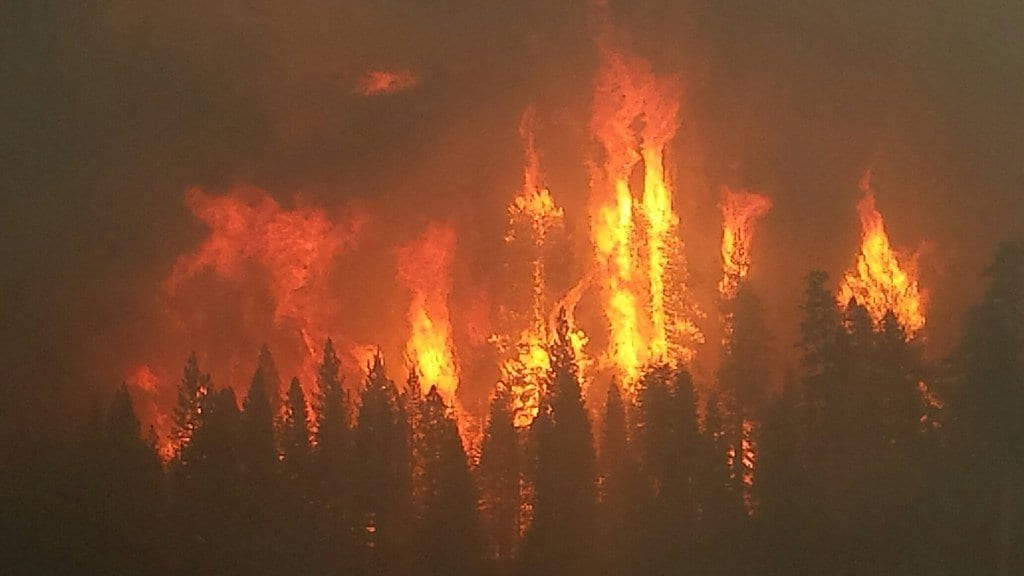
A fire needs three things: heat, oxygen and fuel. Cut off any one and it dies. What made the end-Triassic so catastrophic, a new study argues, is that the landscape kept regrowing its own fuel, fast and for a very long time.
The setting was one of the worst intervals in the history of life. Around 201 million years ago, as the supercontinent Pangaea began to tear apart, immense volcanic eruptions flooded the atmosphere with carbon dioxide and drove global temperatures up by an estimated 5 to 10 degrees Celsius. That extreme greenhouse pulse is tied to the end-Triassic mass extinction, one of the "big five" die-offs. In the heat, the conifer forests that had covered much of the land collapsed.
Into that gap came the ferns.
A team led by T.P. Hollaar at Utrecht University, with senior author Bas van de Schootbrugge, reconstructed what happened next from four sediment cores across northwest Europe, including a freshly drilled 640-meter core from the United Kingdom. Their study appears in Nature Geoscience. As the forests died back, ferns spread into savannah-like expanses and, the researchers argue, turned the region into a machine for making fire.
The loop
The mechanism is a feedback loop, the kind of self-reinforcing cycle that is hard to break once it starts. Ferns are fast growers, and many regenerate quickly from underground root systems after being burned. So a wildfire would tear through a fern savannah, and rather than leaving barren ground, the landscape would rebound within a short span into a fresh, dry, highly flammable carpet, ready to burn again. Fire, regrowth, more fuel, more fire.
"Ferns responded to and delivered the fuel that fanned the flames, triggering repeated massive wildfires," van de Schootbrugge said.
To show that the fires and the ferns rose together, the team leaned on several lines of chemical and fossil evidence. Fossil charcoal and polycyclic aromatic hydrocarbons (molecules produced by burning) recorded the fires directly. Alongside them, the researchers developed a new tool they call the Palynomorph Darkness Index, which tracks subtle color changes in fossil pollen and spores by measuring them across the RGB spectrum. Some 15,000 such measurements revealed a distinct "Dark Zone," an interval where the fossils darkened sharply, coinciding precisely with the spike in fern spores. Because the darkening showed up simultaneously across all four cores, the team argues it reflects a genuine environmental signal rather than a quirk of how any single site was buried.
By their estimate, the fern-driven fire interval persisted somewhere between 40,000 and 300,000 years: a fire regime not of a bad season but of deep time.
Why an ancient fire cycle matters now
The appeal of a 201-million-year-old wildfire is not only the drama. It is that the episode isolates a variable that is hard to study in the present: how the composition of vegetation, on its own, can dictate how severe fires become.
The end-Triassic bundles together forces that feel unsettlingly familiar: rapid warming, the collapse of established forests, and the spread of fast-growing opportunistic plants into the wreckage. Watching how those ingredients combined into a self-renewing fire cycle in the fossil record is a way of seeing, at safe distance, how vegetation and fire can lock into a loop. The ferns of the Triassic are long gone. The dynamic they may have set running is not.