The Glue That Sticks to Non-Stick, Then Washes off With Alcohol

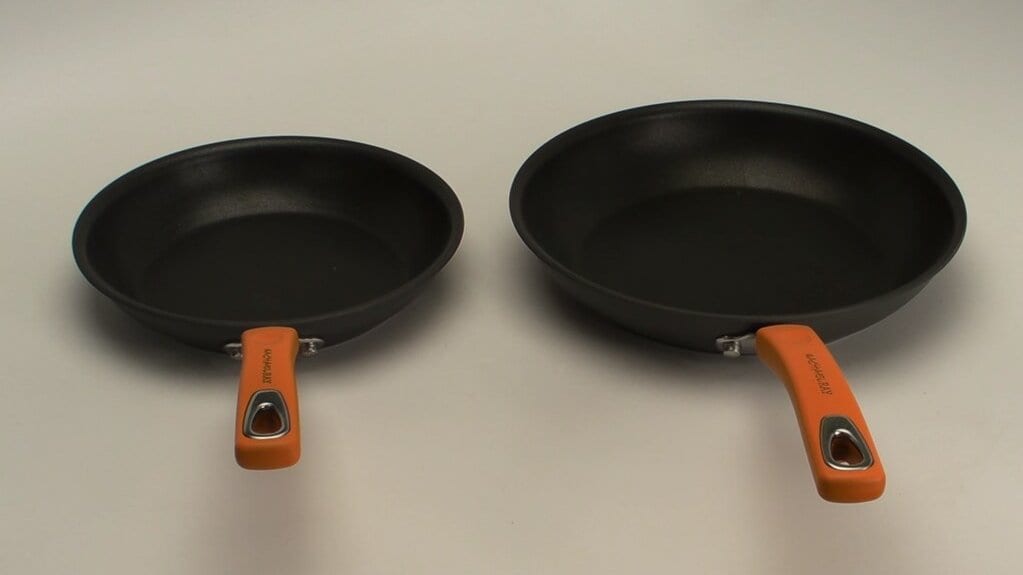
Teflon is famous for the things that will not stick to it. Eggs slide off the pan; water beads and runs. That same slipperiness makes polytetrafluoroethylene, or PTFE, a nightmare to glue. Its surface is chemically inert, so ordinary adhesives find almost nothing to grab. Bonding to Teflon is one of the standing headaches of materials science, and it is exactly the surface a group at the University of Tokyo decided to conquer.
They did it, and then they added a second trick that is arguably harder. The glue washes off.
The material, reported this month in the Journal of the American Chemical Society, is a small crystalline molecule the team calls CyclicFP-fmoc. It came out of the lab of Takuzo Aida, with Kohei Kikkawa as lead author. The design leans on fluorine, the same element that makes Teflon slick in the first place. Rather than fight the fluorinated surface, the adhesive meets it on its own terms, binding through weak attractions between fluorine atoms on the glue and fluorine atoms on the plastic. Many of those small interactions add up to a firm grip.
Firm is an understatement in the numbers. In lap-shear tests, where two bonded plates are pulled to see how much force the joint survives, the adhesive held to about 1.3 megapascals. For comparison, the team reported that common commercial epoxies manage somewhere between 0.1 and 0.7 megapascals on the same slippery plastic. A patch of the glue roughly 7 square centimeters across, smaller than a business card, suspended an 8-kilogram weight without letting go. That is close to 18 pounds hanging from a stamp-sized dab.
The part that usually breaks
Here is the tension that makes the work interesting. A glue that bonds hard tends to stay bonded, and getting it off means solvents, heat, scraping, or brute force that damages whatever was underneath. A glue that lets go easily tends to be weak to begin with. Strength and removability pull in opposite directions, which is why reversible adhesion has been a long-standing goal rather than a solved problem.
CyclicFP-fmoc gets to have both because of how it is built. The molecule is crystalline and held together, and to the surface, by many noncovalent bonds rather than the permanent chemical welds that make a cured epoxy so stubborn. Those weak links are strong in the aggregate but individually reversible, so the right solvent can pry them apart all at once. In this case the solvent is ethanol, the alcohol in a bottle of hand sanitizer.
A simple ethanol wash, the researchers report, stripped the adhesive off the Teflon plates completely, leaving no residue behind. And the glue that came off was not spent. The recovered material could be used again more than 10 times while holding roughly 1.2 megapascals of strength across the cycles, only a hair below its first performance. Bond, wash off, collect, bond again.
What it points toward, and what it does not
The obvious appeal is taking things apart. Electronics, cars, and consumer goods are full of glued joints that make devices lighter and cheaper to build but far harder to repair or recycle, because the parts cannot be separated cleanly at the end of life. "Tough adhesion with easy debonding has long been awaited for the realization of a sustainable society," the team wrote, casting the work squarely toward recycling and reuse.
That framing is the motivation, not the result. The paper demonstrates a strong, removable, reusable adhesive at laboratory scale on small test patches. It does not show a recycled phone or a disassembled car, and scaling a benchtop chemistry result to industrial manufacturing is a long road with plenty of ways to stumble. Read the recycling angle as the reason the chemists find this exciting, and as a direction the field would like to head, rather than a delivered outcome.
The finding itself is solid ground. It is peer-reviewed, published in the Journal of the American Chemical Society, one of chemistry's most established venues, and the coverage in Chemical & Engineering News reports the same figures. A versatile adhesive that washes away with household alcohol is a remarkable molecular breakthrough, no matter how it is ultimately deployed.