Tin Ore at Three Bronze Age Sites in China Traveled 1,500 Kilometers

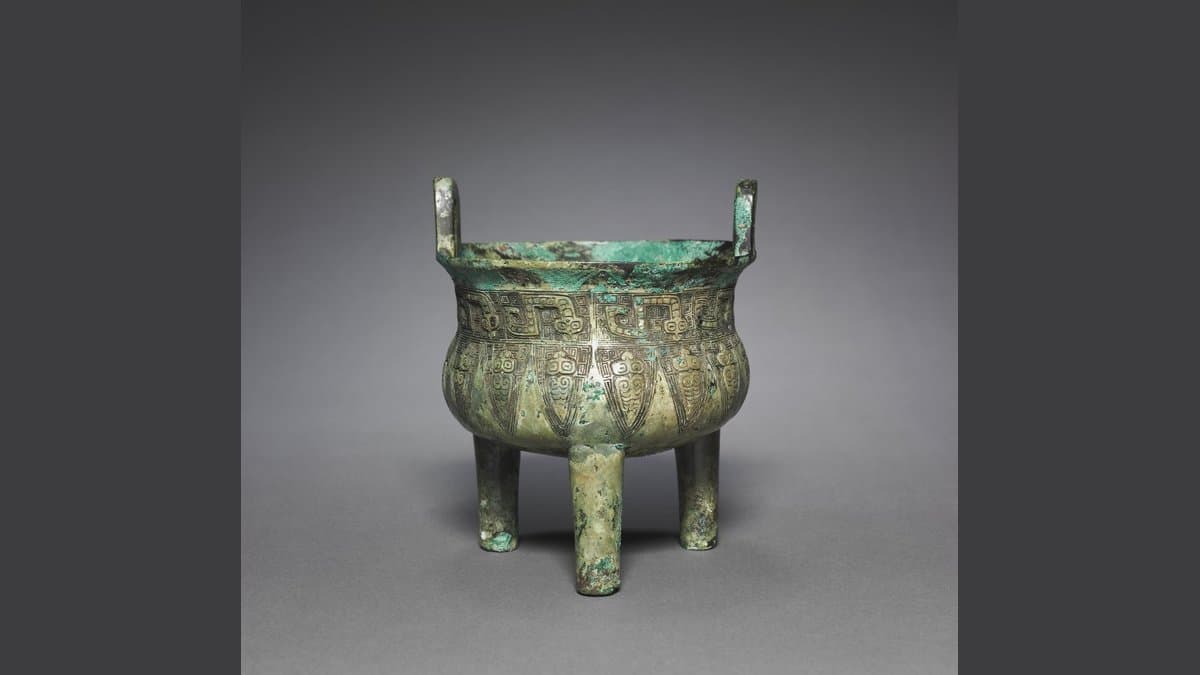
Tin is what makes bronze bronze, and it is the one ingredient the Shang should not have had. Copper turns up across northern China, and lead is more widespread still, but tin is scarce anywhere north of the Yangtze. The workshops of the Central Plain poured ritual bronzes by the thousand anyway, through a dynasty that ran from about 1500 to 1046 B.C. Somebody was bringing the tin in, and for decades nobody could say from where.
The usual way to answer a question like that is to read the lead isotopes in a finished object and match them to an ore body. On Chinese bronzes it has never worked well, because the metal was remelted, recycled and mixed until the ore's signature dissolved into the blend. So a team led by Zhenfei Sun, of the University of Science and Technology Beijing and Peking University, went after the ore instead of the object. Their analysis was published Sept. 21 in the Proceedings of the National Academy of Sciences.
Tin comes out of the ground as cassiterite, a hard oxide mineral. Grains of it survive what the metal does not: burial, half-finished smelting, a spill on a workshop floor. Inside those grains, uranium decays to lead on a clock that starts when the crystal grows. The age that clock gives belongs to the deposit, not to the object made from it, and remelting cannot reset it. That turns it into an exclusion test: if the grains at a metalworking site do not match a belt's formation age, the belt is out.
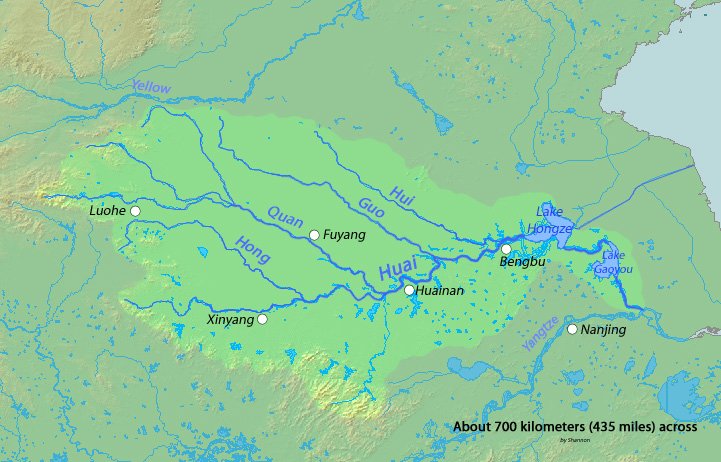
Sun and colleagues found cassiterite in three kinds of place: a site where ore was smelted, a hoard of stockpiled metal, and a workshop where bronze was cast. The grains came from the Great Hinggan Range polymetallic belt, a band of mixed ores in the far northeast of the country. From there they had been carried more than 1,500 kilometers south to the Middle Huai River region, where they went into tin bronze during the Middle Shang period. The paper presents that as the first comprehensive attempt to source the tin ore used under the Shang.
What it hands archaeology is closer to a framework than a verdict: a way of ruling candidate deposits in and out, run here on three sites and one stretch of one dynasty.
A date is an exclusion, not an address. More than one part of China has tin that formed in the Early Cretaceous, deep in the age of dinosaurs. The candidates the dating leaves standing sit at opposite corners of the country: the southern end of the Great Hinggan belt, and tin country in southeastern Guangdong. The clock does not choose between them. The archaeology does, on whether anyone was mining at that scale in the Shang period and whether any trace survives of ore moving out of the south.
Even the candidate left standing leaves a gap. Nothing in the excavated record puts the Middle Huai in direct contact with the mining country in the northeast. The authors propose a relay: metal moving first into the Shang political heartland on the Central Plain, then passing south from there. They offer it as the most likely explanation available, not as something the ore grains show.
The northeast was already under suspicion, by a completely different argument. In a review published Oct. 23, 2025, in the Journal of World Prehistory, Jonathan R. Wood and Yaxiong Liu worked from the chemistry of more than 300 ritual bronzes in a museum catalog rather than from any ore. The traces of gold in those bronzes track the tin, not the copper. Their explanation is that gold and cassiterite came out of the same river gravels in northeastern China, and that the gold was deliberately removed before the ore was smelted. They called the region an increasingly viable candidate for the tin of the whole Chinese Bronze Age, and noted what was still missing: no tin mine has yet been tied directly to the Shang.
Two independent routes converging on the same corner of the map is what lifts this above a local result. It also drops early China into a story archaeologists have so far told about Europe and the Mediterranean, where tin crossed a continent long before anyone wrote about trade. The authors call that bronzization, the Bronze Age as a first globalization, and argue that it now reaches East Asia. The more durable prize may be the method. The same clock can be read on any cassiterite grain that survived anywhere, which gives the next argument about Bronze Age tin something to test instead of something to speculate about.