A Desert Crossing Found 55 Ancient Lakes and Not One Stone Tool
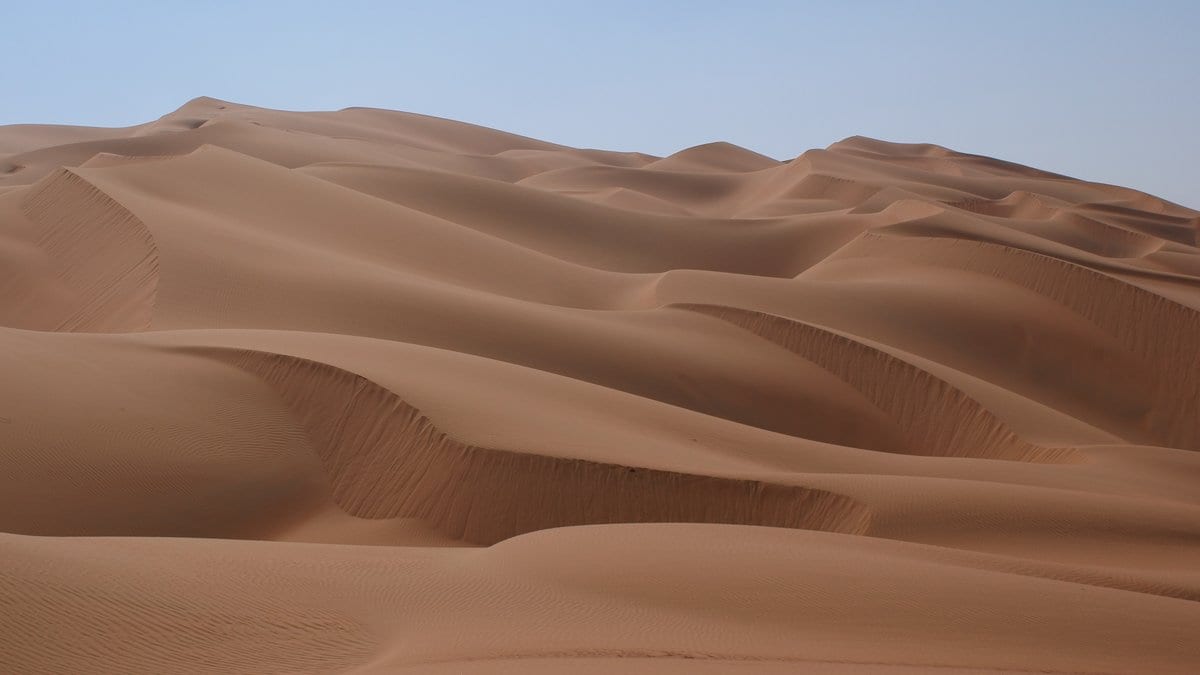
A survey that crossed about 1,500 kilometers of the Rub al Khali, the world's largest sand sea, recorded ancient lake deposits at 55 of the 125 places it stopped and no stone tools at any of them. The work was published Oct. 28, 2026, in Nature.
Rudolf W. Dellmour of the University of Vienna, Jeffrey I. Rose of the Universidade do Algarve in Faro, Portugal, and their colleagues write that the crossing tested a prediction of existing models of early human dispersal, which use climate and water to work out where people could settle: that the desert's wet interior basins should have drawn settlement. They conclude that models leaving out where usable stone lies may overstate the range open to populations that depended on stone tools.
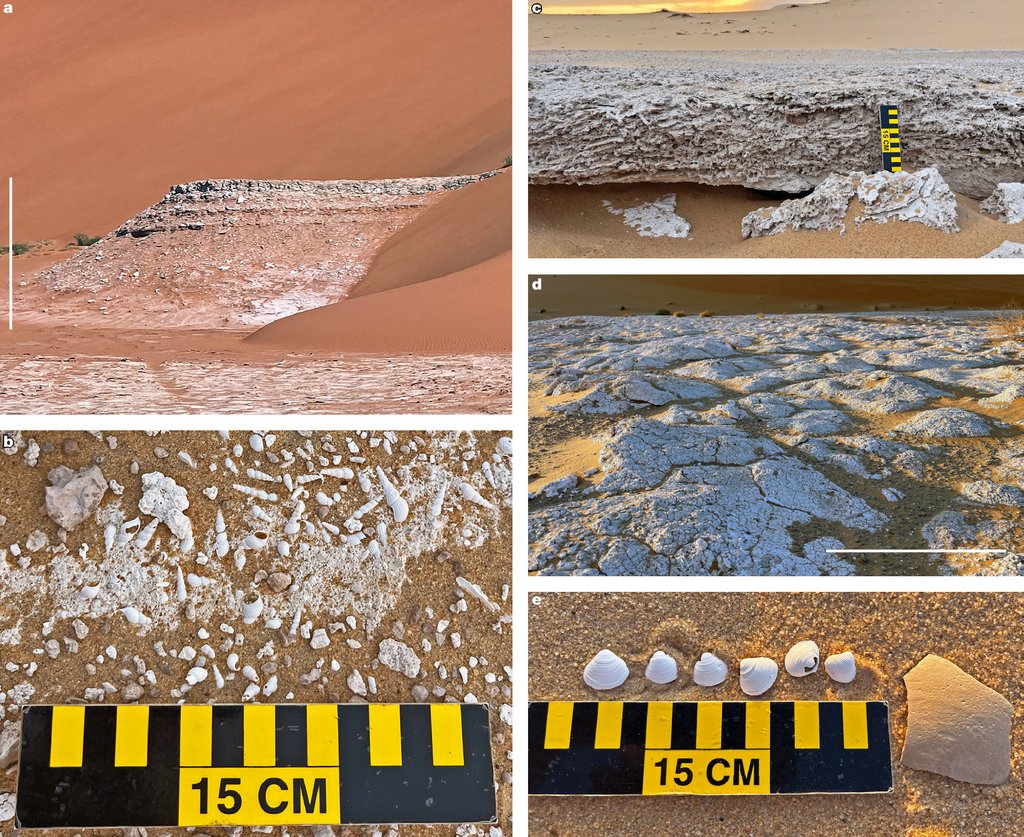
The authors report that the lake deposits lie among sections independently dated to between about 122,000 and 67,000 years ago, a span when people were living around the desert's margins. They put ground visibility along the route above 95%, and say snail shells and bits of ostrich eggshell a centimeter or so across were found at the lake sites, so flaked stone would have shown. The nearest known outcrops of stone that fractures cleanly enough to shape into a tool lie more than 200 kilometers from the basins surveyed.
Usable stone did turn up at 10 localities, all at the western and eastern edges of the basin, and the survey found no tools at those either. Across the Arabian Peninsula as a whole, the team's model of mapped surface geology and reconstructed drainage places 57% of the land within reach of water on rock that yields nothing workable.
They report no material from later periods either, including the Early Holocene, when lakes and rivers formed in the interior again. They describe the peninsula as a patchwork of separate zones where water and stone occurred together, and point to comparable patterns reported in Libya, on the Tibetan Plateau, in Egypt's Eastern Desert and in eastern North America.
Photographs taken at each surveyed locality are archived by site number in a public repository.
Sources
- NaturePeer-reviewed