Reviving an Old Antibiotic: A Small Molecule Brings Vancomycin Back Against a Superbug That Had Beaten It

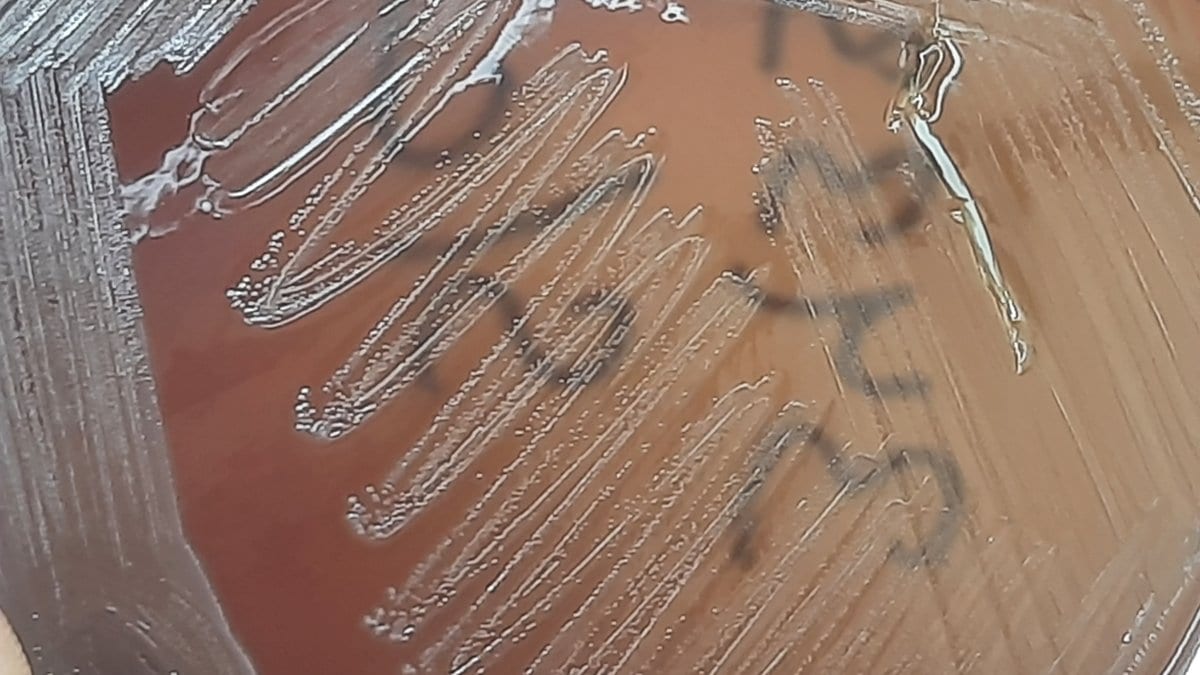
The usual story about antibiotic resistance ends with a plea for new drugs, and the pipeline for those is famously thin. A study out of two American labs points at a different move: not inventing a new antibiotic, but reviving one the bacteria had already learned to beat.
The drug in question is vancomycin, long a last-line defense against tough Gram-positive infections, and the adversary is Enterococcus faecium, a hospital-dwelling pathogen that has grown adept at surviving it. The new work, published in Nature Communications by teams led by John Moses at Cold Spring Harbor Laboratory and Howard Hang at Scripps Research, goes after the bacterium's defenses rather than the bug itself.
At the center is an enzyme called SagA (secreted antigen A) that the researchers link to the microbe's ability to resist the drug. Their tool against it is pghi-4, a small molecule that first turned up in the Moses laboratory back in 2020, not in an antibiotic hunt at all but through basic work on chemical reactions. Blocking SagA with pghi-4, the team found, strips away part of the bacterium's protection and lets vancomycin do its job again. Against resistant E. faecium in the lab, the combination restored the antibiotic's bactericidal punch, cutting the dose needed to kill the bug by up to eightfold.
The strategy has a name in the field: an antibiotic adjuvant, a companion molecule that does not kill bacteria on its own but restores the power of a drug that does. It is the same logic that keeps some older antibiotics clinically useful by pairing them with a resistance-blocker. What is appealing here is the generality of the idea. If a bacterial enzyme is handing a superbug its armor, and a small molecule can knock that enzyme out, then the aging antibiotic on the shelf might be worth another look; the same playbook might apply to other drug-and-defense pairs.
Now the necessary brakes. This is early-stage, preclinical science. The study emphasizes laboratory results, and while the work includes successful testing in mice, none of it has yet reached a human trial. The distance between "revives vancomycin against resistant bacteria in a dish and in mice" and "a treatment a doctor can prescribe" is measured in years and littered with candidates that looked promising and then stumbled: on safety, on dosing, on whether the effect holds up in a living, infected person. A dose reduction in the lab is an encouraging signal, not a clinical outcome.
There is also the ever-present shadow over any resistance story: bacteria adapt. A defense aimed at one enzyme invites the evolution of a workaround, and whether E. faecium can route around a SagA blocker is a question only more work will answer. Reviving a drug buys time; it does not end the arms race.
Held at the right distance, though, the appeal is real. Much of the alarm about antimicrobial resistance assumes the only escape is a steady supply of brand-new antibiotics, which the world has struggled to produce. This line of work suggests part of the answer may lie in the drugs we already have, if we can find the small molecules that switch a superbug's resistance back off. That would not retire the search for new antibiotics. It would widen the field of play, and against a threat that keeps outrunning us, a wider field is worth having.
Sources
Medical Disclaimer: This content is provided for general informational and educational purposes only. It is not medical advice and should not be used as a substitute for professional medical advice, diagnosis, or treatment. Always consult a qualified healthcare professional regarding any medical condition, concern, symptom, or treatment decision.