Skip to content
See the World Through ScienceA project of ALLATRA
Source: Peer-reviewedProceedings of the Royal Society B: Biological Sciences1 source

Hawkmoths Evolved More Than One Way to Make Ultrasound at Bats
Science

Republish this story

Our work is licensed under Creative Commons BY-NC 4.0. You may republish this piece for free — with credit to ALLATRA Media and a link to the original, unedited beyond length trims, and not for commercial use.

Read the full license

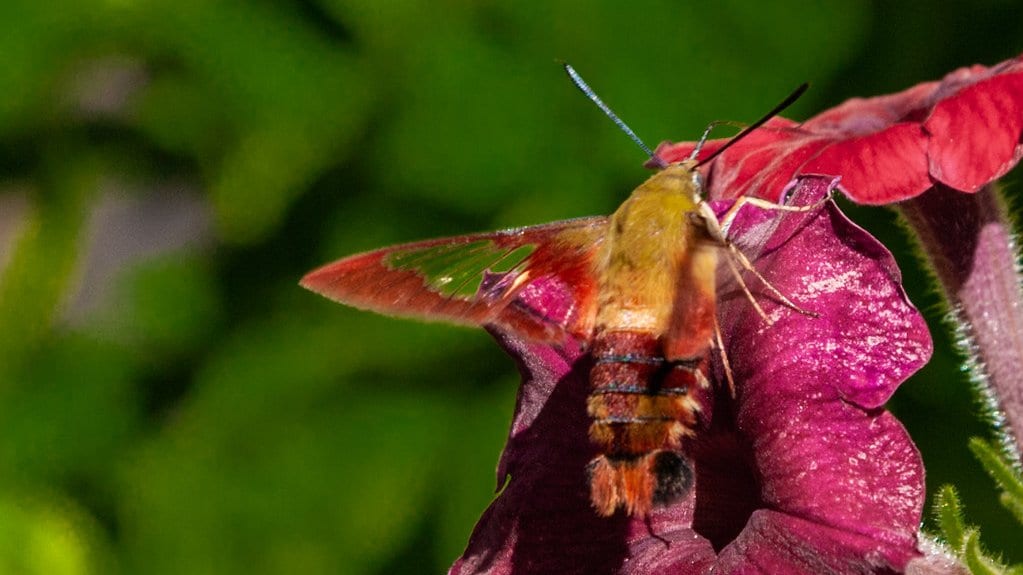
A clearwing hawkmoth with a banded orange and black abdomen perches on a magenta flower, wings partly open.
A clearwing hawkmoth feeds at a garden flower in daylight; the new work looked across the whole hawkmoth family (illustrative)."Clearwing Hummingbird Moth" by Me in ME, via flickr, CC-BY-2.0

Hawkmoths make ultrasound at hunting bats with at least three mechanically different sound-producing systems, and the behavior evolved independently more than once within the family, a team led by Paul K. Masonick of the Florida Museum of Natural History at the University of Florida reports in Proceedings of the Royal Society B. The paper was published Nov. 4, 2026.
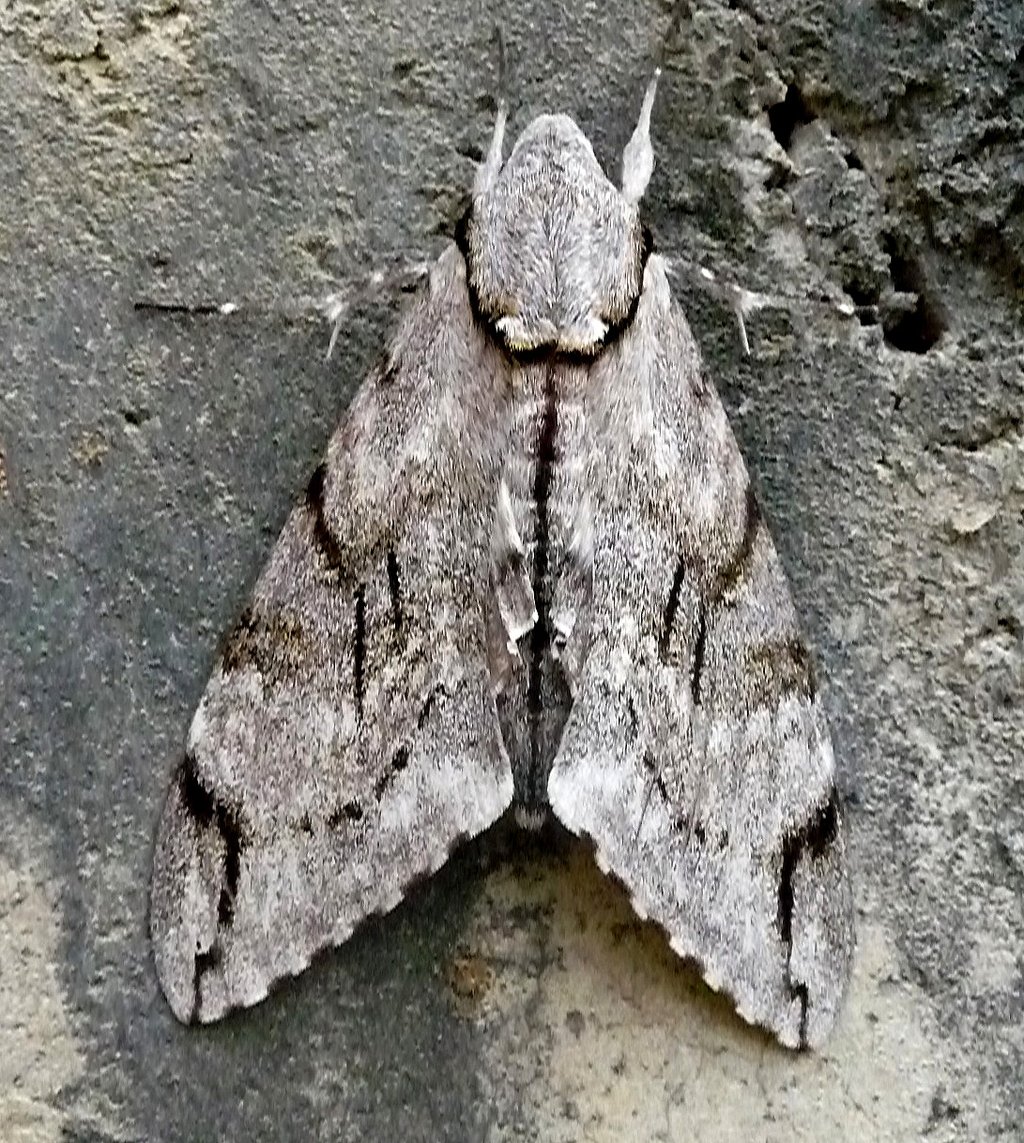
A gray hawkmoth rests flat against a rough concrete wall, wings folded back in a narrow triangle.
Pressed flat against a wall, a night-flying hawkmoth sits out the day (illustrative). "Hawkmoth. Sphingidae. Sphinginae. Psilogramma increta - Flickr - gailhampshire" by gailhampshire from Cradley, Malvern, U.K, via wikimedia, CC-BY-2.0

The authors say they investigated how the behavior evolved across the family, and they conclude that conflict with predators drives both new defenses and repeats of the same one. Their analysis of the hawkmoth family tree places the independent origins within the past roughly 30 million years.

The three systems are named for which pair of structures rubs together: scale on scale, scale on spine and scale on nodule. In each, one part acts as a scraper and the other as a file. The team classified them using sound recordings, electron microscope images, high-resolution X-ray scans and a dated family tree of the group. It also reports the first description of the file in the scale-on-nodule system, found in Macroglossinae, one of the hawkmoth subfamilies, along with new details of two mechanisms that had been described before.

The authors also report that different hawkmoth lineages produce acoustically distinct sounds, and that those differences track variation in the sound-producing structures and in whether a species has hearing organs.

The National Science Foundation funded the work.

Sources

Spot an error?

Spot an error?

Report an error

Spotted a mistake on this page? Tell us what's wrong and our editors will take a look.

What kind of problem?

Only if you'd like us to be able to follow up. We won't use it for anything else.

We correct mistakes openly. Select any text to flag it. Fixes are logged under our Corrections Policy.

Report an error

Reporting on

Hawkmoths Evolved More Than One Way to Make Ultrasound at Bats

What kind of problem?

Only if you'd like us to be able to follow up. We won't use it for anything else.

We read every report. Corrections are logged publicly.