In Mice, Mitochondrial Damage in the First Two Months Was Enough to Drive Later Disease

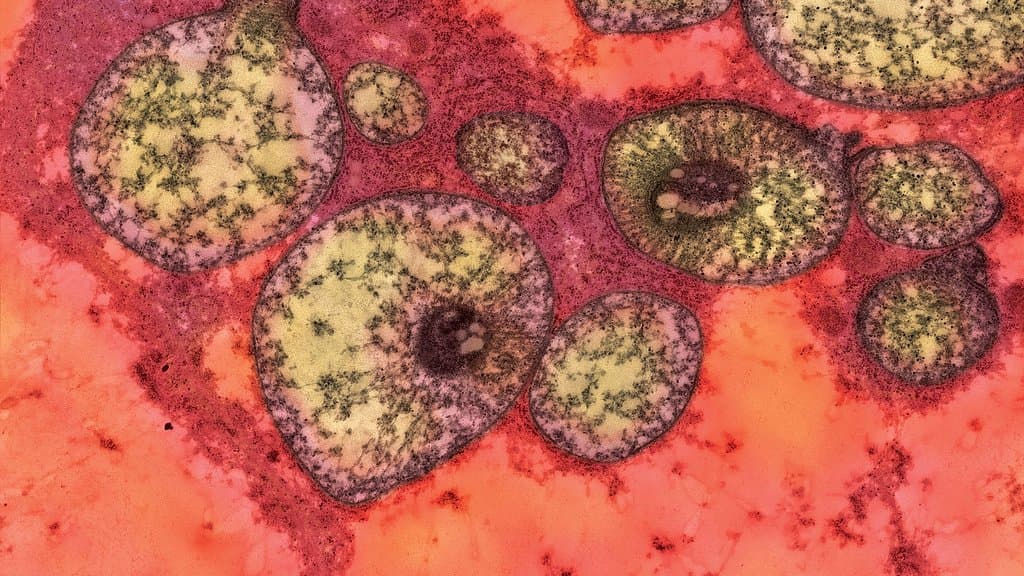
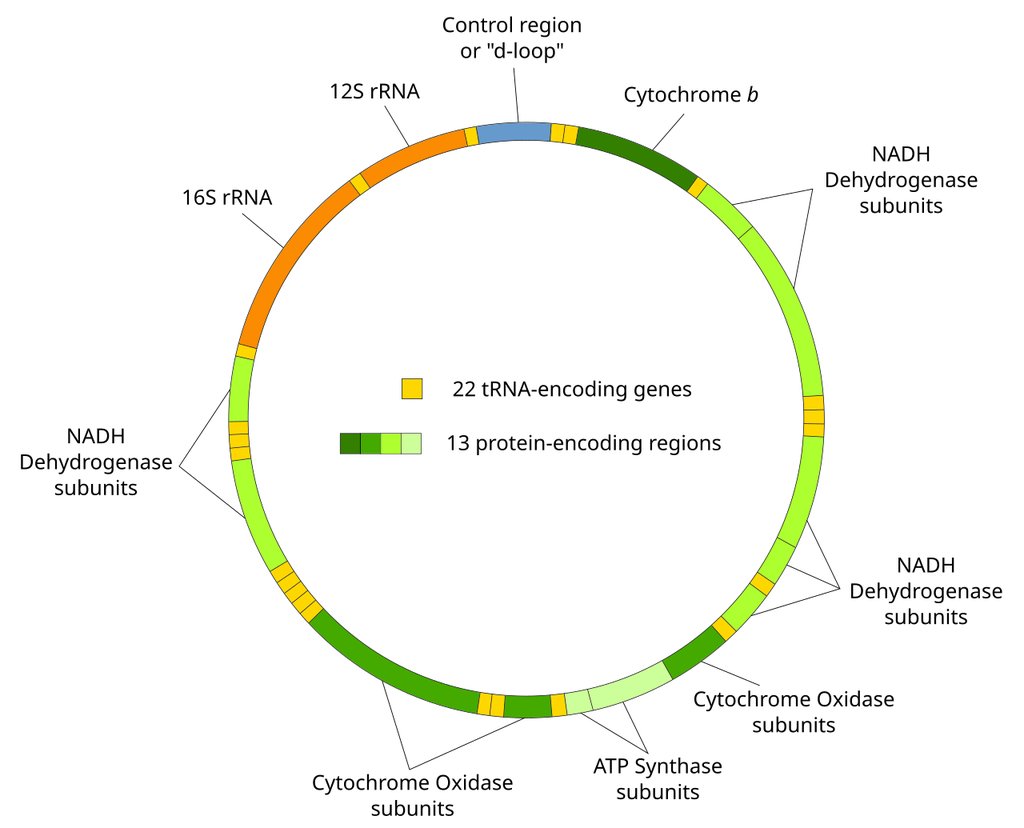
Mitochondria keep a small genome of their own, separate from the DNA in the cell's nucleus, and it accumulates mutations as an animal ages. Some version of that fact has sat inside the standard explanation of why bodies wear out for decades. What the explanation has never pinned down is timing. Do the mutations that drive the decline arrive late, when a body is already failing, or early, leaving a whole lifetime in which a handful of bad copies can spread through a tissue?
Answering it means controlling when the mutations happen, which is not something you can ask a mouse to do. A team led by Sarah Jean Shemtov and Marc Vermulst at the University of Southern California has now built a mouse that will. In a preprint posted on September 27 to bioRxiv, with colleagues at the University of Washington, UCLA, Harvard Medical School and Mississippi State University, they describe an animal in which mitochondrial mutation can be confined to a defined window of time. The preprint has not been through peer review.
The window in this experiment is the animals' first two months. The authors report that mutations arising in that stretch alone were "sufficient to drive a wide variety of age-related pathologies," turning up long after the mutations had stopped being made. The mouse is engineered to mutate its mitochondrial DNA far faster than any normal animal does, which is what makes the experiment possible and also what keeps it from speaking directly about ordinary aging. And enough on its own is not the same as all that matters: an early window being sufficient says nothing about whether damage arriving later also does harm.
A second finding may be the one that travels furthest. Severity was not uniform across the body: it tracked what each tissue did with the mutations it had been handed. Some tissues kept damaged copies of the mitochondrial genome; others cleared them, and the pace of that housekeeping differed from organ to organ. Selection, not only damage, decides how bad the outcome is. And it runs on a different schedule in different places.
Mitochondria are not fixed objects, either. They fuse and split continually, mixing their contents, and that mixing is one of the levers a cell has over which copies of the genome survive. When the team manipulated mitochondrial fusion, in cultured cells and in living animals, the selection against harmful variants shifted. The lever itself is well established. A 2010 paper in Cell by Hsiuchen Chen, David C. Chan and colleagues, with Vermulst among the authors, found that stripping mouse muscle of the proteins that let mitochondria fuse left their genomes depleted and riddled with new mutations. Blocking fusion in a mouse that already carried a heavy mutation load made the damage far worse.
Whether any of this describes a person is a separate question, and the nearest human evidence comes from somewhere else entirely. In 2014 Laura C. Greaves, Douglass M. Turnbull and colleagues reported in PLOS Genetics on colon lining sampled from 207 healthy volunteers, from teenagers to people in their seventies. Harmful mitochondrial mutations were already there in the under-twenties. The rate at which new ones appeared barely moved with age; what climbed steeply was the number that had multiplied into whole patches of tissue. That is an association in human tissue rather than a controlled experiment, and it points the same way the mouse does.
A mouse with a mutation switch is not itself a first. In 2025 a group led by Jaime Ross at the University of Rhode Island described one that can be switched on in chosen tissues as well as at chosen times, and the older literature on these animals had already argued that the mitochondrial mutations linked to aging begin during development. What is new in the USC preprint is the use of the switch: closing the window, then waiting to see what it had set in motion.
The authors keep their own claims narrow. The results "raise the possibility that in some tissues, the pace of aging is pre-determined by events that occur early in life," and the intervention they float, aimed at fusion, is offered as something that "may be able to slow down or reverse the expansion of these pathogenic variants." That is a claim about mutations spreading, not about aging being undone. The work was funded by the National Institute on Aging, the National Institute of General Medical Sciences and the nonprofit Hevolution Foundation. Two of the senior authors declare commercial interests: Scott R. Kennedy holds equity in a DNA sequencing company and founded a diagnostics firm, and Pinchas Cohen is a consultant and stockholder of CohBar Inc.
The experiment that would test the other half of the question is the mirror of this one: open the window later, in an animal that has already grown up, and see whether mutations acquired in middle age do the same work. A model that can confine mutation to one stretch of life can, in principle, be pointed at another.
Sources
- bioRxivPreprint
- PLoS Genetics
- Cell