Computer Models Predicted This Moth's Mating Scent, and the Insect Confirmed It
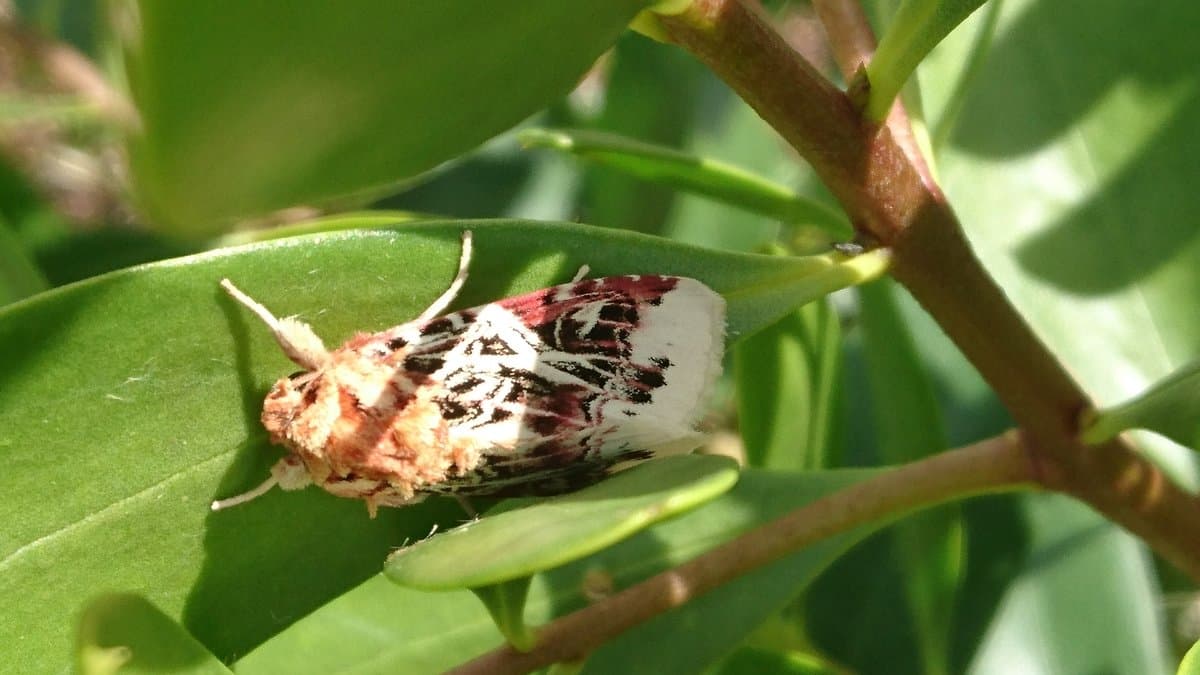
Researchers modeled the shapes of two odor-detecting proteins from the antennae of a moth whose mating chemistry nobody had studied, predicted the molecule those proteins pick up, and then confirmed in the living insect that it is the moth's main sex pheromone. The study, on the lily moth Spodoptera picta, was published Sept. 21, 2026.
In BMC Biology, the authors present that order of steps as a route into species that pheromone research has passed over: every moth pheromone found so far has needed live insects, knowledge of the hours when females release the scent, and the separation of one active compound from everything else in a gland extract.
A genome search found S. picta copies of OR5 and OR75, two pheromone receptors known from the related crop pests S. litura and S. littoralis. Structural modeling of the two, together with docking tests that fit candidate molecules into them, predicted that both would bind (Z,E)-9,11-tetradecadienyl acetate, the main pheromone component of those two relatives. The team then put each receptor into the smell neurons of fruit flies and offered a panel of 26 moth pheromone compounds: only that acetate set off OR5, while OR75 responded to several.
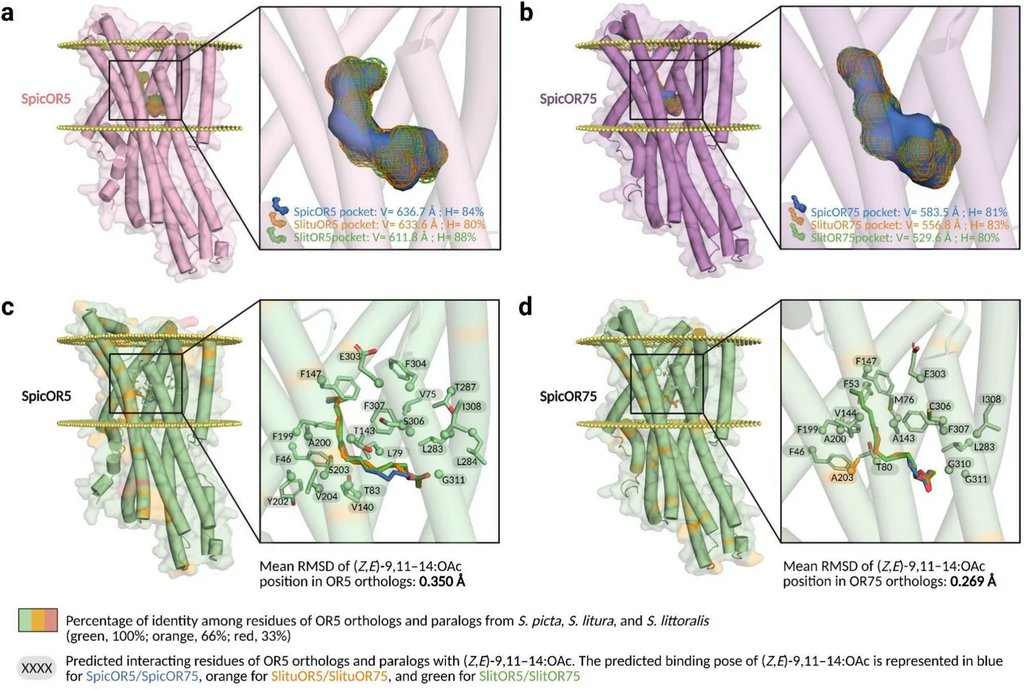
The insect bore it out. Chemical analysis of extracts from female glands found the same acetate as the blend's main component, male antennae responded to it, and on filter paper the compound alone drew courtship behavior from just over half of the 16 males tested. A gland taken from a live female drew the full courtship sequence from every male, so the single molecule is not the whole signal.
The lily moth's caterpillars feed on ornamental plants in public and private gardens, where synthetic pesticide use is limited, and the authors offer the compound as the basis for a targeted trap. The work is reported by Arthur Comte and senior author Emmanuelle Jacquin-Joly of iEES-Paris in Versailles, with colleagues at Université Côte d'Azur and Nanjing Agricultural University. The authors also conclude that this class of receptors arose by gene duplication and then became selective about which molecule it detects.
Sources
- BMC BiologyPeer-reviewed