Mammal Cells Make Rings of Pure Sulfur and Store Them in Fat Droplets


Elemental sulfur is the yellow crust around a volcanic vent and the brimstone of old sermons. It is also one of the oldest ingredients in biology: microbes built their metabolism around it long before there was much oxygen to breathe. What it does inside an animal has been a looser question. A group working between Sendai and Mainz went looking for it in mouse and human cells, and found a stockpile.
Uladzimir Barayeu and Takaaki Akaike, working between Tohoku University in Sendai and the Max Planck Institute for Polymer Research in Mainz, report in Science with more than forty colleagues that mammals carry elemental sulfur in its most stable form. The form is cyclo-octasulfur: eight atoms of sulfur closed into a ring, written S8. The paper was published on September 24, 2026.
Sulfur is not a stranger to the body. It sits inside two of the amino acids that build every protein, and inside some of the molecules a cell uses to defend itself. What is unusual here is the form: sulfur bonded to nothing but itself, in a closed ring, held in quantity inside a living animal cell.
It is not spread evenly. The rings pile up in two addresses in particular: the membranes of mitochondria, the compartments that run the cell on oxygen, and the lipid droplet, its fat store. In both, the concentrations reach millimolar, a level at which a molecule is a stock rather than a trace. Those are compartment figures, not a number for the cell as a whole.
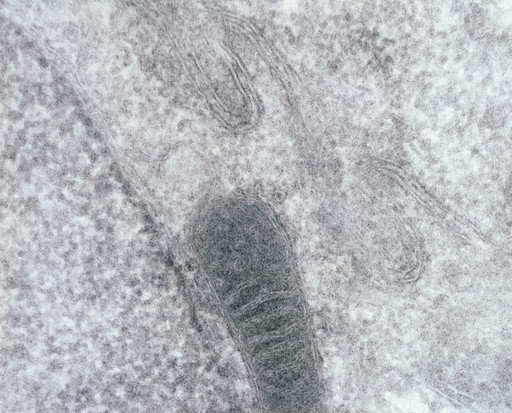
The fat droplet is the address that matters for what comes next. A cell's membranes are built from fats that oxidize, and when enough of them do, the cell can die by ferroptosis, a form of death driven by that damage. The S8 stored in the droplets limits the oxidation and holds that death back.
Where does a cell get pure sulfur? The paper points at an enzyme better known for another job: a nitric oxide synthase, from the family that makes the gas that relaxes blood vessels, sitting on the lipid droplets themselves. The wording is deliberate, a source of S8 production rather than the source. The Max Planck Institute for Polymer Research goes one step further in its own announcement of the work, naming the enzyme as eNOS and describing the ring as the storage form in which the cell keeps its elemental sulfur.
Then the test. The team dissolved S8 and injected it into the joints of mice in a model of osteoarthritis, and the oxidation of fats in the joint went down. That is the whole of the reported result: a marker of fat damage, measured in mice. Not pain, not cartilage, not a therapy for anyone's arthritis, and nothing yet done in a person.
The other address invites a larger story, and the institute tells it as a suggestion rather than a result. Mitochondria descend from free-living bacteria that an ancestor of every complex cell took up and kept. Sulfur ran through the metabolism of early life. Finding S8 inside mitochondria, on that reading, could point to an inheritance from that chemistry.
How new is it? The paper's own framing is the modest one: elemental sulfur is an evolutionarily ancient metabolite whose generation, storage and function in animals have remained unclear. The institute is bolder, calling this the first demonstration that mammalian cells make and store cyclo-octasulfur under their own control. In the same issue of Science, Richard Possemato of NYU Grossman School of Medicine gives the work an independent commentary titled King sulfur.
The authors keep their own conclusion conditional. What they describe is a pool of S8 inside the mammalian cell that may protect it from oxidative damage to its membranes by changing how easily it tips into ferroptosis. The pool is the finding: that it is there, where it sits, and how much of it there is. Whether the body leans on it, and how hard, is the next question.
Sources
- SciencePeer-reviewed
- doi.org
- idw-online.de