From a Blurry 2008 Photo to a New Species: The 18-Year Likweli Hunt

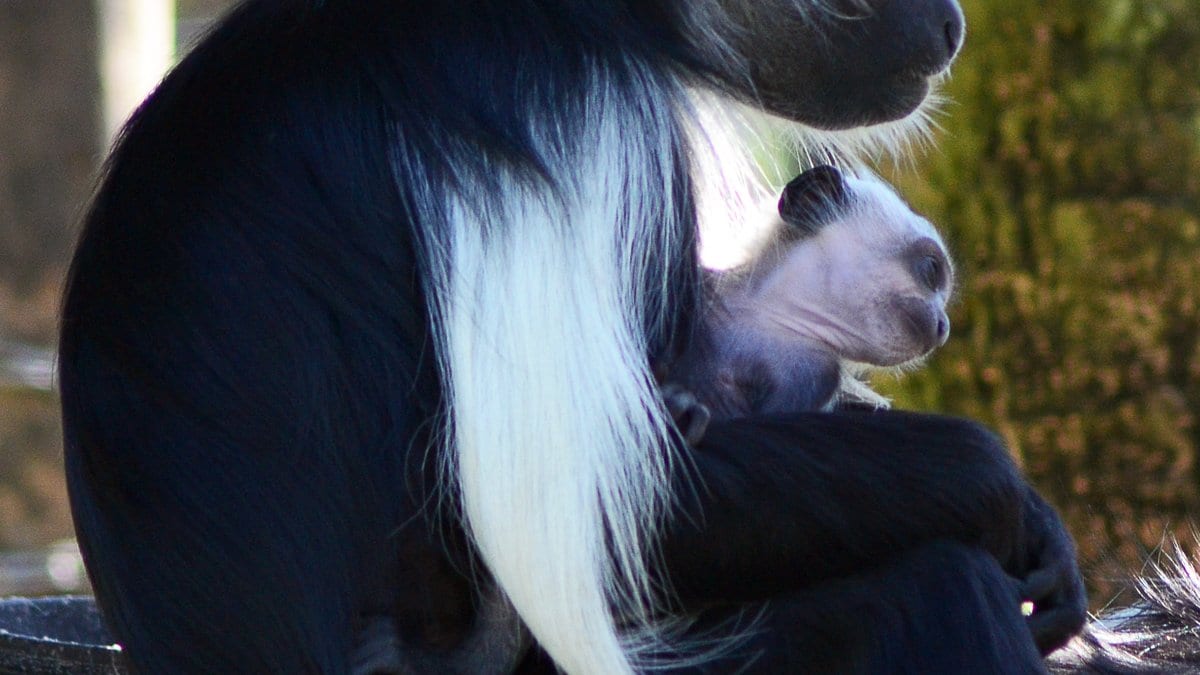
The first clue was almost nothing. In 2008, a photograph taken on the east bank of the Lomami River in the Democratic Republic of Congo showed a black monkey with a strange, bright detail: orange lips. The image was blurry, the animal unfamiliar, and for a decade, that was all anyone had. A smear of color in a photograph, deep in one of the least-surveyed forests on Earth.
Eighteen years later, that monkey has a name. Writing in PLOS One, a team with senior author Kate Detwiler of Florida Atlantic University has formally described it as Colobus congoensis, a new species. Local people already knew the animal and called it likweli. Science has now caught up with them.
The gap between the 2008 photo and the formal description is the real story. New species of large mammals are not supposed to be easy to find in the twenty-first century, and a monkey is about as conspicuous as wildlife gets: large-bodied, active by day, loud. Yet the Lomami basin, a stretch of rainforest in the center of the country, is remote and hard to work in, and the likweli lives in a narrow band of it. After that first grainy image, the trail went cold. It picked up again in November 2018, when a second photograph, this one clear, set off a focused effort to document the animal.
What followed was patient fieldwork rather than a lucky break. Between 2018 and 2022, researchers logged 114 field observations of the monkey across an estimated range of about 1,700 square kilometers. Most were direct sightings, dozens of them detailed enough to record the makeup of a group. Slowly, the picture filled in: a black colobus monkey with those distinctive orange lips, given to roaring and snorting calls, living in the forests between the Lomami and Lilo rivers and, as far as anyone can tell, nowhere else.
Placing the animal on the primate family tree sharpened the case that it was genuinely new. A molecular clock analysis, reading the slow accumulation of mutations in its DNA, put its split from its nearest relative, the black colobus Colobus satanas, at roughly 4.1 to 5.0 million years ago. Today, the two live more than 1,200 kilometers apart. That is a long time and a long distance, the kind of separation that lets an isolated population drift into a form of its own. The Likweli is, in effect, the product of millions of years spent evolving alone in one corner of the Congo basin.
Its rarity is also its peril. By the authors' count, the likweli is only the fifth new species of African monkey described in the past 75 years, which says as much about how thoroughly the continent's primates were thought to be catalogued as it does about this animal. And because its entire known range is so small, that distinction comes with a warning. The team proposes a preliminary listing of Endangered on the IUCN Red List, citing habitat loss and a limited population, and points to Lomami National Park as central to the animal's survival. A species can be named and imperiled in the same paper.
Sources
- www.science.org
- PLOS OnePeer-reviewed